

Beyond the headline scale of the proposed Unilever-McCormick transaction, the more important question is how the combination reshapes portfolio fundamentals and future growth. Using our Company Analytics and Company Growth Outlook tools, we assess how the deal supports McCormick’s market expansion and Unilever’s transition towards a focused home and personal care portfolio, and what those shifts imply for long‑term performance.
Unilever Foods significantly extends McCormick’s geographic reach
At the category level, the strategic logic becomes clearer when examining McCormick’s exposure across the cooking ingredients and meals industry, a core but highly fragmented part of the global flavour landscape. These categories vary significantly by region and competitive structure, making aggregate portfolio statements less informative. A granular view is therefore essential to pinpoint where McCormick already has strength and where the addition of Unilever Foods materially changes its position.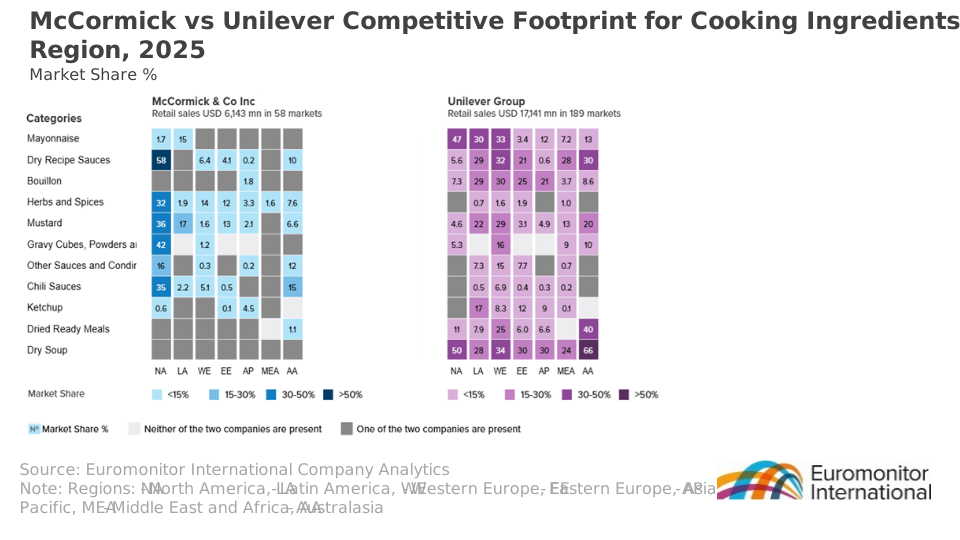
The most immediate benefit for McCormick is category scale. In mayonnaise, Unilever’s Hellmann’s fills a clear gap in McCormick’s portfolio, particularly in North America where the brand holds a 2025 category share of 47%. This provides McCormick with instant leadership in one of the largest and most competitive subcategories, avoiding the need for a lengthy organic build. A similar dynamic is visible in bouillon and dry soup, where Unilever’s Knorr strengthens McCormick’s position in flavour‑led cooking aids that align closely with its core herbs and spices business. This deepens McCormick’s role in everyday meal preparation while reinforcing its existing flavour‑focused proposition.
The geographic impact is equally significant. The combination establishes a foothold in the Middle East and Africa, where McCormick has historically had limited presence, while strengthening scale across both Western and Eastern Europe. This creates an opportunity to replicate the high market shares McCormick commands in North America within regions where Unilever Foods already has established distribution and brand equity.
Growth outlook explains Unilever’s portfolio pivot
From Unilever’s perspective, spinning off then combining its Foods business with McCormick represents a decisive step towards becoming a pure home and personal care company, although it also implies a greater focus on maintaining profitability as it exits higher-margin food segments. The rationale becomes clearer when looking beyond portfolio using Euromonitor’s Company Growth Outlook tool. This way we can assess where country and category market size growth would take Unilever over the next five years and how this supports a more focused strategy.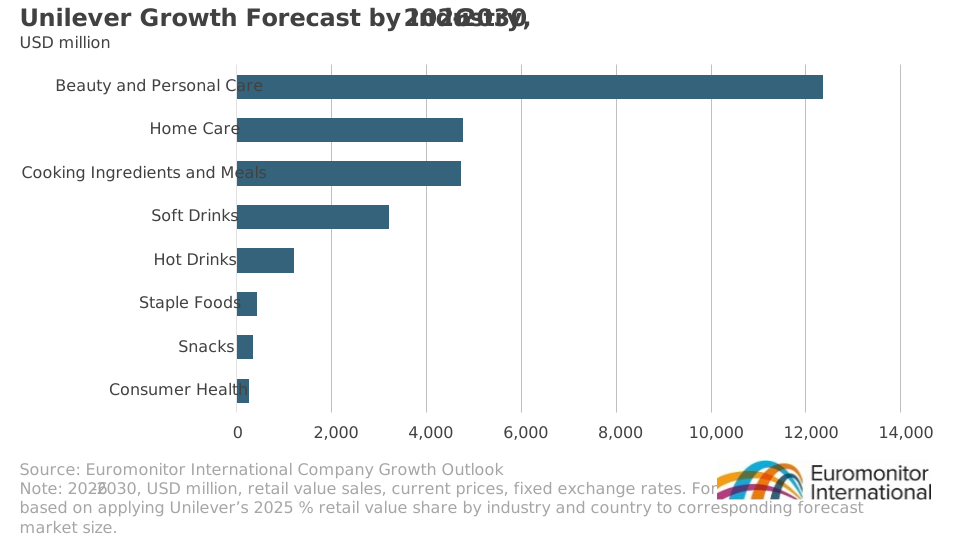
The chart shows that beauty and personal care will be Unilever’s overwhelming engine of growth based on its 2025 market presence, contributing more than USD12 billion between 2026 and 2030. This significantly exceeds any other segment and underscores its central role to Unilever’s future. Home care follows as the second largest contributor, with approximately USD4.8 billion in projected growth, reinforcing a portfolio built around high-frequency, daily-use categories with strong global scalability. While cooking ingredients and meals is expected to contribute almost as much as home care to Unilever’s 5-year outlook, other food categories like staple foods and snacks will contribute a materially smaller share to future growth.
Growth evaluation blends category insight with future views
The Unilever-McCormick deal illustrates why major portfolio moves cannot be assessed through just headlines. Understanding whether a transaction truly reshapes a company’s growth profile requires looking at both granular category‑ and geography‑level dynamics and broader, forward‑looking growth expectations. In this case, micro‑level analysis clarifies where category adjacency, market share, and geographic expansion create real strategic upside, while macro‑level growth outlooks explain why portfolio focus and simplification matter in the longer term.
Applying these frameworks allows companies, advisers, and investors to move beyond surface‑level narratives and evaluate where growth is coming from. Whether supporting M&A decisions, competitive benchmarking, or portfolio optimisation, our analytics and data help bring clarity by combining detailed market insight with forward‑looking growth perspectives.