
Global cannabis is at a pivotal juncture, shaped by regulatory uncertainty, the ongoing rise of telemedicine, and ever-changing product innovation. As governments grapple with policy, companies must adapt to a landscape where new product features, emerging channels and the rise of hemp-derived intoxicating drinks (HDICs) are redefining both risks and opportunities. This article distils five critical trends currently shaping the sector and what they mean for FMCG stakeholders.
Regulatory ebbs and flows: The industry’s defining challenge
Regulatory volatility remains an intrinsic component of the cannabis industry. The pace and direction of cannabis legislation are unpredictable, on both state and national levels. Recent global developments underscore this complexity.
In the US, the redefinition of hemp could eliminate the USD10 billion HDIC market, whilst the potential rescheduling of cannabis from Schedule I to III could unlock opportunities for legal operators, including significant tax benefits.
Source: Euromonitor International
Meanwhile, Thailand’s restrictions on adult-use and stronger focus on medical cannabis, and Italy’s attempt to crack down on CBD products have destabilised local markets and aroused feelings of uncertainty amongst local stakeholders.
For brand owners and industry stakeholders the message is clear: robust, unambiguous legislation is the foundation for sustainable growth. Without it, the illicit market thrives, and negative perceptions persist among consumers, investors, and policymakers.
HDICs: Riding the no/low alcohol wave, but for how long?
The intersection of cannabis and mainstream FMCG goods is most visible in the explosive growth of HDICs. As US consumers reduce alcoholic drinks consumption and seek wellness and hangover-free alternatives, HDICs have surged in popularity, embraced by retailers like Target, Circle K, and DoorDash. Brands are positioning HDICs as substitutes for alcohol, especially during cultural moments like Dry January.
Yet, this momentum is fragile. The likely federal redefinition of hemp threatens to abruptly halt the HDIC boom, raising existential questions for brands and retailers alike. The segment’s rapid expansion into mainstream channels demonstrates cannabis’s potential to disrupt adjacent categories, but also highlights the risks of operating in regulatory grey zones.
Telemedicine: Expanding access, raising scrutiny
Telemedicine has emerged as a powerful driver of medical cannabis sales, particularly in markets like Germany, Australia, Poland and Brazil. Digital platforms have democratised access, connecting patients in remote areas with prescribers and a broader range of products. In Germany, the delisting of cannabis from the narcotics list and the rise of telemedicine have propelled the country to the forefront among global medical cannabis markets.
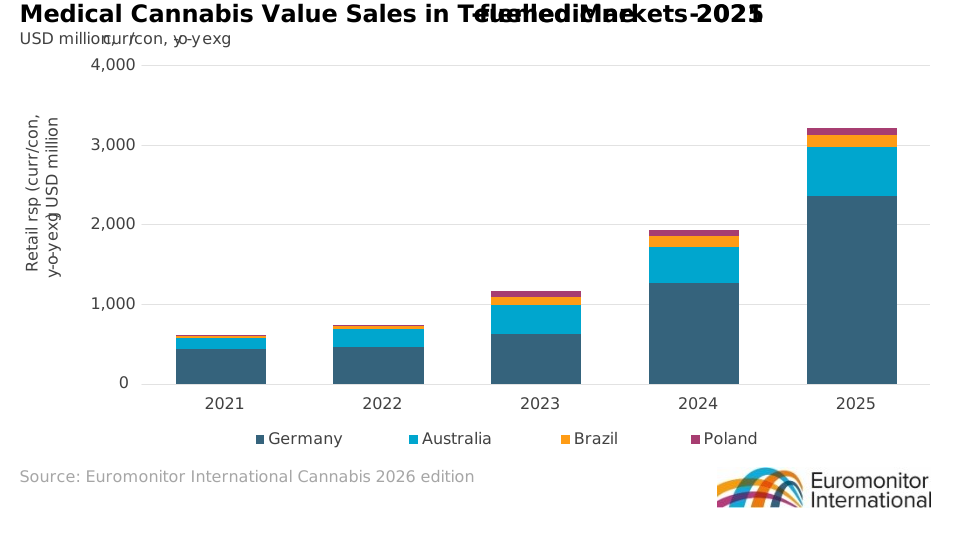
However, this democratisation has a downside: the risk of quasi-recreational consumption and regulatory backlash. As seen in Poland and contemplated in Germany, authorities are responding with tighter controls, such as mandatory in-person consultations. The lesson for industry stakeholders is that while telemedicine can unlock rapid growth, it also invites heightened scrutiny and the potential for abrupt policy reversals.
Product innovation: The expanding potency spectrum
Cannabis product innovation is accelerating, with brands catering to both experienced and canna-curious consumers. High-potency flowers, infused pre-rolls, and vapes attract legacy consumers, while low-dose edibles and beverages, sometimes infused with familiar ingredients like caffeine or L-theanine, lower the barrier for new entrants. This widening potency spectrum is central to the ongoing “normalisation” of cannabis, positioning it as a viable alternative to traditional FMCG products.
As consumer familiarity grows, so does demand for tailored experiences. Companies that can balance potency, safety, quality and format innovation are best positioned to capture share in both mature and emerging markets.
Corporate struggles: Short-term pain, long-term opportunity
Despite robust consumer demand, cannabis companies face challenges: oversupply, price compression, high taxes, and regulatory whiplash. The US, in particular, is grappling with the fallout from overproduction and stalled federal legalisation, leading to market exits and job losses in states like Michigan. In Europe and Asia, abrupt regulatory shifts have destabilised entire segments.
Yet, these challenges are also clarifying. Companies with a long-term, resilient approach, focused on operational efficiency, regulatory engagement, and targeted innovation, are most likely to emerge as winners. The current turbulence is separating opportunistic entrants from those committed to building sustainable, compliant businesses.
The cannabis industry holds immense potential, but only for those that can navigate volatility with agility, foresight and patience. In the medium term, headwinds are likely to persist as reform slips further down the regulatory and political agenda and legal cannabinoids struggle to earn a consistent role in consumer wellness and recreational routines. However, pockets of growth in US hemp-derived intoxicants and European medical cannabis give a glimpse of the longer-term future.
Read our full report, Top Five Trends in Cannabis 2026.