Nicotine and CannabisExplore thought-leadership and expert insights on the consumer behaviour, regulatory forces and cutting-edge innovation trends shaping the complex and rapidly developing nicotine and cannabis industries.
The USD3 trillion wellness industry is no longer just about green juices, yoga mats and incremental optimisation. A new frontier is emerging, one that challenges long‑held taboos around substances, mental states and self‑experimentation. Euromonitor defines this shift as transgressive wellness: a growing consumer mindset that integrates emerging, previously illicit or culturally marginalised substances into health, wellbeing and relaxation routines.
Transgressive wellness marks a deliberate departure by some consumers from established orthodox health norms in pursuit of profound emotional regulation, cognitive enhancement, or psychological transformation. It encompasses engagement with psychedelics, dissociatives, empathogens, and psychoactive botanicals, alongside legal adjacencies like functional mushrooms, adaptogenic formulations, and microdosing-inspired behaviours.
Crucially, this is not reckless hedonism. For many consumers, transgression is purposeful. These substances are being reframed as tools for healing, focus, creativity, connection and harm reduction, rather than escapism. In this sense, transgressive wellness represents the rehabilitation of once‑demonised compounds (including more mainstream substances such as nicotine and cannabinoids) into structured, intentional wellbeing and productivity practices.
Macro chaos, scientific advance and prominent proponents create reinforcing loop
Several forces are converging to accelerate transgressive wellness. First is macro uncertainty. Polycrisis – economic pressure, climate anxiety, geopolitical instability – has driven stress, burnout and a sense that conventional wellness is no longer touching the sides. Many consumers report “pill fatigue” with pharmaceuticals and alienation from the (what is increasingly perceived as toxic) perfectionism of mainstream wellness culture.
Secondly, scientific legitimisation. Clinical research into substances such as psilocybin, MDMA and ketamine has expanded rapidly, particularly for mental health conditions like depression and PTSD. This research is reshaping public narratives and, in some markets, encouraging regulatory liberalisation.
Finally emerging substances are being culturally reframed via digital communities and influencers. Biohackers, tech elites and wellness advocates openly promote microdosing, alternative therapies and ritualised substance use, thereby normalising experimentation. Online platforms are democratising access to knowledge that was once niche or underground.
Together, these forces create a reinforcement loop: curiosity fuels research, research fuels legitimacy, and legitimacy fuels broader adoption.
Why transgressive wellness matters for FMCG
For FMCG companies, this trend represents both threat and opportunity. The potential of emerging substances overlaps directly with many existing consumer missions: stress relief, mood regulation, focus, social connection and appetite control. As uptake grows, categories such as alcohol, nicotine, packaged food and some consumer health spaces face potential volume displacement.
Transgressive wellness is helping to rebalance the USD3 trillion global wellness market. Even modest shifts in consumer spend towards these new behaviours could have material category impact.
Source: Euromonitor International
Importantly, while legalisation may increasingly allow access to revenue from currently restricted substances (for example, we believe microdosing could drive the value of psilocybin consumption globally to USD40 billion within a decade), many opportunities sit adjacent to controlled substances rather than requiring brands to touch them directly.
Opportunities for FMCG in a sector taking a step towards the mainstream
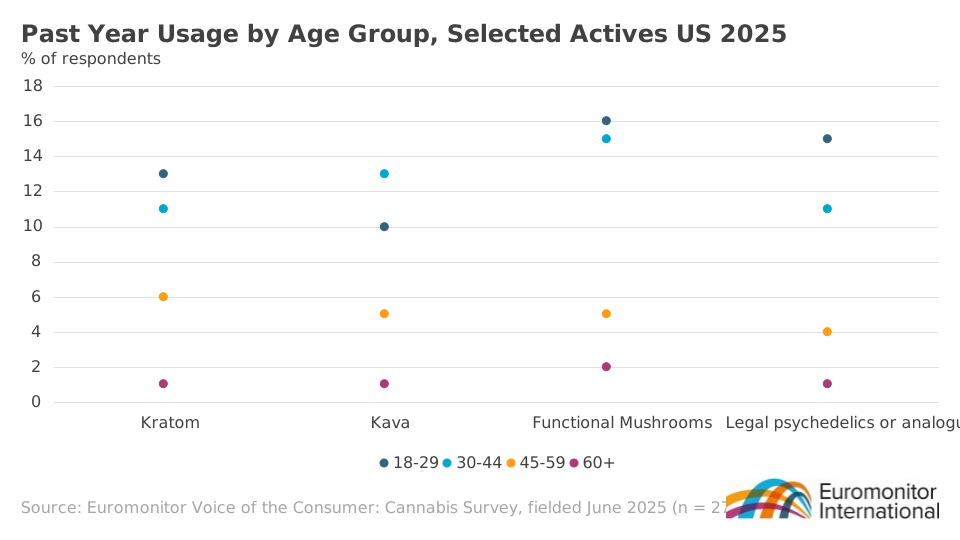
While opportunities are likely to evolve within controlled and previously illegal substances, there clearly remains significant regulatory and reputational road yet to run. In the meantime, where regulation allows, legal emerging actives such as kava, kratom and kanna will provide more immediate potential and can be positioned around outcome, as well as or rather than transgression itself, in order to maximise appeal.
The lowest‑risk entry point lies in non‑taboo-substance‑touching innovation. This includes functional, nootropic and adaptogenic products that address similar need states (calm, focus, recovery), nutritional support before and after substance experiences, and integration tools such as journals, ritual kits or guided digital content. Brands can also build credibility through community alignment and education.
Ultimately, as one era’s taboo is fast becoming another’s everyday wellbeing, transgressive wellness will reward brands that combine boldness with nuance. For FMCG companies willing to engage early, authentically and responsibly, this shift offers a rare chance to tap into new growth while helping to shape what wellness means in coming decades.
For in-depth analysis on transgressive wellness and its implications for FMCG, please read our latest briefing report, Emerging Substances and the Rise of Transgressive Wellness. To discuss this trend and our capabilities in more detail, contact Shane MacGuill.
This report analyses the key developments shaping the global nicotine and cannabis industries in H1 2026. It examines tightening regulation, tax hikes and…
This report outlines five forces reshaping the nicotine market: intensifying regulation, reduced visibility of smoking, growth of multi format usage, expanding…
Global nicotine markets remain structurally stable as declining cigarette volumes are offset by the rise of reduced-risk products such as heated tobacco,…