
The US travel market is experiencing a redistribution of demand: international arrivals are softening amid political uncertainty and rising cost barriers, while domestic travel intent remains comparatively resilient, keeping hotels occupied and planes full. Yet, this equilibrium is fragile – if macroeconomic pressures deepen, domestic traveller confidence may erode, placing strain on suppliers. The 2026 FIFA World Cup offers a near-term boost to inbound spending, yet the structural challenges shaping the US market will not resolve with the tournament, and the visitor mix may skew more towards domestic audiences than early forecasts assumed. For travel operators, leveraging this moment while building resilience for the coming years is the defining task.
The US inbound arrivals problem
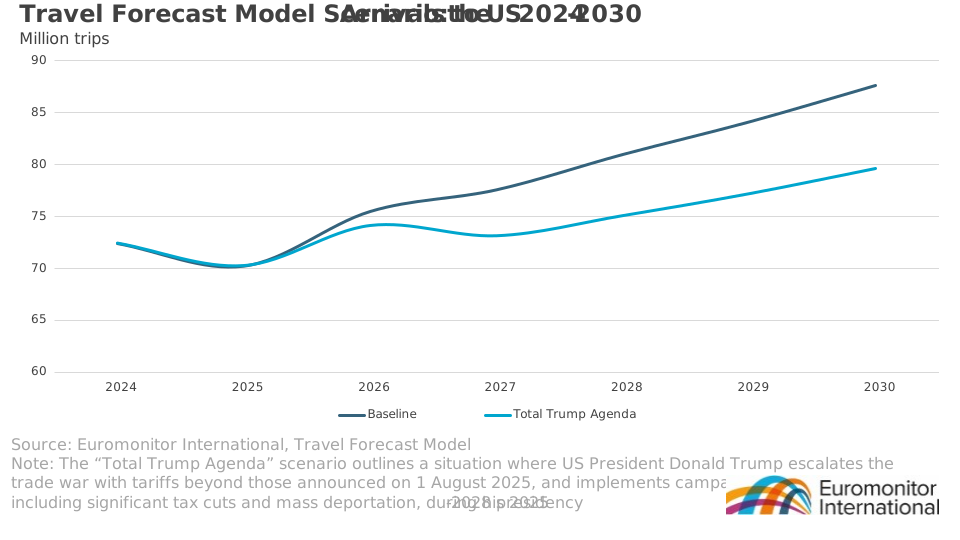
Spending by inbound arrivals to the US declined by 4.5% in 2025, driven by rising political uncertainty and the gradual translation of the current administration’s agenda into policy. Euromonitor’s Travel Forecast Model indicates that challenges are set to continue: consumers who have already deferred a US trip are likely to maintain that hesitancy over the next 1-2 years, as visa friction and geopolitical concern remain in place.
The World Cup: A boost, but not a cure
The 2026 FIFA World Cup – hosted across 16 US cities alongside venues in Canada and Mexico – represents the most significant single stimulus for US inbound tourism in recent years. According to the US Travel Association, World Cup visitors could spend over USD5,000 per person, or more than double the average inbound rate, while total tournament-related spending could be worth USD6 billion. Most of this spending is likely to be incremental – meaning visitors would not have come if it were not for the tournament – and that alone could cover the deficit from 2025.
International visitors to the US spent 2.6 times more on travel-related expenses than domestic travellers in 2025
Source: Euromonitor Passport Travel, 2026 edition
Early booking signals, however, suggest the uplift will be uneven. Many US hoteliers report bookings tracking below initial forecasts, with exceptionally high nightly rates in several host cities deterring conversion. Short-term rental platforms, however, are capturing demand that hotels are missing: Airbnb claims that searches for stays in host cities have increased by 80% compared to previous years, with fans favouring flexible, multi-bedroom properties for group and family travel over inventory constrained by price inflation.
How Mexico is different – and also the same
Mexico presents a similar picture of delayed bookings and supply-side uncertainty, yet without the magnitude of structural barriers constraining US demand. Easier entry requirements and lower administrative friction mean Mexico is capturing spillover demand from consumers priced out of the US or who are otherwise hesitant to travel there. Airbnb searches surged by 250% in Guadalajara and Monterrey which suggests short-term rental accommodation in Mexican host cities is comparatively more critical than in US host cities.
Mexico must also cope with unique challenges. Security concerns remain a major risk to demand and destination image, and crowding, transport pressure and service variability could add friction to managing large-scale fan movement. Monterrey’s mobility strategy relies primarily on buses rather than rail, and ride-hailing platforms currently face airport access restrictions.
But these challenges also provide opportunity. Rather than optimising for peak yield, mobility platform Didi has scaled its driver network ahead of anticipated demand and worked proactively with government and regulators to stabilise pricing and guarantee vehicle availability across tournament venues. By positioning itself as core event infrastructure, Didi is capturing revenue streams that traditional operators are missing.
A lesson for travel operators
The 2026 FIFA World Cup will deliver a meaningful short-term stimulus for North American tourism, but is unlikely to resolve the structural challenges facing the US market; inbound declines are expected to extend into 2027. What the tournament has already demonstrated is that overshooting on price suppresses conversion rather than maximising yield.
Operators that combine pricing discipline with bundled, end-to-end offerings are best placed to benefit: airlines and OTAs that package the complete fan journey; mobility platforms that scale capacity and work proactively with regulators ahead of demand peaks; and accommodation providers with dynamic, group-friendly inventory suited to compressed booking windows. Strategies employed effectively during the tournament could generate a level of resilience that supports growth well after the World Cup glow fades.
Download our report, Travel in an Age of Poly-Crisis, for more on building resilience and strategic recommendations across aviation, hospitality and online travel.