
The hot drinks industry is facing challenging times in 2026. Climate pressures and higher energy and logistics costs due to geopolitical conflicts are driving up prices again and brands need to target consumers more effectively to generate value growth. Social media and at-home café experiences are already reshaping Gen Z hot drinks habits, while Chinese coffee and tea chains are emerging as a potentially disruptive force internationally as they scale value-led and format-driven offers. All this while green coffee prices are on historic high levels and therefore lead to uncertainty in the industry but also increasing attention on value and innovation.
Brewing prices: How coffee prices are changing the market
Coffee prices surged in 2025, with green coffee almost doubling year-on-year due to climate-stressed harvests, higher energy and logistics costs, and volatile supply from key producers such as Brazil and Vietnam. Brands are repricing, resizing packs, and focusing on premiumisation to protect value.
While green coffee prices began to ease in early 2026, the security crisis in the Strait of Hormuz created fresh uncertainty by pushing up energy and freight costs.
Source: Euromonitor International
This has added pressure to coffee, tea and cocoa supply chains, while also disrupting tea exports to key Middle Eastern markets in the short term.
Social media platforms drive discovery and influence Gen Z preferences
Gen Z is reshaping coffee and tea consumption through social media, with 25% relying on company accounts for purchase decisions (Euromonitor Voice of the Consumer: Lifestyles Survey, fielded January-February 2025). For this generation, drinks are not just functional, they are a form of self-expression, shaped by personal taste, mood, wellbeing and occasion. Platforms such as TikTok and Instagram do more than drive discovery. They turn beverages into cultural moments, accelerating demand for customisation, cold formats and viral flavours such as matcha, ube and fruit-led combinations. In this environment, brands that feel authentic, visually relevant and socially fluent are more likely to win attention, while those relying on conventional messaging risk falling behind Gen Z’s fast-moving preferences.
Functionality beats sustainability
When budgets are tight, consumers focus on immediate, tangible benefits. In hot drinks, that increasingly means energy, focus, relaxation or immune support, especially during daily stress. By contrast, sustainability often feels less urgent at the point of purchase and is more easily traded down from. For brands, this underlines the need to build ranges around clear need states such as morning energy, focus at work or evening relaxation. These offers can justify modest premiums and support trade-up, but coffee brands in particular still need to do more to communicate coffee’s health benefits. Sustainability remains important for compliance and long-term resilience, but functionality, alongside price and flavour, is the stronger selling point today.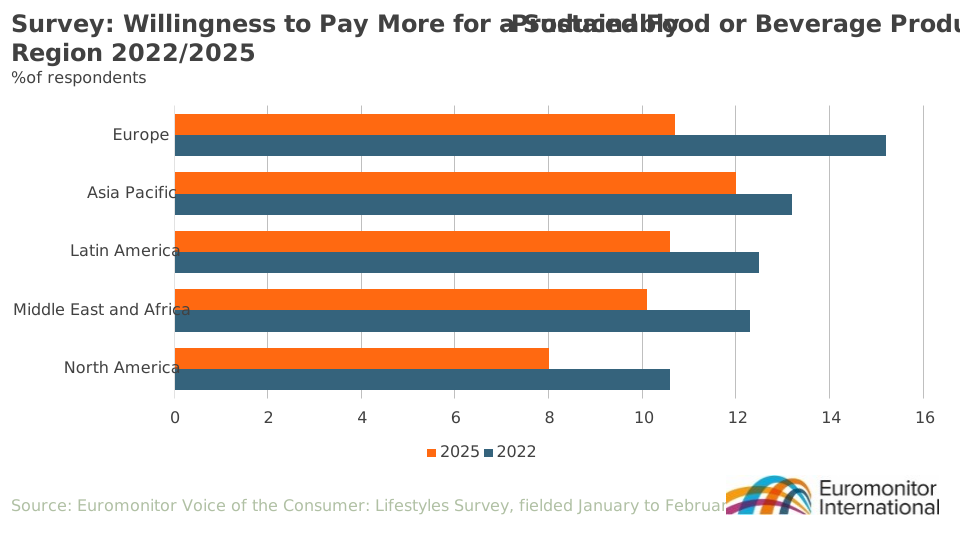
In-home: The new social hub for hot drinks
As consumers react to rising prices, higher out-of-home costs and hybrid work, coffee and tea occasions are increasingly moving into the home. It is not just about saving money. Consumers are investing in better machines and speciality ingredients to recreate café-style experiences, while gatherings around hot drinks are becoming more common. Gen Z leads this shift, increasingly choosing coffee and tea over alcohol for social occasions. For brands, the opportunity lies in making at-home hot drinks feel premium, social and easy to prepare.
Chinese coffee and tea shops expand beyond domestic turf
At the same time, Chinese brands such as Luckin and Chagee are accelerating global expansion, targeting Southeast Asia and North America in 2026. Luckin’s entry into New York, with affordable, innovative options such as coconut latte, and Chagee’s premium tea positioning challenge established players such as Starbucks by combining affordability, convenience, and cultural relevance to appeal to young, price-sensitive consumers.
Amid cost pressures and shifting consumer priorities, businesses face both challenges and opportunities. Brands must adapt to a landscape where tangible benefits, experiential consumption and quick responses to new preferences define value. Success will depend on balancing pricing strategies, providing clear functional value and building engagement, whether through digital channels or at-home experiences. Simultaneously, global expansion and rising competition require a careful approach to localisation and innovation. Companies that address these trends proactively will be best placed to achieve growth and secure lasting consumer loyalty in a fast-changing environment.
Download our report, Top Five Trends in Hot Drinks, for in-depth trend descriptions, case studies and strategic recommendations.