DrinksFrom coffee and kombucha to seltzer and champagne, we explore the latest insights on the consumer trends and new products shaping the drinks industry.
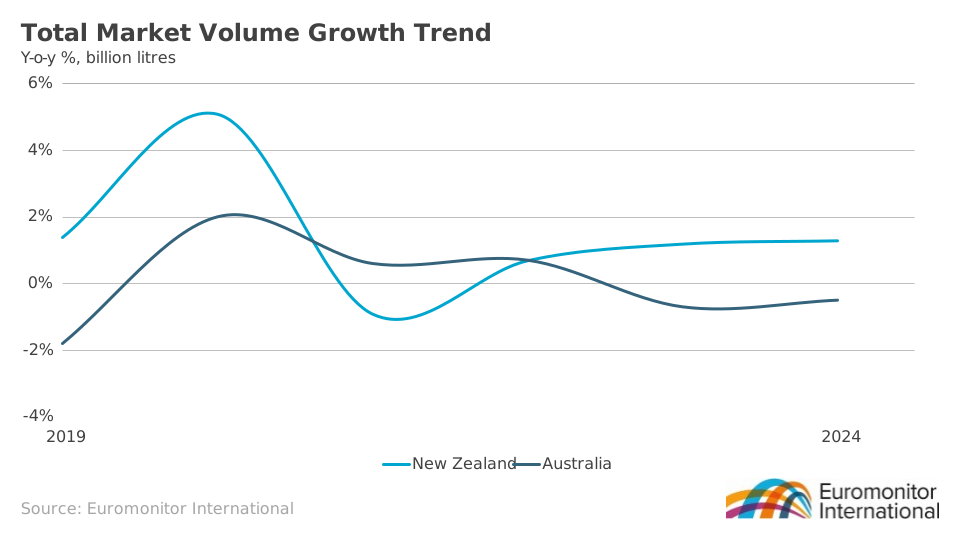
Australasia’s juice market remains structurally challenged, with growth constrained by intensifying competition from higher-momentum better-for-you beverages and ongoing cost-of-living pressures that have curtailed discretionary spending. As consumers increasingly prioritise drinks with clearer functional or performance-led benefits, juice has struggled to defend relevance, resulting in largely stagnant demand. This pressure has been amplified by Australia’s updated Health Star Rating methodology, which now scores fruit juice lower than diet cola due to its naturally high sugar content, despite its inherent nutritional value. The reclassification has further weakened juice’s traditional “better for you” positioning, forcing brands to rethink value communication through elevating credible functional cues in order to restore consumer trust and sustain category relevance.
Health-led differentiation unlocks new premiumisation pathways in a price-sensitive juice market
While volume growth remains subdued, juice still presents opportunities for brands able to identify unmet needs and articulate a stronger value proposition. In a market defined by price sensitivity, differentiation now hinges on aligning with consumer health priorities rather than competing solely on cost.
37% of Australian and 36% of New Zealand consumers prioritise health benefits when selecting beverages
Source: Euromonitor Voice of the Consumer: Lifestyles Survey, fielded January to February 2025
The commercial potential is clear, 21% of Australians and 23% of New Zealanders are willing to pay a premium for products with recognised health and nutritional advantages. These attributes sit at the heart of the premiumisation trend, offering a clear strategic path for brands that can effectively combine perceived wellness value with functional innovation and transparent health messaging.
Mapping value in juice: A consumer need states perspective
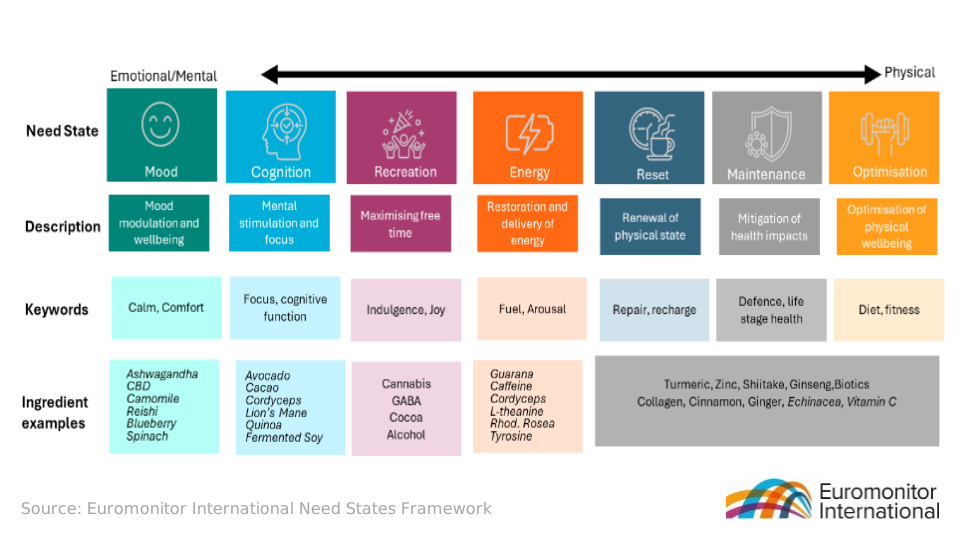
In response, the industry is experiencing a new wave of health outcome-driven innovation that is reshaping category momentum. Euromonitor International’s Need States Framework analyses outcome-orientated consumer behaviour and brand strategies that prioritise the desired benefit, based on local health priorities, over traditional beverage categories, ingredients or formats. By focusing on the specific need a product fulfils, such as performance, recovery or balance, rather than when or how it is consumed, this framework helps brands decode evolving consumption drivers and identify white-space opportunities to reignite growth in the juice sector.
Two notable developments are reshaping beverage innovation across Australasia, as the market witnesses both a surge in active nutrition solutions and a growing consumer shift towards alcohol moderation as part of a balanced, health-conscious lifestyle. High-protein diets maintain strong consumer appeal, reflecting a sustained shift towards performance-driven nutrition and recovery-orientated lifestyles. Cross-category innovation is accelerating; Muscle Nation’s juice-style protein water and Dairy Farmers’ protein smoothie blur traditional boundaries, while brands like V8 and Dairy Farmers are trialling protein juice smoothies to capture the performance segment. Convenience also remains a key purchase driver, with 41% of Australians preferring ready-to-drink formats post-workout, according to Euromonitor’s Voice of the Consumer: Health and Nutrition Survey, fielded February 2025, mirrored in the success of Pickle Juice, whose Extra Strength Shots target rapid muscle recovery and cramp relief.
At the same time, health-minded consumers, particularly younger cohorts, are embracing alcohol moderation, prioritising balance over abstinence. The same Euromonitor survey shows a majority of millennials report actively reducing their alcohol consumption, whereas Generation Z shows a stronger tendency towards full abstention as part of a broader focus on wellbeing. This creates new headroom for juice to play in “smarter drinking” repertoires, supporting hydration, recovery and refreshment in social or post-alcohol occasions.
Bae Juice exemplifies this opportunity, tapping into the “reset” need state. Made from 100% Shingo pears, prized for their high water content, natural enzymes and antioxidants, it is positioned as a hangover-prevention drink. The brand highlights enzymes like alcohol and aldehyde dehydrogenase that accelerate alcohol breakdown, alongside hydration and antioxidant benefits rooted in traditional Korean medicine. The success of Bae Juice has since inspired similar offerings from The Juice Lab and Seoul Tonic, signalling a wider shift towards function-led innovation that aligns juice with modern lifestyle goals of purpose-driven consumption.
In a market where functional parity dominates, differentiation depends on designing around distinct need states that deliver both a defined use-case and an emotional pay-off. Brands that do so build repeat purchase, improve price realisation and strengthen willingness to pay for quality cues.
Read our article, Need States Across FMCG, to explore how the Need States Framework applies across fast-moving consumer goods.
Energy management is reshaping coffee consumption as consumers seek more control over caffeine, focus and wellbeing across the day. Coffee risks losing key…
Global alcohol volumes slipped yet again in 2025 as a bitter cocktail of weak confidence and lifestyle shifts continue exerting profound pressures on the…
This report highlights key innovation trends in hot drinks, analysing new product launch activity on e-commerce along with insights into key attributes and…