

The Euromonitor International Top 100 City Destinations Index 2025, produced in collaboration with Lighthouse, assesses 100 cities using more than 50 metrics across six core pillars to deliver an overall city attractiveness score. Covering economic and business activity, tourism performance, infrastructure, tourism policy and appeal, health and safety, and sustainability, the Index offers a holistic perspective on the factors driving urban success and resilience.
In 2025, urban destinations are reframing their tourism strategies to prioritise value over volume, recognising that unmanaged growth strains infrastructure, ecosystems and residents’ wellbeing. By targeting visitors who stay longer, spend more and engage more responsibly, cities are tackling overtourism pressures while generating more sustainable and resilient economic returns. AI readiness has emerged as a defining advantage in global urban competition. Cities leading in AI adoption are not only optimising infrastructure and transport networks but also enhancing talent development, business innovation and personalised customer experience.
Bangkok reigns as the world’s top city for international arrivals
The Top 100 City Destinations Index 2025 reveals that the leading global destinations are projected to welcome 702 million trips this year, marking an 8% increase. Collectively, these cities account for 46% of global inbound tourism, continuing to outpace overall global growth, which stands at 4%.
Source: Euromonitor International
Bangkok retains its position as the top destination with 30 million international arrivals, despite headwinds from a stronger local currency, safety concerns and intensifying regional competition.
Hong Kong took second place in international arrivals in 2025, achieving 6% growth. The city attracted visitors with the launch of Kai Tak Stadium, hosting major international football events, while the reopening of the expanded Terminal 2 at Hong Kong International Airport boosted connectivity, cementing its status as a premier global destination.
Macau stands out as the most dynamic city, with inbound trips rising by 14% in 2025, while same-day visits are growing at an even faster pace. Nearly 90% of visitors come from China and Hong Kong. Innovative tourism initiatives – such as Zhuhai residents’ “one trip per week” multi-entry programme and Hengqin visitors’ “Multiple Entries” policy – have reinforced Macau’s position as a leading regional destination.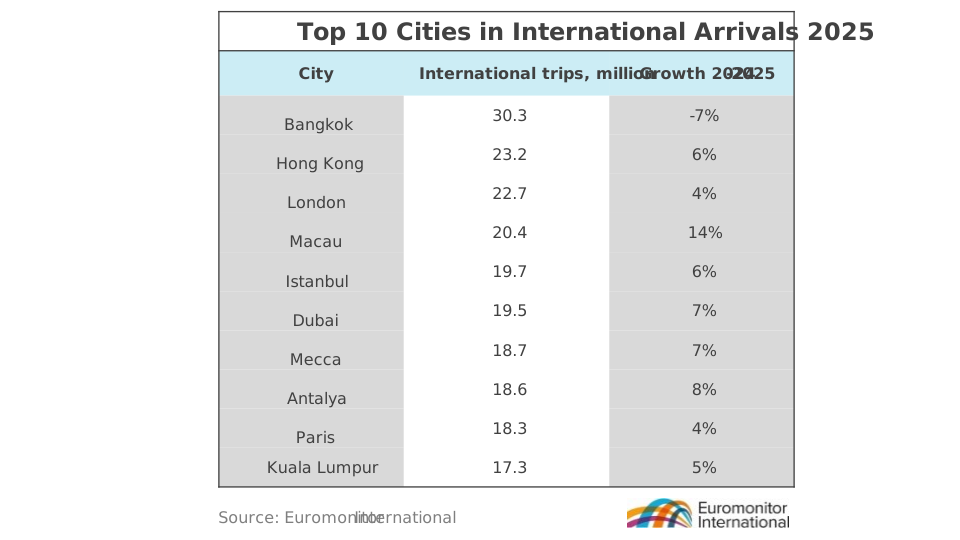
Orlando has surged past New York to claim the top spot in the Tourism Performance pillar for 2025. Paris, while dropping two positions, demonstrated resilience, buoyed by ongoing travel fuelled by the Olympic Games legacy and major infrastructure developments. Only three cities – Orlando, Medina and Los Angeles – secured places in the top 20 for both international and domestic tourism demand.
Orlando’s lead was propelled by robust domestic travel, while Dubai continued to dominate international arrivals. Medina recorded the largest gains, driven by higher hotel occupancy, rising airport traffic, and expanded airline connectivity. Orlando’s growth was further boosted by the opening of Epic Universe in May 2025, enhancements at SeaWorld and Disney World and the city hosting six FIFA Club World Cup matches.
Dubai’s strength in international tourism demand reflects active promotional campaigns by the Department of Economy and Tourism and ongoing enhancements in connectivity and AI. Tourism remains a cornerstone of the UAE Economic Agenda, with the ambitious target of attracting 40 million visitors annually by 2031.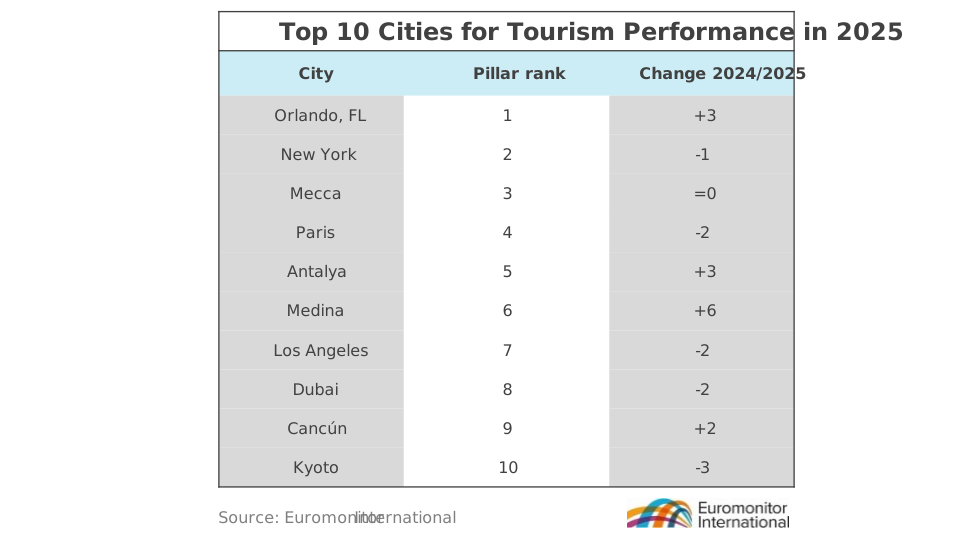
By fostering AI innovation, advancing smart city initiatives and start-up incubators, implementing digital government solutions and enabling AI-driven governance, leading cities are transforming tourism management and asserting themselves as global pioneers.
Major destinations, including Abu Dhabi and Dubai, Singapore, Beijing and Paris, are making significant investments and bold strides in AI to reshape their urban strategies. As cities accelerate AI adoption, establishing globally aligned regulatory frameworks is essential to protect citizens and visitors, uphold privacy, prevent bias and ensure responsible, sustainable urban innovation.
Read our report for more analysis on the performance of city destinations.