Travel What are the key consumer and industry trends shaping travel and tourism? Understand the best-in-class innovations in technology, customer experience and sustainability to help you thrive in dynamic times.
Travel is at a turning point, with personalisation, sustainability and technology redefining the journey.
Experiences, authenticity and value now define traveller choices, while technology, including AI, shapes trip planning and booking. Euromonitor identifies the leading trends influencing the travel industry, offering a closer look at what is driving change.
1.Shifting corridors drive market diversification
Tourism flows are being reshaped by policy reforms, expanding air connectivity and the rise of new outbound markets. India is projected to rank among the top five outbound markets globally by 2030, highlighting the need for diversified source markets. Saudi Arabia, for example, is reducing its reliance on traditional source markets and is unlocking year-round demand. This diversification rewards destinations and businesses that invest in agile product development, regional partnerships and digital agility. Adapting to diversified demand streams will build resilience, protect against volatility and open new consumer segments.
2. Passion and purpose drive new demand
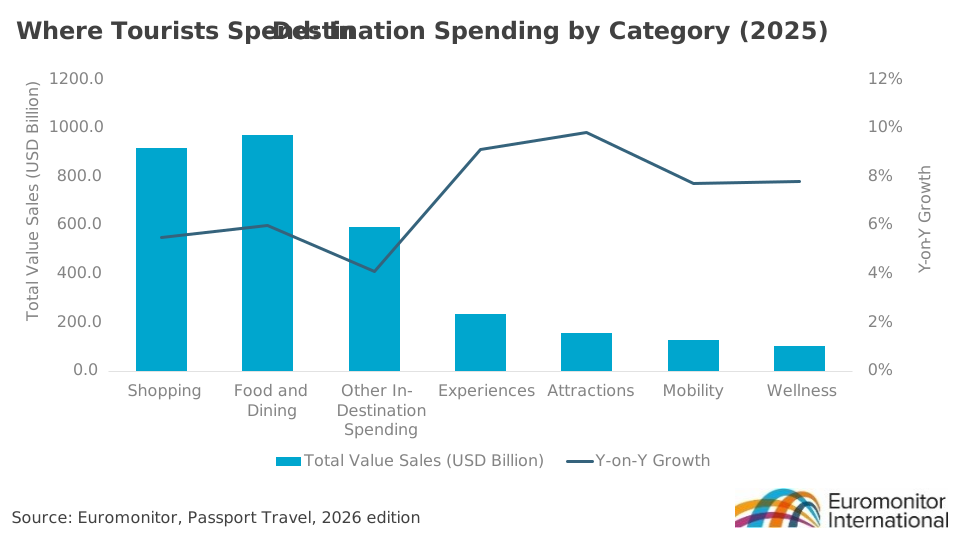
A defining shift in global travel is the rise of purpose-driven and passion-led journeys. Travellers are no longer choosing trips solely for leisure; they are seeking experiences that align with their identities, interests and values. Euromonitor’s Voice of the Consumer: Travel Survey highlights this broadening of motivations, with travellers blending wellbeing, discovery and creativity within a single trip. This is reshaping demand well beyond traditional holiday packages. In-destination spending patterns reinforce this behavioural shift: attractions and experiences are among the fastest growing categories globally, signalling a move towards emotional fulfilment rather than purely transactional travel.
Destinations are responding by investing in cultural storytelling and immersive itineraries, from K-culture trails to regenerative wellness programmes. The opportunity lies in designing experiences that speak directly to travellers’ passions and foster deeper emotional connection.
3. Smart travel: AI, automation and the digital journey
Artificial intelligence and automation are rapidly transforming the travel journey, making experiences more predictive, seamless and personalised across planning, booking and in-destination touchpoints. Nearly 60% of travel and service operators surveyed expect generative AI to impact their operations within the next 12 months, driving a shift where personalisation and efficiency are now standard consumer expectations. Global players, such as Booking.com, are scaling predictive personalisation, while India’s ixigo is using AI to power multimodal, affordable mobility. This signals a broader industry transition: biometrics, mobile ecosystems and super-app platforms are converging to create unified digital pathways that minimise friction and maximise convenience. As these technologies mature, travel brands will need to invest in digital capabilities to stay relevant and meet rising expectations.
4. Two-speed era: Premiumisation and value segmentation
The global recovery in travel has widened the divergence between premium and value-driven travel segments, forcing operators to redesign their offerings for resilience. Premium travel thrives on exclusivity, wellness and immersive experiences, while rising cost pressures drive demand for affordable, tech-enabled convenience. Flexible financing solutions and dynamic pricing models, like South Africa’s Payflex (launched in 2024), offer travellers more control over spending, supporting financial inclusion. Marriott International’s dual portfolio strategy, blending luxury and midscale brands, exemplifies adaptation to both segments. For travel companies, success now lies in tiered product design, embedded payment solutions and loyalty ecosystems that feel personalised to different spending powers, enabling aspiration and accessibility to grow in parallel.
5. Regenerative growth by balancing people and planet
Sustainability is now a baseline expectation, and regenerative models that have a positive impact on ecosystems and communities are becoming a core differentiator. Travellers show increasing willingness to pay for experiences with demonstrable benefits – 24% are willing to pay more for volunteer opportunities, 15% for eco-tourism, and 12% for local cultural immersion (Source: Euromonitor Voice of the Consumer: Travel Survey). Switzerland’s “Swisstainable” programme (launched in 2023) and Indonesia’s Beyond Bali initiative (expanded in 2024) reflect this shift in mindset by integrating sustainability certification and community-driven tourism. Regulatory pressure will only intensify, and companies must now embed carbon reduction, inclusion and transparent reporting into their core strategies to attract conscious travellers and secure investment, positioning regeneration as the new growth benchmark.
Shaping the future of tourism
Tourism businesses must adapt to rising consumer expectations for authenticity, wellbeing and environmental responsibility. Success depends on blending operational efficiency with emotional engagement through digital personalisation, diverse value and regenerative practices. Volatile travel flows will favour those advancing digital integration, fostering local partnerships and offering inclusive, future-proof experiences. Value creation now extends to trust, social impact and long-term destination equity. Prioritising sustainability, embracing technology and encouraging cross-border collaboration will position brands to capture high-quality demand and support sustainable growth.
For more detailed analysis and strategic recommendations, please see our full report, Top Five Trends in Travel.
This content was written with the assistance of AI. All information is original to Euromonitor and is derived from our report, “Top Five Trends in Travel”. The final article has been thoroughly reviewed by our team to maintain the highest standards of quality and integrity.
The US/Israel-Iran war has delivered the steepest shock to global travel since the pandemic. Airspace closures, surging oil prices and shifting consumer…
The 2026 Iran conflict marks the fourth major economic disruption to global consumer markets in under two decades. While each crisis originated differently,…