
At the 2025 World Travel Market (WTM) conference, held in London during 4-6 November, talk about artificial intelligence (AI) and its many applications for travel was inescapable, as was the excitement around its potential. AI has been around for years, but this year was different for two reasons. First, AI tools like ChatGPT are firmly established and are being used, without cost, by everyday consumers for everyday things.
51% of consumers claimed to use AI for trip planning
Source: Euromonitor’s Voice of the Consumer: Travel Survey, fielded January to February 2025
Second, many of the world’s largest OTAs are now rolling out new AI features that empower their digital offerings in different ways, and many of these features made a big splash at WTM. Widespread adoption by the biggest companies will have a trickle-down effect across the world’s tour operators and travel businesses, just as consumer expectations for AI features increase.
The impact will be huge. Travel spending is expected to grow by USD1.4 trillion over the coming five years, the growth in large part driven by the unlocked potential that AI creates.
AI-empowered search
As OTAs begin to roll out more advanced search features that are empowered by AI, they will attract more travellers who are using everyday AI applications to their platforms. Consumers will have an incentive to do this because rather than scraping and analysing all possible information – reliable or otherwise – from the internet, OTAs provide a safer, more secure and more relevant ecosystem of data to provide more effective, personalised recommendations.
This democratises choice because better-fit experiences, transport options, and price levels rise to the surface through more personalised filters and recommendations for the user. Properties become more relevant: “Show me dog-friendly short-term rentals within walking distance of a park”, and AI even allows for room preferences: “Show me options for adjoining rooms away from the elevator that have a view of the mountains”.
Agentic AI and organic sale opportunities
AI features are largely present behind the scenes to empower search, but a potentially more significant shift is happening, towards AI-first options (or agentic AI) that engage travellers in the discovery phase through chat features. OTAs then become not just booking platforms, but total trip planning solutions.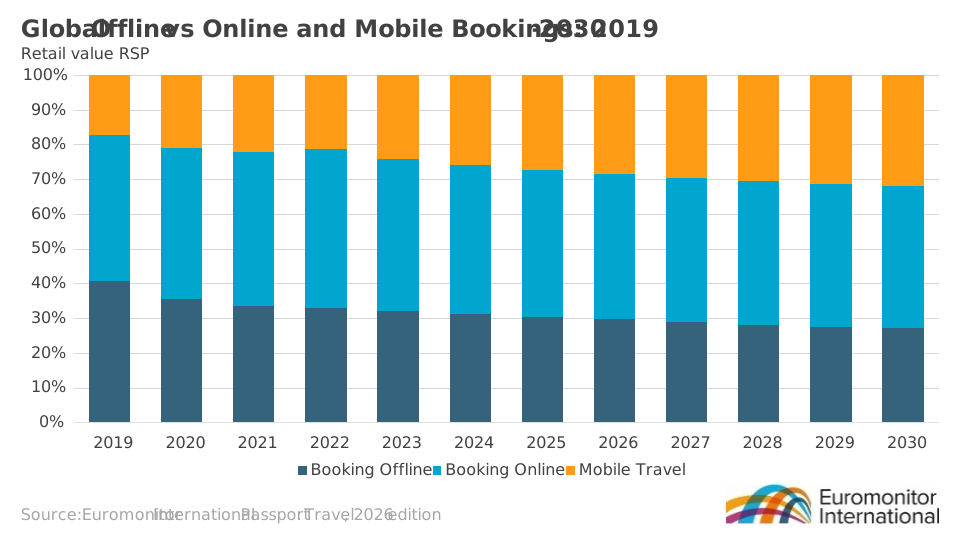
It is not about being more online
Importantly, despite there being more tech at the heart of this process, consumers are not necessarily looking to be more connected during a trip. If anything, smarter planning and more dynamic services allow travellers to disconnect and engage a destination more meaningfully.
In addition to attending WTM as a visitor, I had the pleasure of moderating a panel, called “The Shifting All-Inclusive Mindset”, where, alongside hotel professionals and destination representatives, we had the opportunity to discuss how resorts are increasingly popular with a wider set of often younger-generation travellers. Seamless and frictionless are key to this demographic and to making the most of a resort holiday.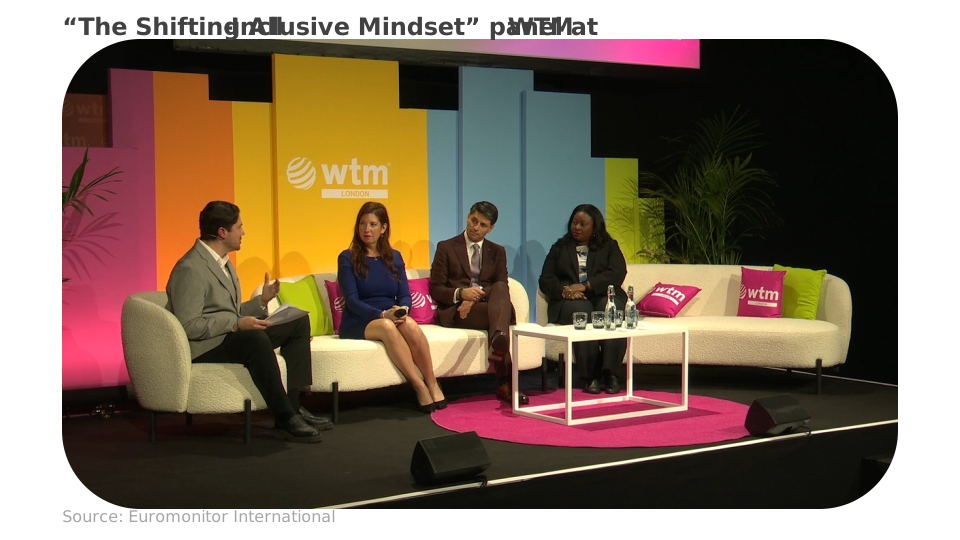
A turning point
OTAs will be seen as first movers in AI adoption, but AI may empower individual travel operators and encourage direct bookings to make space for new brand-driven platforms with their own universe of options.
Beyond consumer-facing applications, AI is generating operational efficiencies and even being used to tackle huge challenges like overtourism and sustainability. If the rise of the internet and shift towards mobile were turning points in travel, AI is the next big shift and there is no turning back.
Learn more about the impact of AI in travel in our latest article, Top Five Trends Shaping Travel into 2026.