
Despite lagging behind European adoption rates, heat pumps in the US have outsold traditional gas furnaces annually since 2021, according to RMI (formerly Rocky Mountain Institute). Since 2015, the Energy Information Administration has reported higher residential HVAC activity each year. With cooling rates increasing due to higher average global temperatures, heat pumps have two points in their favour.
Primarily, heating and air conditioning usage is increasing by necessity, not choice. Second, heat pumps are gaining market share by having a more energy-efficient, consistent, and overall better use-case in warmer climates. The idea that heat pumps rely on a sustainability-conscious marketing gimmick loses effectiveness as temperatures become extreme and sales grow.
Despite the US pulling out of the United Nations Framework Convention on Climate Change on 7 January 2026 and repealing parts of the Inflation Reduction Act (eliminating the 25C tax credit for heat pumps), heat pumps continue to see opportunity driven by advantages in energy efficiency and dual-purpose heating and cooling as the energy mix tilts towards electrification.
Ignoring the Nordic example, government tries and fails to stunt heat pump growth
Local government and private partnerships continue working to scale heat pump technology across the US, notwithstanding federal rollbacks. For example, Denver Colorado’s metro area has preserved the USD5 billion Climate Pollution Reduction Grants programme that President Trump has been trying to claw back. By disbursing funds through the Power Ahead Colorado programme, which subsidises energy-efficient retrofits to low-income housing, Colorado cracks a market which has historically been unable to afford heat pumps entirely. When a typical AC or furnace lifespan sometimes breaches two decades or more, most homeowners will not purchase more than 2-3 HVAC appliances in their lifespan. The subsidies are not just important for consumers; any heat pump installer will see an opportunity to penetrate a market that could otherwise not usually consider a heat pump.
In the private sector, ground-source heat pump start-up Dandelion and home builder Lennar mitigate costs by treating ground-source heat pumps as infrastructure. By placing underground piping beneath the home ahead of time, Dandelion avoids the cost and logistical problems that arise from needing to dig below a fully constructed home and foundation, while helping to manage (or avoiding) future gas interconnection costs and adding grid resiliency through lower load-peaking electrical draw. New homes are also scarce, while this is an appealing upgrade that adds a premium for builders targeting that market.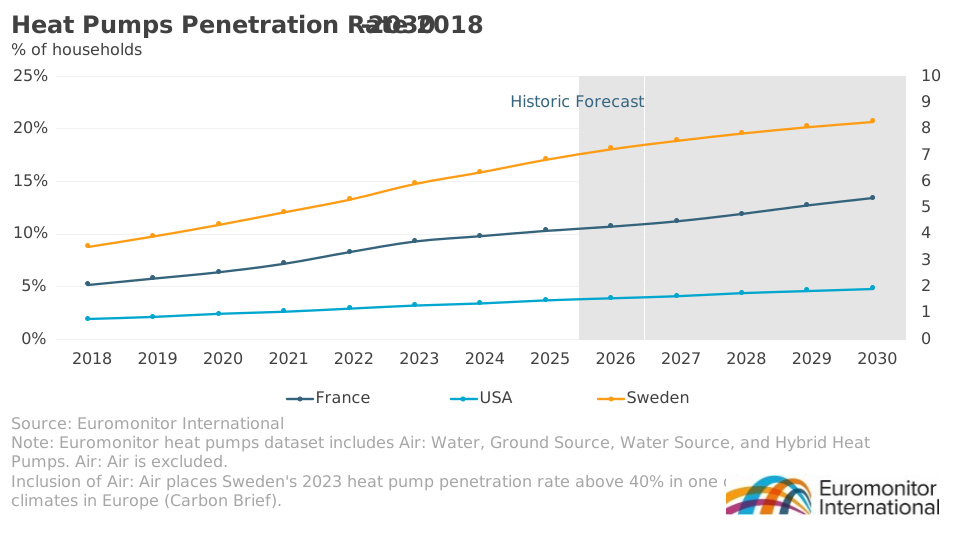
Culturally, US consumers perceive that heat pumps cannot meet winter demand, particularly in the north of the country where winters are bitter. Even President Trump stated “gas heater the heat is much better” prior to the subsidy rollback. In contrast, Nordic countries with the coldest temperatures in Europe have the highest global penetration rate of heat pumps, with Norway reportedly nearing 65%. Heating capability is not a technological but a consumer education concern that installers should look to address.
To the innovators: The environmental case for going against the governmental grain
Despite the substantial yearly growth rate increase, the number of heat pumps sold in the US lags far behind Europe and even China
Source: Euromonitor International
Although late to heat pump adoption, China quickly boosted industrial capability and has become the leading heat pump manufacturer, according to the International Energy Agency (IEA). Conversely, US Secretary of Energy, Chris Wright, threatened to leave the IEA over “green” energy transition messaging, citing energy security concerns while spearheading a block on diversified energy resources.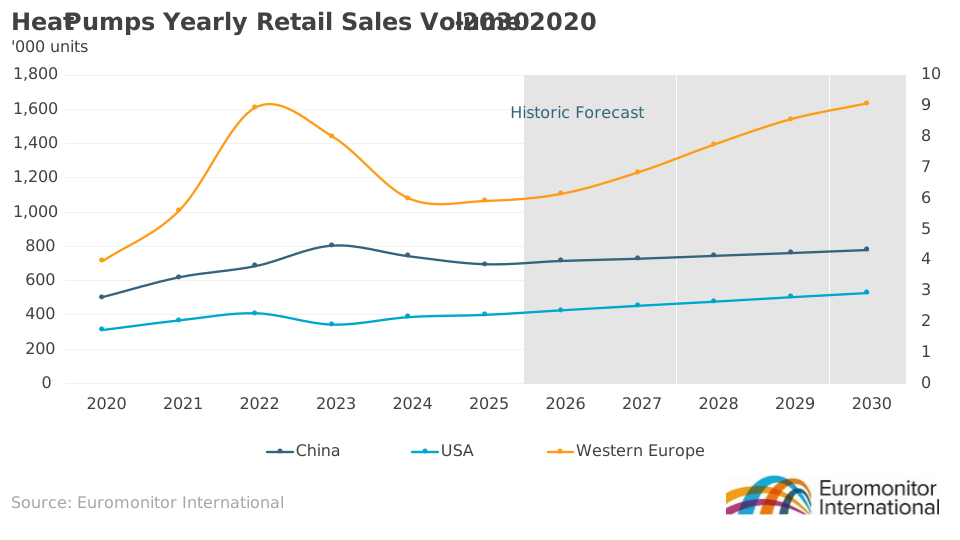
The messaging is clear: policy will not aid heat pumps during this administration beyond what is insulated from federal rollbacks. It is also clear that consumers, not just in the US, are receptive to more efficient energy usage and long-term cost savings; an environmentally conscious warm feeling on top does not harm the use-case. The market is available. Jetson Home, for example, is pioneering a vertically integrated, heating-as-a-service payment model to financially engineer a bridge that policy would have otherwise built. Having identified a clear value-orientated opportunity, it claims a 50% reduction in cost for the consumer, compared to traditional installers, coming on the heels of the federal government repealing their heat pump subsidy. In any case, a dominant player is yet to emerge in the US space with plenty of market share to fight for – if comparisons to more mature geographies are any indication.
Earth’s heating up! There is no planet B! Find out more about the heat pumps landscape in this industry’s addition to our Passport coverage. Request a demo.