

Gen Alpha is emerging as one of Asia Pacific’s most influential cohorts. Families with children are predicted to generate USD9 trillion in household expenditure by 2025; and by 2040, the region will be home to an estimated 965 million Gen Alpha consumers, contributing USD3 trillion in spending.
Parents are having fewer children, but are investing more time, attention and money in them.
In Asia Pacific, retail sales of children’s product categories are set to reach USD142.7 billion by 2029, making up more than a third of global sales
Source Euromonitor International
Businesses that understand this generation’s context and motivations will be positioned to build long‑term advantage.
Gen Alpha’s worldview is shaped by their “village”
Gen Alpha, as children in 2026, are highly influenced by various stakeholders, both at home and out of the home, meaning that brands need to reinforce their presence in both environments. In addition, Gen Alpha’s characteristics and behaviour are strongly influenced by national infrastructure, industry ecosystems and typical lifestyles during their childhoods. This highlights the complexity of entering Gen Alpha’s spaces.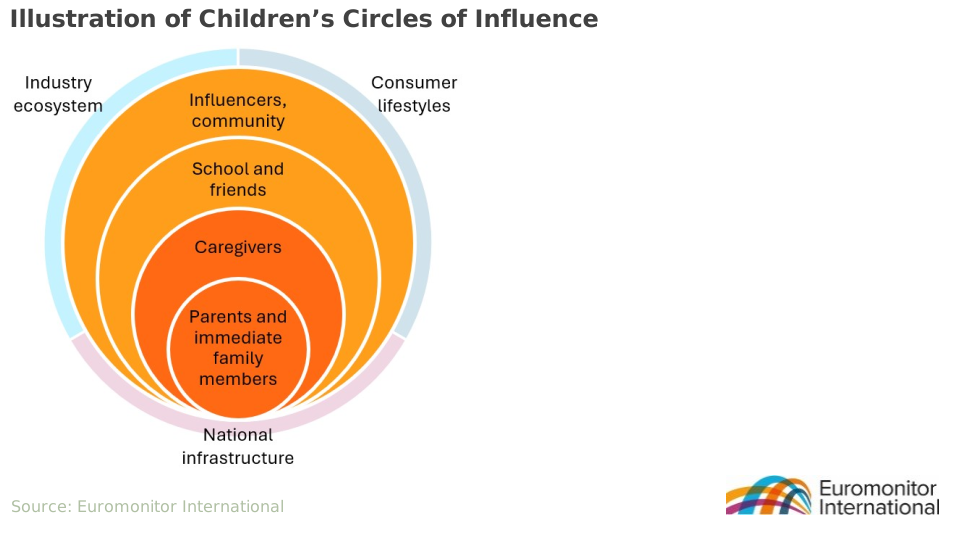
Millennial parents, deeply embedded in digital culture, set the tone for Alphas’ behaviour. Growing up during COVID-19, Gen Alpha experienced major shifts in routines, rapid digital adoption and the normalisation of remote services. Witnessing uncertainty may heighten their sensitivity to issues of resilience, value and wellbeing.
Digital immersion is another defining force. Gen Alpha has never lived without smart devices. Their comfort with AI, through recommendations, voice assistants and conversational interfaces, makes them highly receptive to algorithm-driven experiences. Influencers and online creators increasingly shape their preferences. Their early digital literacy lowers tolerance for friction, building expectations for seamless, instant and hyper-personalised engagement. In fact, Gen Alpha being digital natives is one of their defining characteristics – sometimes dubbed the “iPad Generation”. Smart devices and AI are expected to supercharge expectations around convenience for Gen Alpha families, while social media shapes their behaviour and preferences.
Culturally, they are growing up in a more multipolar world. Issues of representation, identity and self-expression, amplified by Gen Z, continue to shape their environment. At the same time, Asia’s rising cultural influence broadens Gen Alpha’s references and deepens their exposure to global diversity.
Together, these experiences influence their desire for health, convenience and rapid gratification.
Hyper-segmented wellness solutions are critical to a child’s growing up years
Euromonitor International’s Voice of the Consumer: Health and Nutrition survey, fielded in February 2025, shows that while 75% of parents consider the diets of children aged under two years healthy, this falls to 71% for children aged over 10 years, pushing families to seek effective wellness solutions. Products that help build strong routines through nutrition, supplementation or digital health tools could thus gain long-term importance.
Supplement use reflects this trend. Across Asia, 40% of parents give supplements to their children at least once a month, above the global average of 35% (Euromonitor International’s Voice of the Consumer: Health and Nutrition survey, fielded February 2025). Millennial and Gen Z parents’ own supplement habits create a natural progression for Gen Alpha. Interest is expanding across digestive, eye and skin health.
As Gen Alpha enters puberty and develops independent identities, communication must evolve. Clear, age‑appropriate education on wellness will build credibility. Brands that offer practical guidance and safe, appealing products will become partners in habit formation, rather than mere suppliers.
What is the next move for brands?
Growth prospects are strongest in developing Southeast Asian markets, such as the Philippines and Indonesia, as well as India, with strong growth predicted across children’s categories from paediatric health to food. China and Japan show a more uneven pattern, with with strongest demand for price-driven categories like children’s apparel and footwear, alongside declining demand for baby food (comprising milk formula and toddler-targeted food).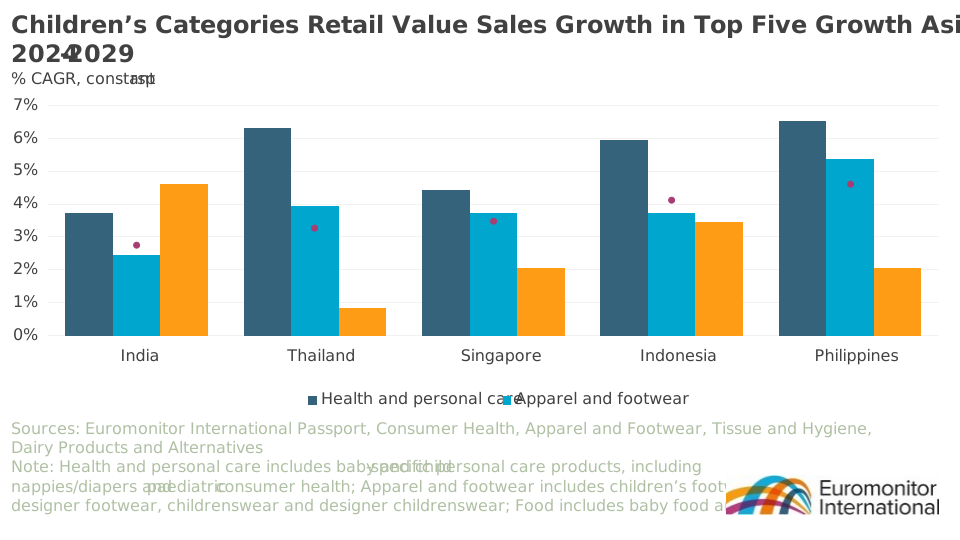
As innovation accelerates, solutions must protect children’s wellbeing. Adaptive AI, robust safety frameworks and privacy‑by‑design models will be essential. Blending human guidance with digital autonomy will enable Gen Alpha to thrive, while ensuring responsible use.
Read our report Decoding Gen Alpha as Asia’s Next Growth Engine for more analysis on the defining characteristics of Gen Alpha, and how their behaviour, values and preferences are set to reshape industries and services of tomorrow, or download the white paper.