
Digital commerce is undergoing a seismic shift as generative AI-powered search and emerging “agentic” commerce become new gateways between consumers and brands.
Unlike earlier evolutions in e-commerce such as social commerce, livestreaming or immersive technologies, AI-powered search is fundamentally rewiring how consumers discover brands, evaluate choices and make purchasing decisions online. The interaction has changed from typing keywords and scrolling through listed products to a conversational platform asking questions in natural language and expecting a precise, context-aware answer.
The disrupted funnel: Compressed shopper journeys, fewer touchpoints
Over half of consumers use GenAI tools such as ChatGPT, Google Gemini and Perplexity for information and recommendations, per Euromonitor’s Voice of the Consumer: Lifestyles Survey, fielded January-February 2025. This shift is making AI chat platforms a mainstream part of discovery and shopping journeys. During 2025, referral traffic from AI platforms to e-commerce sites accelerated sharply. Between Jan-Sep, 2025, AI-driven referrals grew by 109%, while all other referral sources increased by only 7%.
AI-driven referral traffic currently represents a small share of overall traffic, but the growth curve and emerging “searchless” model position GenAI platforms as a critical entry point into digital commerce – prompting questions for future brand strategies.
Fundamentally, this shift means that shoppers are turning to chat assistants like ChatGPT, Google’s AI Search and other generative platforms for product discovery, comparison and advice before they reach a retailer or brand site – compressing the traditional purchase funnel.
Traditionally, shoppers moved through multiple, observable stages: search, browse category pages, read reviews, compare alternatives, then finally add to basket. In an AI-mediated journey, much of this is collapsed into a single interaction.
AI-powered search is expected to influence more than USD595 billion in retail e-commerce by 2028
Source: Euromonitor International
It is unsurprising that retailers such as Target are already integrating their apps within ChatGPT.
The new visibility arena and the emerging AI advantage
This shift also rewrites the rules of visibility – from share of views to share of conversations. For consumer brands, AI-driven discovery is redefining how influence, trust and competitiveness are built online.
In traditional search, strong brands could rely on SEO, paid search and retail media to secure prominent placement. When it comes to AI-generated answers, however, there is no guaranteed slot even for the market leaders. A well-known brand can be entirely absent from recommendations.
Early analysis of US skin care illustrates the magnitude of this change.
Across 8,700+ brands selling online, only up to 30% have any visibility on GenAI platforms. The subset actually referred on to e-commerce sites is even smaller, at 10-15% of all brands
Source: Euromonitor International
Up to half of existing skin care brands are at risk of gradual loss in relevance, as meaningful consumer attention shifts to AI-driven discovery.
Simultaneously, AI is opening space for new winners. While the tools for success are still being defined, initial evidence suggests that AI visibility doesn’t simply mirror market share. Many brands will discover that their presence in AI results lags far behind their SEO and e-commerce footprint, while others gain an AI advantage through focused effort or, even, without significant retail media spend.
To quantify this, the AI Advantage Score compares each brand’s share of AI referral traffic with its share of skin care e-commerce sales.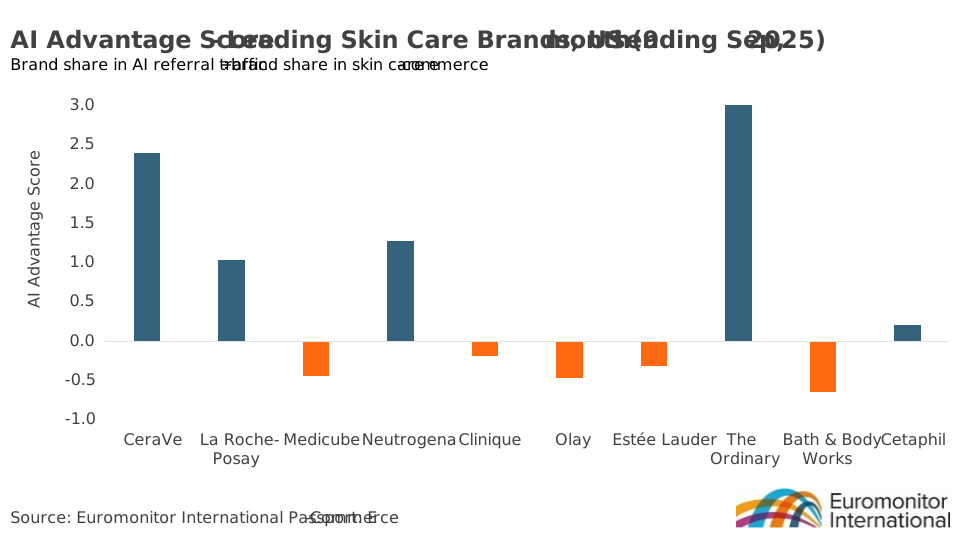
In contrast, Olay, Bath & Body Works, Medicube, Estée Lauder and Clinique are underrepresented in AI recommendations, signalling that their current equity and scale on the digital shelf are not yet translating into AI visibility.
Why brands must act now
The AI revolution has the potential to upend market positions and reshape brand perceptions. For brands already enjoying an AI visibility advantage, this is an opportunity to convert that edge into higher conversion and stronger trust. For those not, it is a signal to rethink what visibility and shopper trust mean when AI increasingly mediates decisions.
Read Next-Gen Online Storefront: A Shopping Journey for One, for further analysis.