
While loyalty programmes continue to be a key driver of customer retention, gaps in engagement and reward redemption often hinder their impact. To address this, brands are leveraging gamification to drive sustained participation, strengthen emotional connections and convert memberships into dynamic, interactive ecosystems that keep shoppers returning through meaningful experiences.
From silent to engaged: Reigniting inactive members
Inactive customers are often the hardest to win back, and when there is little or no contact over time, there is a high risk they will stop engaging altogether. In many cases, engagement is defined by such parameters as frequency of visits, duration of each session, referral activity, user feedback, or product or brand knowledge. User activation serves as a vital sign of a business’s success, with higher activation levels often leading to increased customer lifetime value. The challenge lies in determining the exact point at which a user becomes fully engaged. Loyalty programmes often gauge success by tracking users who have interacted with their app within the past 60-90 days, labelling them as “active members”.
Results from Euromonitor’s Voice of the Consumer: Loyalty Survey 2025 highlight that 27% of Gen Z and 25% of millennials report loyalty programmes as “not fun”, underscoring that younger generations view entertainment as essential to value, making gamification not just an enhancement but a requirement for future-proofing loyalty. This dissatisfaction signals a clear market opportunity to reinvent loyalty programmes through gamified experiences and mobile-first design. Moving beyond transactional models towards more experiential ones will, in turn, enable brands to cultivate deeper emotional loyalty.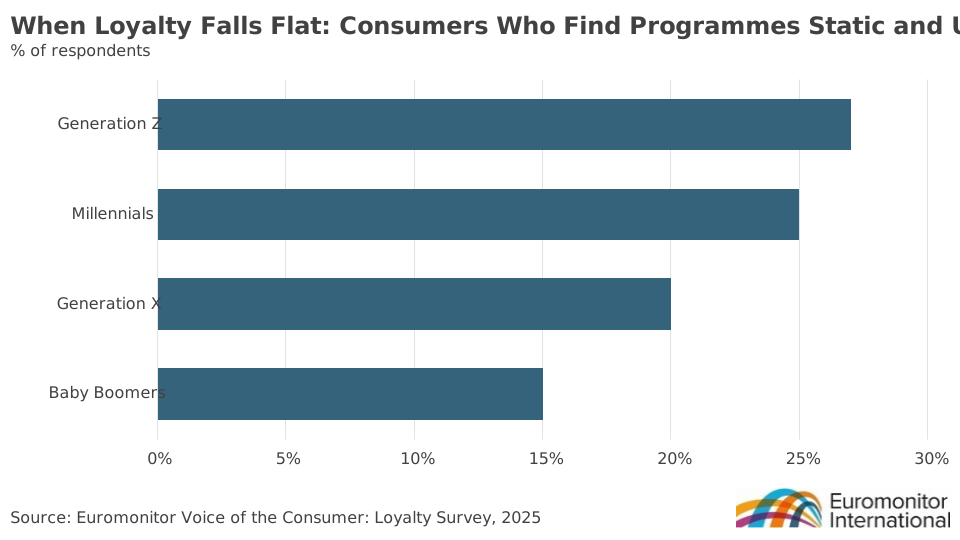
The consumer perspective on game-like experiences
Customer sentiment data from Pulsar (July-August 2025) across key loyalty markets globally – spanning X, Reddit, blogs and forums – show that conversations from gamified loyalty offers totalled 3,000, yet their impact far outweighed their volume. Social impressions soared to 71 million based on data from Pulsar, indicating that fewer but more influential discussions are driving the narrative and amplifying the appeal of gamified loyalty programmes to a significantly broader audience. Importantly, the overwhelming share of voice sentiment was positive, reinforcing the strong consumer reception of gamified mechanics as part of loyalty programmes. With 89.2% of customer interactions happening online, gamified loyalty programmes must adopt a digital-first strategy – embedding rewards, badges and challenges into web, app and social platforms where engagement is already highest. The smaller 10.8% in-store share offers a chance to extend the game into the physical world, using check-ins or QR code scans to unlock exclusive digital rewards, linking offline moments back to the core online gamified experience.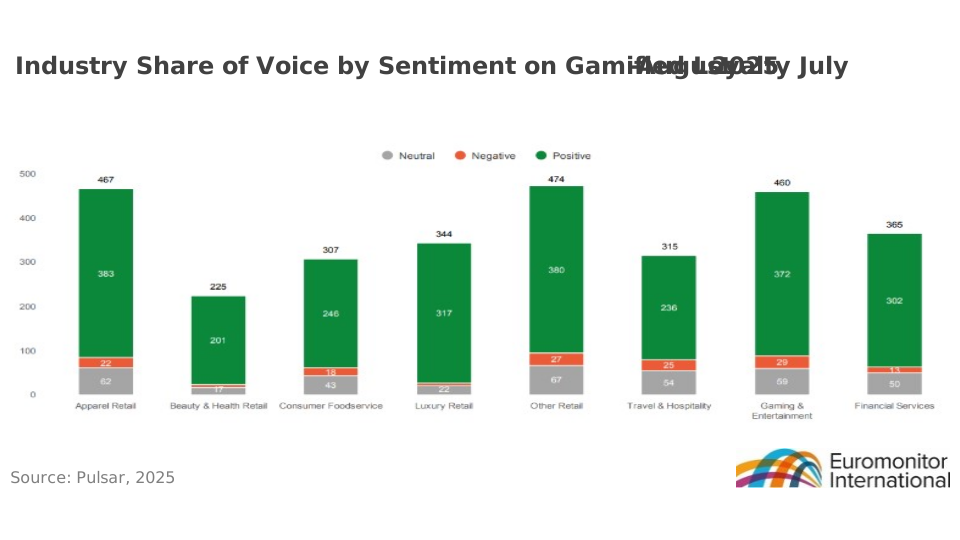
- On 7 May 2025, Marriott Bonvoy launched (until 26 May 2025) “Travel Roulette”, a digital gamified experience allowing members to spin a wheel for a chance to win travel-related prizes. Rewards included instant Marriott Bonvoy points, hotel stays and a prize of one million points plus a 4-night stay at the new Canal House of Georgetown, Washington, DC. The campaign was inspired by the viral "vacation roulette" trend on social media, reflecting a growing desire for spontaneous travel experiences. It also celebrated Marriott reaching one million hotel rooms across the US. During the campaign period, app downloads rose by 6.5% and daily active users increased by 2.3%, according to Apptopia.
- In April 2025, e.l.f. Beauty loyalty programme launched “Fortune Island: Earn. Learn. Flex” on Roblox, a financial literacy game developed in partnership with fintech company Chime and game studio Karta, aimed at educating Gen Z players on money management through interactive gameplay. E.l.f. has a strong Roblox presence with “e.l.f. UP!”, with over 22 million visits and a 96% approval rating as of April 2025, according to the company. The new game teaches Gen Z budgeting, saving and investing through milestone-based activities to tackle financial insecurity.
What next?
The next generation of gamified loyalty lies in real-time engines that deliver micro-gamified rewards across both physical and digital touchpoints, ensuring customers feel recognised at every interaction. Digitalised surprise and delight moments will enhance emotional resonance and brand stickiness.
As the work with AI demands ongoing refinement and validation and the protection of sensitive customer data becomes paramount, the adoption of GenAI testing platforms that can help improve customer journeys through gamified experiences is set to increase.
For more information on the state of gamified loyalty, see the report, Loyalty Reloaded: Gamify or Get Left Behind.