
As companies increasingly focus on loyalty programmes to differentiate through AI-driven personalisation and tailored offers, complacency is not an option. Before focusing on purchasing behaviour or retention, brands must convert interested consumers into active users who show meaningful digital engagement. Monitoring their own metrics is essential, but so is tracking competitors to stay relevant and benchmark effectively. This piece uses Euromonitor’s Engagement Index to identify which companies led and which lost ground in engagement in Q3 2025.
Apparel brands show wide engagement swings in Q3
While companies prioritise Q4 holiday sales to lift annual performance and recover promotional costs, Q3 serves as an early indicator of how well they sustain consumer attention and engagement. Tracking engagement trends from Q2 to Q3 shows which brands are best positioned for the holiday season. Among the 100 companies in Euromonitor’s Engagement Index, we highlight the five largest increases and decreases in scores for July to September versus the previous three months.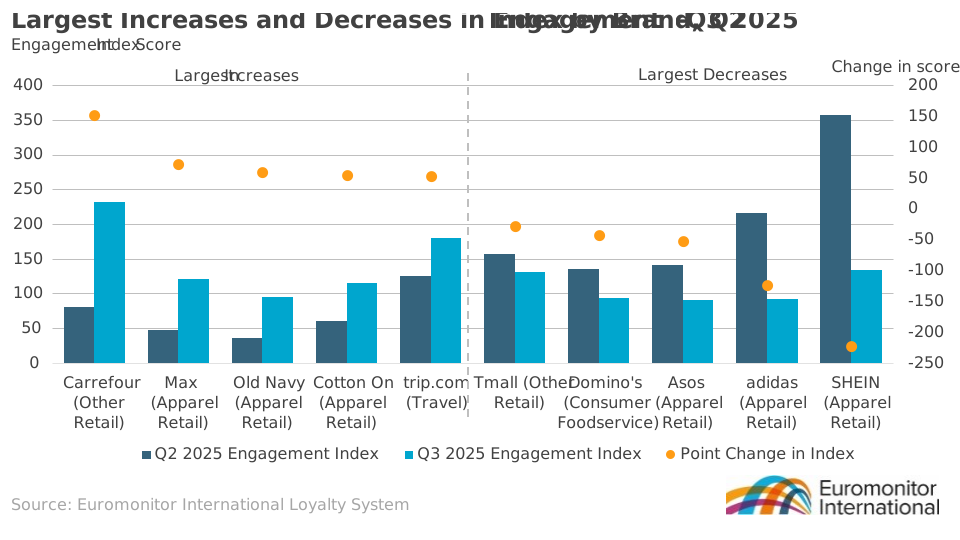
While apparel brands accounted for three of the five biggest increases in engagement, they also featured among the sharpest declines in Q3 compared with other industries. The category is especially exposed to a volatile macro environment, where shifts in discretionary spending and movement between digital and physical channels quickly reshape traffic and engagement. In SHEIN’s case, part of the decline likely reflects an exceptionally high Q2 baseline that was hard to sustain, along with heightened US scrutiny of de minimis imports and tariff policy debates that pressured its model. For adidas, despite solid Q3 financial results, the decline underlines how even strong brands can struggle to sustain consumer interest and digital engagement between major campaigns.
Carrefour’s engagement performance driven by average view duration (AVD)
Back to Q3’s star performer, Carrefour’s improvement was driven by increased users and longer viewing online, supported by more frequent and deeper use of the MyCarrefour app. In January 2025, Carrefour launched Le Club Carrefour across France, and by Q3 it was active across the full network, including former Cora stores. Le Club Carrefour is accessed through its app and integrated into the checkout journey, so members earn rewards on purchases, view their balance instantaneously, and access personalised offers within a single experience. This set-up gives shoppers clear reasons to engage and stay within the ecosystem which helped boost its engagement score in Q3.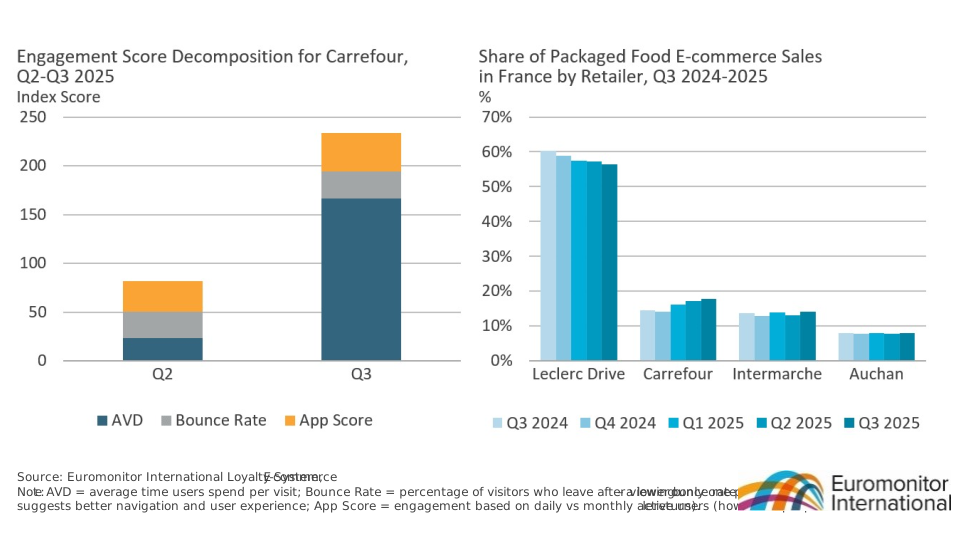
To learn more about creating effective loyalty programmes, explore our comprehensive Loyalty content hub on our website. Dive deeper into the latest trends and strategies by downloading our report, New Concepts in Loyalty, and discover how to drive customer retention and revenue growth through innovative loyalty solutions.