
Assortment is one of retail’s most important growth levers, but only when tracked alongside performance. More SKUs alone do not guarantee stronger sales, better margins or higher conversion. E-commerce has long enabled broad product choice, but retailers are increasingly balancing this against the need for more focused assortments in line with profitability and consumer price sensitivity. Winning retailers are those offering the right products at the right price points. As a result, assortment performance is a critical metric in assessing who is gaining ground online.
E-commerce growth shifting from SKU expansion to assortment focus
Looking at the dynamic US e-commerce market, sauces, dips and condiments provides a useful case study for how retailers are evolving assortment strategies. The category recorded strong performance in Q1 2026, growing by 20% year on year, and is emerging as the fastest-growing major category within cooking ingredients and meals.
As previously explored, the category is also attracting strategic attention, with McCormick’s proposed acquisition of Unilever assets highlighting the importance of scale and positioning within sauces and condiments. However, beyond supplier activity, the category offers a clear lens into how retailers are rethinking their online assortments and what that means for performance.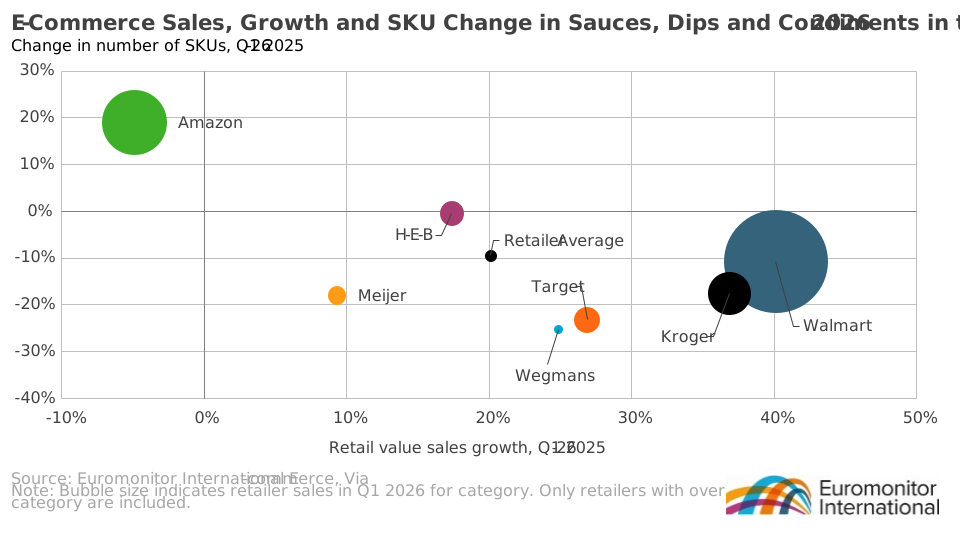
Using Euromonitor’s Passport E-commerce and Via SKU tracking data, retailer-level dynamics begin to emerge. As shown in the chart, the majority of the retailers delivered strong category sales growth despite reducing their SKU counts over the same period. This is particularly evident among larger players, where growth has been achieved alongside more focused assortments, suggesting a shift towards prioritising higher-performing SKUs rather than expanding range.
In contrast, Amazon stands out as a clear exception, increasing its SKU count while experiencing weaker sales performance during the period. This divergence may partly reflect structural differences in operating models. Unlike traditional retailers, Amazon’s marketplace includes a significant third party component, which can support broader SKU expansion, particularly across long-tail listings. This can increase overall assortment without necessarily translating into proportional gains in sales.
Assortment changes reflect greater focus on affordability
There are multiple ways to assess how assortments are evolving, including category mix, brand composition and product format. However, given the current importance of affordability, price positioning offers a particularly useful lens.
Shifts in price positioning highlight how retailers are responding to evolving consumer priorities. While pricing thresholds vary, the USD5 mark provides a useful reference point within this highly competitive category, where consumers frequently switch between brands in search of value. Tracking the share of SKUs above this threshold offers a directional view of how retailers are balancing affordability within their online portfolios.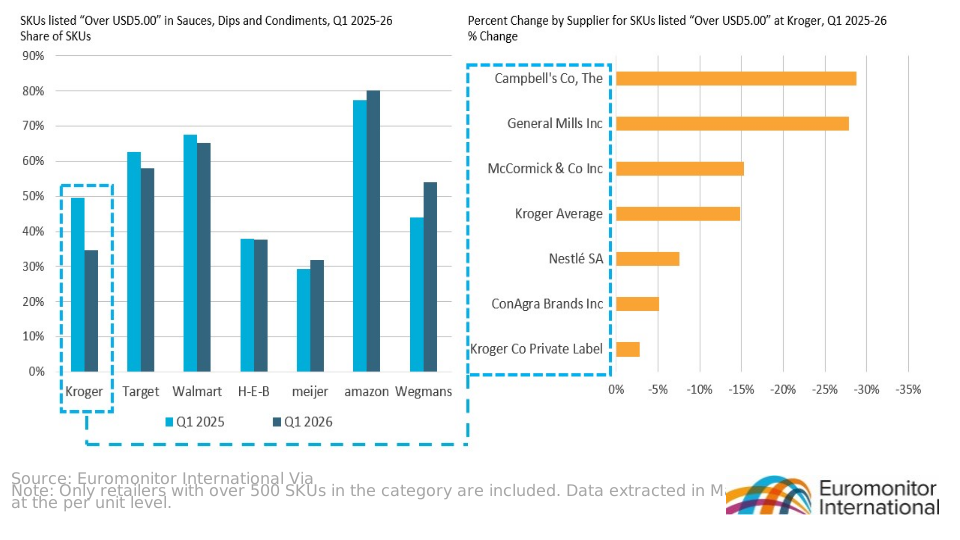
As shown in the data, several major retailers, including Walmart, Target and Kroger, reduced the share of SKUs priced above USD5 between Q1 2025 and Q1 2026. This suggests a shift in assortment mix towards more affordable price points, even as overall category sales continue to grow.
Managing visible price thresholds appears to play an important role in how assortments are presented, highlighting that “sticker shock” remains a consideration in e-commerce environments.
Source: Euromonitor International
This shift is particularly pronounced at Kroger, where the reduction in higher-priced SKUs is more significant than the category average. A closer look into Kroger’s online SKU portfolio shows that this change is largely driven by branded suppliers, with Campbell’s and General Mills leading the decline, while McCormick has also reduced its exposure to higher-priced SKUs, albeit to a lesser extent. In contrast, private label remains relatively stable, indicating a different role within the overall price architecture.
Taken together, these dynamics suggest that retailers are actively managing assortment structure to align with current consumer priorities. Evidence from Kroger also indicates that branded suppliers may be contributing to these shifts through changes in their SKU portfolios. While adjustments to headline price points can help reduce perceived cost at the shelf, maintaining consumer loyalty ultimately depends on delivering real value on a per unit basis. In this context, expanding assortment is giving way to more deliberate curation, as retailers recognise that more choice does not necessarily translate into stronger sales when consumers are actively seeking value across channels.
For more help on product assortment, prices and SKU dynamics, please see our Via homepage alongside our e-commerce report, Next-Gen Online Storefront: A Shopping Journey for One, to uncover how to generate sustainable online revenue through stronger engagement tactics.