Feasibility is emerging as a new competitive battleground for FMCG companies. Climate volatility, geopolitical disruption and extreme commodity price swings are turning once‑reliable ingredients into structural risks. Cocoa prices surged 123% in 2024, orange prices rose 44% and coffee climbed by over 50% in 2025 as climate shocks hit key producing regions. These are not isolated commodity spikes but, rather, a new operating reality. According to Euromonitor's Voice of the Industry Survey 2025, over two thirds of respondents expected rising raw material costs to impact their business in the year ahead, and over half cited lack of availability as a major concern.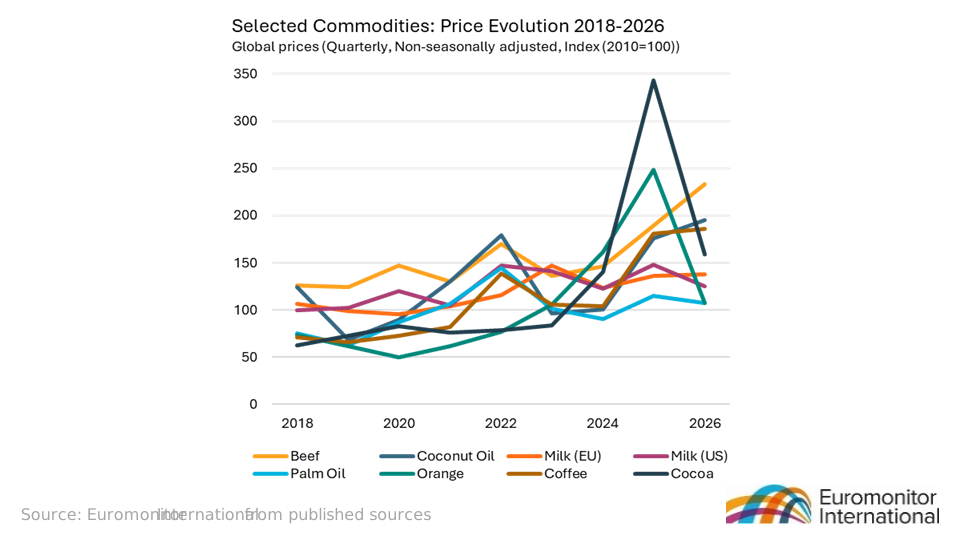
Feasibility is no longer assessed at the end of the innovation process; it is moving upstream, shaping ingredient selection, formulation design and portfolio strategy from the outset. The rules governing product innovation have fundamentally changed. The question brands must now answer has shifted from “Can we make it?” to “Will we still be able to make it, consistently and at scale, 5-10 years from now?”.
Building flexibility into formulations
One of the clearest shifts in FMCG innovation is the move away from rigid recipes. As feasibility constraints intensify, companies are reformulating and reducing the volume of new launches, concentrating investment on fewer innovations with clearer, more resilient value propositions.
Traditional innovation prioritised consistency, with products’ ingredient combinations tightly specified. Today, that rigidity creates risk. Brands are increasingly redesigning formulations so key inputs like oils, fruits, and proteins can be substituted quickly when availability or costs change, without compromising taste or quality. Heineken, for example, has reduced reliance on imported barley in African markets by reformulating with locally available crops like sorghum and maize, lowering exposure to global supply shocks.
Juice illustrates how feasibility pressures are reshaping formulations and launch strategies. As orange and apple shortages make 100% juice models harder to sustain, brands are reformulating around more resilient ingredient bases like berries and vegetables, while layering in functional and health benefits to create new value propositions. In 2025, juice launch activity fell by around a third following high activity in 2024, signalling a shift towards fewer, more selective innovations. That discipline is translating into better outcomes, with first-year digital delistings declining from 16% to 14% in 2025.
The focus is shifting from what a product contains to what it delivers. Feasibility‑driven reformulation is not a downgrade, but a catalyst for more resilient, disciplined and competitive innovation models.
Biotech moves from sustainability play to resilience tool
Some companies are moving to reduce reliance on climate-vulnerable crops entirely using biotech solutions, including precision fermentation and lab-grown ingredients. What was once positioned primarily as a sustainability innovation is becoming a core resilience strategy. Consumer acceptance is still evolving, but resistance to lab-cultured foods is declining, particularly when these alternatives help prevent price spikes or product shortages.
30% of respondents said they would not eat lab-cultured foods
Source: Euromonitor Voice of the Consumer: Lifestyles Survey, fielded January-February 2025
Start-up Planet A Foods’ cocoa-free fermented alternative, ChoViva, demonstrates how biotech can remove exposure to one of the most volatile agricultural commodities entirely. Major retailers and manufacturers are already adopting it to stabilise chocolate portfolios. Unilever is taking a similar approach through investments in biotech ingredients designed to reduce dependence on palm oil and other high‑risk inputs. Biotechnology offers brands something that traditional sourcing cannot: control over product continuity, scalability and long-term feasibility.
Localisation as a strategic resilience lever
Feasibility challenges are also exposing the risks of geographic concentration. Palm oil originates mainly from just three countries and over 60% of cocoa production comes from West Africa. When climate shocks, political instability or trade disruption hit these regions, disruption spreads rapidly across global portfolios.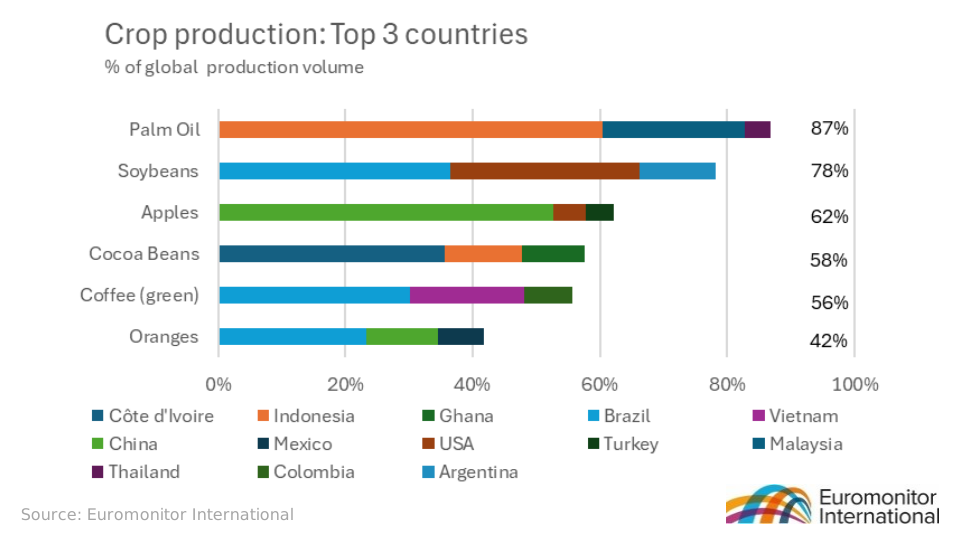
In response, companies are increasingly localising ingredients, formulations and flavour profiles, not just for relevance, but for resilience. Products are being redesigned to align more closely with what can be reliably sourced in each market. This shift requires global portfolios built around adaptable templates rather than rigid, SKU-heavy designs. Brands that can pivot quickly are better positioned to protect margins, maintain retailer confidence and sustain availability during disruption.
From operational concern to competitive advantage
As climate disruption and commodity volatility intensify, feasibility can no longer be treated as an operational check. It is becoming a strategic filter that determines which products get developed and scale, which portfolios endure and which brands remain competitive. Innovation that cannot be sustained is no longer innovation, it is risk.
Climate volatility is reshaping FMCG innovation. Learn why feasibility is moving upstream and how brands are redesigning innovation for long‑term resilience in our full, Competitor Strategies in Innovation briefing.