
Longevity is everywhere in beauty today across product claims, ingredient narratives, and innovation pipelines. But when a theme becomes this pervasive, the more important question is not what is trending, but what is translating into sustained demand. From a market perspective, this distinction matters. Trends create noise while repeat purchase, ingredient scale, and cross-category adoption signal where companies should invest versus where they should wait. By analysing ingredient lists across millions of SKUs, we can identify which ingredients are seeing sustained growth over a longer period and seeing an increase in their adoption by companies across price tiers, which helps companies separate a fad from a real opportunity.
From anti-ageing to skin span and hair longevity
Beneath the longevity noise, a more grounded shift is taking hold. The industry is moving away from “anti-ageing” as reversal, towards functional longevity which focuses on maintaining how skin and hair perform over time.
This shift reflects a deeper understanding of ageing itself. With advances in medical science, ageing is understood because of oxidative stress, cellular senescence, and chronic low-grade inflammation (“inflammaging”). Consumers and companies understand that these processes cannot be reversed overnight and need to be managed consistently, shaping in turn the demand for longevity.
One of the clearest signals of what is here to stay is biological relevance, ie the rise of skin span and hair longevity – the ability of skin and hair systems to maintain structure, resilience, and function over time. Ingredients such as peptides and ceramides, which are scientifically proven to deliver structural integrity, are therefore scaling.
What’s scaling: Ingredient convergence and the systemisation of longevity
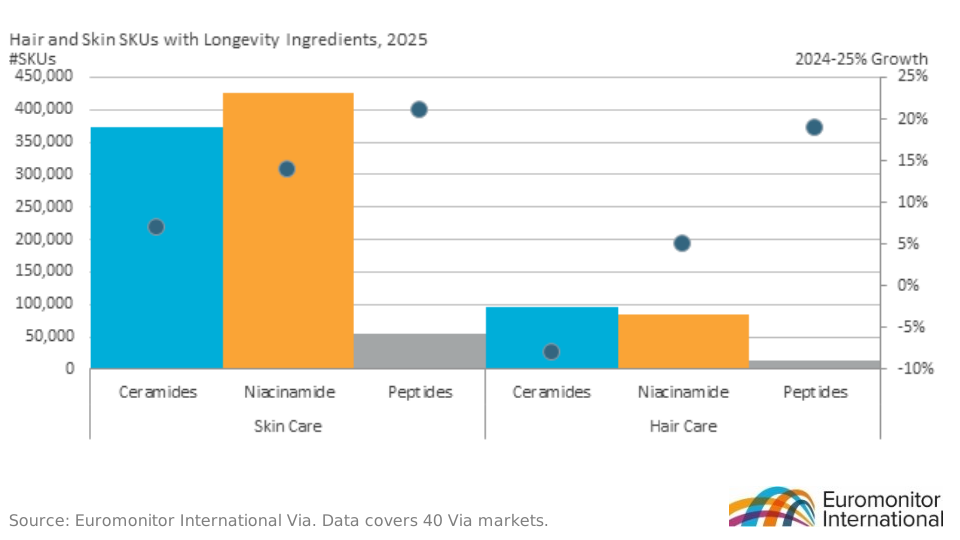
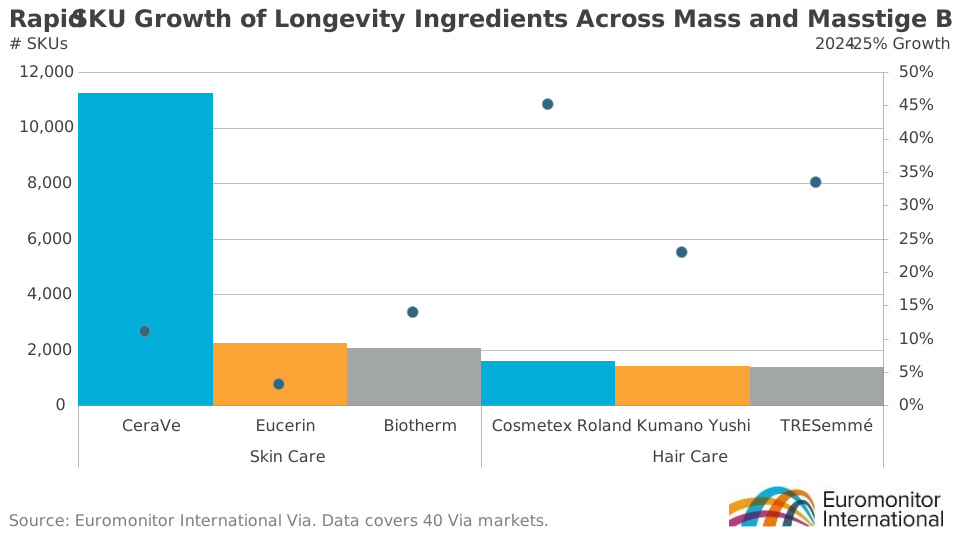
As reflected in the chart, longevity is being driven by a mix of premium and mass brands, signalling clear convergence across price tiers. Leading brands include Eucerin, Elizabeth Arden, CeraVe, and Missha.
Notably, both dermocosmetic mass brands and premium legacy players are leveraging a similar ingredient playbook. Ingredients such as ceramides, niacinamide, peptides, and antioxidants are being embedded for repair, resilience, and longevity into everyday routines. This indicates that longevity is no longer a premium-only proposition, but being standardised across price points, with mass brands driving accessibility and premium brands reinforcing efficacy and credibility.
When the same ingredients are consistently used across brands, categories, and regions, they move from trend to baseline expectation, indicating that these would scale.
For instance, L'Oréal has embedded ceramides and niacinamide across CeraVe, La Roche-Posay, and L’Oréal Paris, making barrier repair and resilience baseline expectations. Ingredient-led skin care company, The Ordinary, originating in Canada, builds on ingredient transparency, using niacinamide, peptides, and antioxidants to support cellular repair through routine use.
At scale, Beiersdorf integrates glycerin, panthenol, and coenzyme Q10 across Nivea and Eucerin, embedding longevity into everyday products across Europe and expanding into emerging markets. The competitive edge is no longer in ingredient discovery, but in how effectively brands scale and systemise proven ingredients across portfolios.
Where the real opportunities lie
Looking ahead, the opportunity is not in chasing the next molecule, but in strengthening three core areas. Firstly, barrier and structural integrity since early ageing begins with barrier decline. Ceramides, cholesterol, niacinamide, and panthenol will remain foundational to address such concerns. Secondly, resilience and repair would remain a core area focused on managing inflammation, oxidative stress, and cellular repair pathways, and lastly scalp-first hair care
which would depend on optimising the follicle environment, not masking fibre damage. Beyond this, the gut-skin-hair axis would also open new pathways, linking systemic health to visible outcomes.
Looking ahead, the most promising opportunities are not in fleeting ingredient trends but in leveraging foundational ingredients to deliver foundational longevity systems that support skin, scalp, and hair over time, helping systems perform better for longer.
To learn more about Longevity and how it is shaping ingredient innovation and consumer demand across life stages, read our strategy briefing, Healthy Longevity: Maximising Opportunities Across the Lifecycle.