
Packaging is far more than a protective shell; it is one of the most trusted sources of information for consumers. In fact, 53% of global respondents trust what they read on labels, packaging and company websites, according to Euromonitor’s Voice of the Consumer: Sustainability Survey, fielded January to February 2025.
As regulations tighten, circularity expectations intensify and greenwashing scrutiny increases, packaging has transformed from a design consideration to a frontline credibility test for brand sustainability strategies.
Packaging as a sustainability credibility test
Packaging sits at the centre of FMCG sustainability strategies. It is an instant signal, visible on the shelf, in the hand, and online. Because it is tangible and tied directly to a preferred product, consumers instinctively use packaging as proof of whether a brand’s commitments are real. Any sustainability claim, whether about ingredients, sourcing, emissions or environmental impact, loses strength if the packaging itself is not sustainable. When the story on the pack and the brand’s broader message fail to align, the credibility gap becomes immediately obvious.
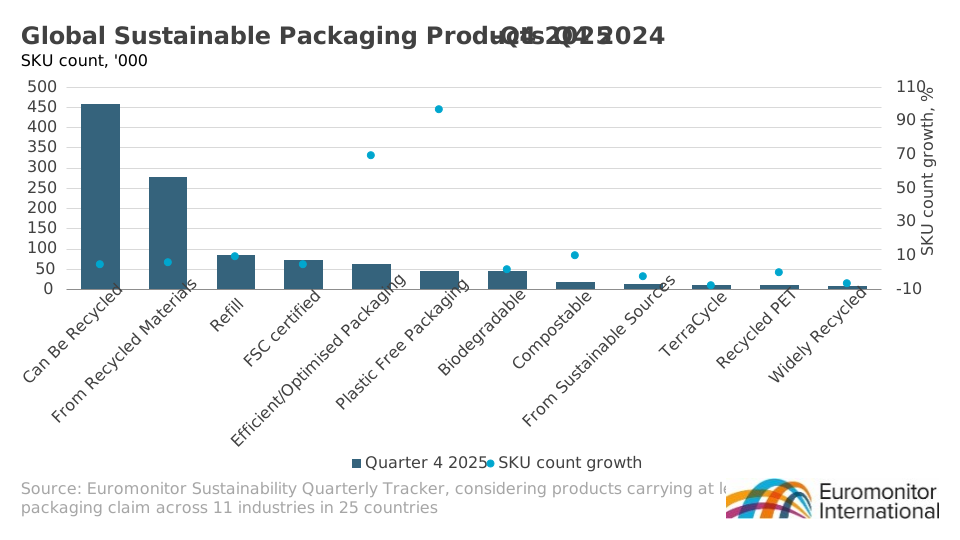
Recyclable packaging remains the most trusted sustainability claim worldwide, cited by 57% of consumers. But, as regulatory pressure and widespread consumer understanding grow, recyclable packaging has become table stakes. Necessary, but no longer enough to differentiate. Brands seeking to stand out must show how they are closing the recyclability gap and redesigning materials to move beyond basic compliance. This is why claims such as plastic-free, efficient packaging, and alternative materials like compostables, bioplastics, and paper are gaining momentum. They signal meaningful efforts to reduce virgin plastic use, lower transport emissions and expand circular solutions.
From recyclability to active circularity
As recyclability becomes hygiene, innovation is shifting towards active circularity: using recycled content, offering refill solutions, and exploring lower-impact materials. A bottle made from recycled plastic offers physical proof that a recycling loop is working. This tangibility matters when many consumers are unsure whether their recycling actually makes a difference. Holding a package explicitly marked “from recycled materials” allows them to connect their actions with real outcomes.
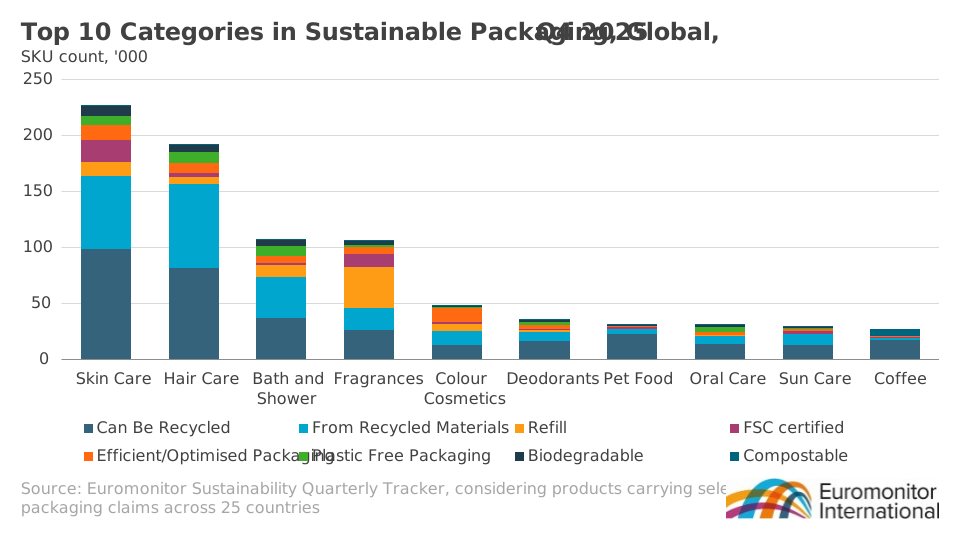
Geopolitical pressures, such as oil supply chain disruptions due to the US-Israel-Iran conflict, are further strengthening the business case for alternative materials by pushing virgin plastic prices upward. Beauty and personal care categories are leading the transition, showing a notably close gap between “can be recycled” and “from recycled materials” claims. Meanwhile, refills are now the third most used sustainable packaging claim, led by fragrances, skin care, and bath and shower.
Packaging as a behaviour-shaping touchpoint
Packaging does more than communicate impact – it reinforces and shapes behaviour. Many consumers express a desire to recycle more, but question whether their actions matter. Packaging can close that intention‑action gap with simple, intuitive cues.
A package made from recycled materials delivers a clear message: someone’s recycling effort re‑entered the system, so yours can too. Refill solutions extend this behavioural influence. They help consumers reduce waste without requiring dramatic lifestyle changes, proving that sustainable actions can be easy, habitual, and cost‑effective.
Economic benefits are particularly powerful for shaping behaviour around reusables. In fragrances, for instance, both premium and mass brands are highlighting cost-savings alongside environmental benefit. For premium brands, refill systems increase perceived value and support premium positioning while signalling transparency and strengthening trust.
The most effective sustainability interventions are those that feel immediate, achievable and personally rewarding. Packaging can deliver this by making circularity visible and actionable in seconds, supporting habit formation and driving loyalty.
Packaging as a future sustainability interface
The next era of sustainability will demand deeper transparency and stronger circularity. Regulatory momentum around recycled-content mandates, recyclability definitions, and Digital Product Passports will require packaging to carry more responsibility. Generic sustainability claims will no longer be sufficient. Brands will need to demonstrate how materials flow through systems, how products fit into circular loops, and what consumers must do at end-of-product-life.
Packaging becomes a connector between brand ambition and regulatory obligations, product design and recycling infrastructure, consumer actions and system-wide progress. Brands that design packaging as this bridge, with transparency, clarity, and circularity in mind, will remain resilient as packaging evolves from marketing tool to licence to operate.
Explore Euromonitor’s Sustainability solutions to unlock growth through the right sustainability claims.