
Sustainable products reached USD886 billion in 2025 sales, their 6.7% CAGR (2020-2025) outperforming conventional items by 1.3pp. However, consumer guilt about contributing to climate change dropped 5.1pp over 2023-2026, while belief that individual actions make a difference fell 3.7pp. Shoppers are overwhelmed by issues beyond their control and tune out broad sustainability narratives.
In 2026, three main forces are reshaping how FMCG brands communicate sustainability: stricter regulations, AI-powered commerce, and persistent supply chain volatility.
Regulation reshapes claims landscape
Sustainability communication is more selective as regulations force brands to choose quality over quantity. Euromonitor’s Sustainability Quarterly Tracker shows sustainable SKUs grew 10% between Q4 2024 and Q4 2025, yet conventional products grew 15%, signalling brands’ cautiousness due to fear of greenwashing.
The EU's Empowering Consumers for the Green Transition Directive (EmpCo), enforced from August 2026, bans generic claims like "eco-friendly" without recognised proof, directly targeting today's dominant positioning. Globally, 40% of sustainable SKUs are self-declared without external verification in Q4 2025, relying on natural and environmentally friendly claims. Self-declared / optionally certified claims including vegan, cruelty-free and plant-based cover 46% of global SKUs, growing 7% since Q4 2024, indicating that investing in substantiation is gaining ground.
The exposure is uneven. Pet care and tissue and hygiene are highly exposed, with 63% and 58% of products positioned without external verification. Hot drinks and dairy, resource-intensive industries, are more advanced, positioning organic, fair trade, rainforest alliance and B-Corp certifications – critical as the EU Deforestation Regulation mandates plot-level traceability by December 2026, ensuring products are not linked to deforestation or forest degradation.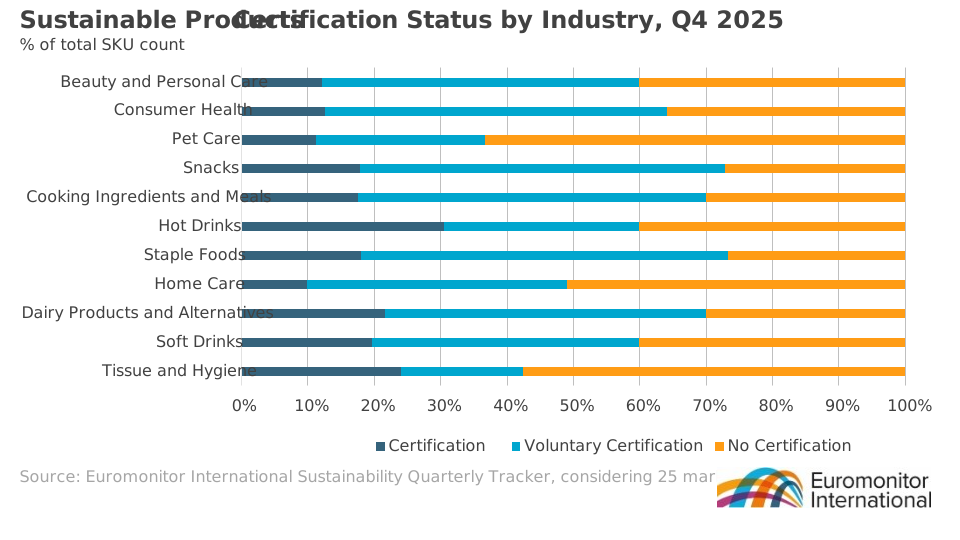
It is crucial to ensure a good balance of highly resonating claims alongside specific ones that provide transparency. Substantiated claims, self-declared or externally certified, deliver price premiums, like 30% in B-Corp plant-based dairy, 46% in organic juice and 36% in cruelty-free hair care.
Communicating sustainability everywhere with AI
The FMCG industry often views AI as a tool for operational efficiency, yet its influence on product discovery and shopping journeys is underestimated. Over half of consumers use GenAI tools for information and recommendations, per Euromonitor’s Voice of the Consumer: Lifestyles Survey, fielded January to February 2026. While total e-commerce traffic from these sources remains small, the momentum is undeniable.
AI referrals to e-commerce sites grew by 302% during 2025, while all other sources grew by 40%.
Source: Euromonitor E-commerce data
Success in this new landscape depends on how discovery engines identify and prioritise information. AI favours structured product descriptions, certifications, and ingredient transparency. Beauty and personal care is well positioned with a 49% share of digital shelf for sustainable products in Q4 2025. This visibility is paying off, as BPC brands now capture 45% of all AI-driven referrals within FMCG.
Consumers increasingly treat AI as a personalised beauty coach to navigate complex trends like healthy longevity and clean beauty. For instance, 55% of GenAI users researching facial care seek information relevant to them, like skin type, ingredients list, anti-ageing properties and animal welfare. To win the referral race, brands must ensure product descriptions stay updated across marketplaces, specialist sites, and social platforms.
A winning strategy requires a dual approach to communication. On pack, the focus should be on 2-3 clear, substantiated claims. Digital channels require detailed sustainability data in machine-readable formats. As facial care sales soar on platforms like Amazon and Sephora, digital clarity determines which brands AI chooses to surface.
Operational feasibility: Sustainable sourcing and packaging
Rising energy costs and continued supply chain volatility are pushing operational feasibility central to business resilience. With WTI oil up 72% and European natural gas up 40% this year, higher transport and input costs are squeezing margins, forcing companies to rethink sourcing and materials, with sustainability storytelling becoming a secondary benefit.
Therefore, companies are prioritising margin protection and supply security, through nearshoring and friendshoring. Shorter supply chains help reduce scope 3 emissions and strengthen locally-sourced positioning. They also deliver tangible social benefits by supporting local farmers and economies – especially resonant as supporting those in need is consumers’ top sustainability concern in 2026.
Regulatory pressure and high oil prices are reshaping packaging decisions, too. Policies such as the EU’s PPWR are accelerating the shift towards paper and plant‑based alternatives. Requirements including 70% recyclability, 30% recycled content in key food and beverage formats, and the allocation of 10% of retail space to refill solutions by 2030 are making reduced reliance on virgin plastic both a regulatory and a cost imperative.
The future of sustainability is selective, substantiated and operational. Brands that build proof today secure margins, credibility and visibility tomorrow.
Discover how Euromonitor data helps brands turn sustainability into a competitive advantage.