
Ingredients and Packaging Interested in high-growth markets for new ingredient and packaging solutions? Stay ahead of evolving trends in product formulations and packaging materials, driven by innovation and a growing focus on sustainability.

Demand-Driven Botanicals: Mapping Ingredient Growth and Evolving BPC Trends

12/18/2025
Jared Conway Profile Picture
Jared Conway Bio
Share:

Botanical ingredients continue to play a central role in product formulation and innovation as consumers increasingly recognise the natural benefits associated with plant-based extracts and healthier positioning. However, it is not enough to track which ingredients are rising in popularity from the supply side; understanding which botanicals are used at the product level and in which countries and categories they appear provides a clearer view of what trends are here to stay. By analysing ingredient lists across millions of SKUs, we can identify which botanicals are seeing the strongest growth over a sustained period and how this aligns with the wider consumer shift towards health- and longevity-focused products.

Familiar and emerging botanicals support healthy longevity trend

Looking specifically at the beauty and personal care (BPC) industry, where consumers have long focused on ingredient transparency, wellness, and self-care, we can see which specific botanical ingredients are becoming more prevalent across digital shelves globally. The strongest gains in demand-side adoption are not limited to the largest botanicals. Instead, they reflect a mix of well-established ingredients such as mint and jasmine, and lesser-used ones like tea tree oil, bakuchiol, and hibiscus. This combination suggests that consumers remain loyal to familiar plant-based extracts while also showing a growing openness to newer ingredients that offer distinct functional benefits.
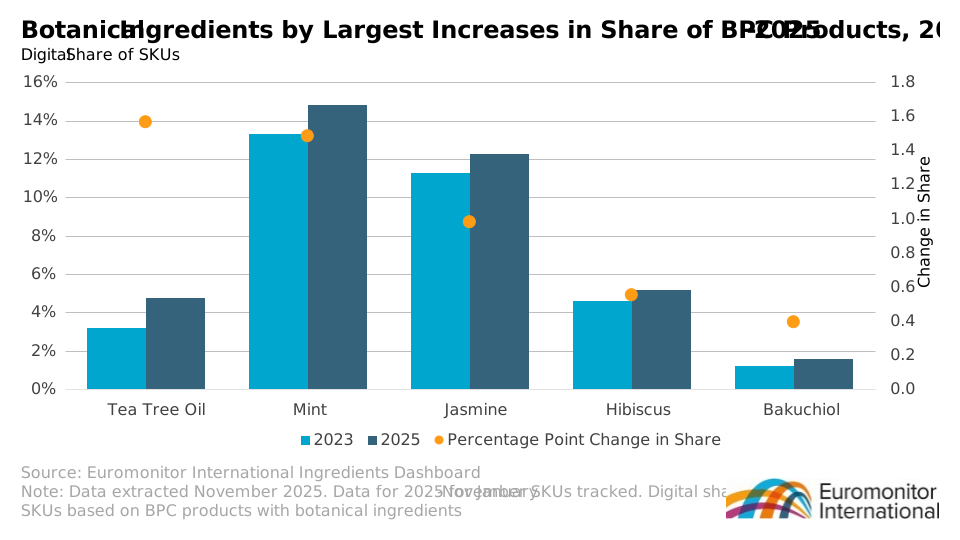
Chart Showing Botanical Ingredients by Largest Increases in Share of BPC Products 2023-2025These five botanicals align closely with emerging longevity-related priorities, not as strict “longevity molecules”, but through their links to skin longevity, cellular protection, inflammation reduction, and stress modulation. As more brands incorporate longevity messaging into formulation, branding, and consumer engagement strategies, botanicals’ appeal with perceived protective, restorative, or anti-ageing functions has grown. This is pertinent as companies seek to translate complex science on ageing hallmarks and life stage needs into accessible benefits that resonate with everyday consumers. The rise of both trusted botanicals and newer science-backed ingredients signals a broadening demand for plant-based solutions that support long-term beauty health.

Botanicals adoption reflects local beauty needs

Tracking where these leading botanicals appear across markets and categories is critical for understanding how consumer preferences are evolving, as ingredient expansion and innovation trends are not uniform. In 2025, South Korea accounts for nearly half of all tea tree oil SKUs online, reflecting strong demand for natural, preventative skin care. Japan also shows high shares for tea tree oil and mint, aligning with local preferences for gentle, effective ingredients. Botanical ingredients’ strong presence across East Asian markets underscores the region’s role as a trendsetter in functional beauty, where natural and preventative solutions are deeply embedded in consumer routines. Botanicals like hibiscus and bakuchiol are gaining ground in the US and Germany, driven by interest in natural anti-ageing and restorative benefits. This spread of botanical adoption across countries highlights how evolving health and longevity trends are shaping ingredient choices, setting the stage for further innovation in functional beauty.
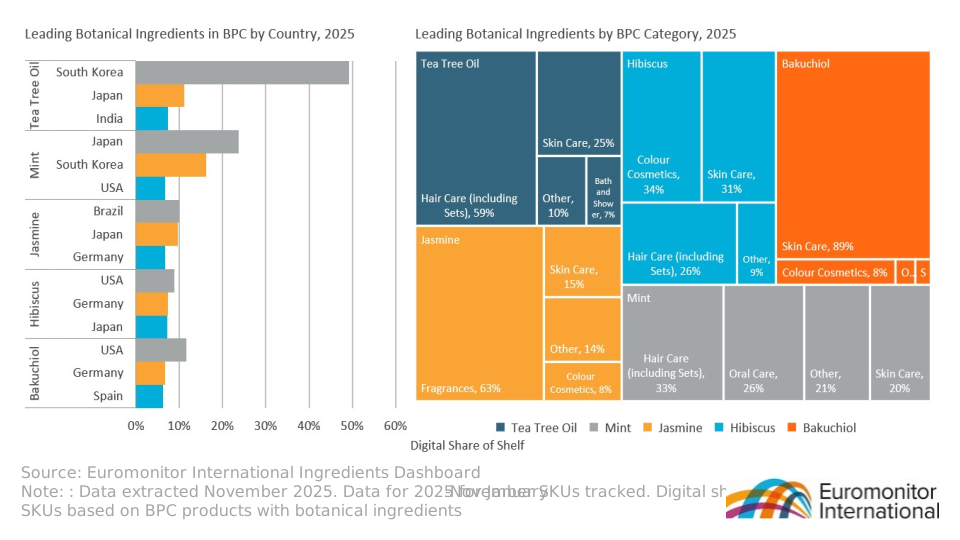
Chart Showing Leading Botanical Ingredients in BPC by Country & Category 2025Looking at which BPC categories are driving the biggest share of these botanical ingredients in 2025, it is clear that the healthy longevity trend is making a real impact on everyday routines. Tea tree oil and mint are popular in hair care, oral care, and skin care, thanks to their ability to support scalp health, keep things feeling fresh, and provide gentle cleansing. These benefits are all about helping people maintain healthy skin and hair for the long term. Jasmine and hibiscus are appearing more in fragrances, colour cosmetics, and skin care. Jasmine’s calming scent and hibiscus’s antioxidant properties appeal to those seeking both emotional wellness and visible results, like brighter skin and a sense of relaxation. This fits perfectly with the growing interest in holistic approaches to beauty and healthy ageing. Bakuchiol is mostly found in skin care, valued as a gentle, plant-based alternative to retinol. It helps people care for their skin as they age, without the irritation that sometimes comes with traditional anti-ageing ingredients.

The increased usage of both established and emerging botanicals shows how quickly consumer expectations are evolving across regions and categories. Companies that track these shifts from a demand-driven perspective can identify growth opportunities, align ingredient strategies with wellness trends like healthy longevity, and drive innovation to stay ahead.

For more information on ingredients and innovation, contact us to discover where new products are expanding the fastest and what ingredients are driving growth. For more information on healthy longevity, see our report, Healthy Longevity: Maximising Opportunities Across the Lifecycle.

Explore More

Trending Topics: Cross-Industry Shifts Into 2026

Euromonitor International 04 September 2025

Introducing Euromonitor's Trending Topics

Euromonitor International 04 September 2025

2025 Asia Pacific Outlook: Snacks trends and opportunities

Euromonitor International 02 September 2025

Shop Our Reports

The World Market for Packaging

Global packaging volumes rose by 1.4% in 2024, led by emerging markets, especially Asia Pacific as growth slows in the West. Pack type and size adaptations…

View Report

The World Market for Fast-Moving Consumer Goods: Outlook and Opportunities

The global FMCG market is projected to grow by 4.6% in current value terms to reach USD6.6 trillion. Growth is largely price led and financial concerns are…

View Report

Global Overview of the Hi-Tech Goods Industry

The briefing examines how the hi-tech goods industry is performing globally and in the largest countries in terms of hi-tech goods output. The report also…

View Report
Healthy Longevity: Maximising Opportunities Across the Lifecycle Learn More