
Success in claim innovation isn't measured solely by volume, but also by reach. When a functional claim established in one industry migrates across category boundaries, you know it has transcended niche status to become a general consumer expectation. Nootropic claims are doing this, and the diffusion pattern shows something important about how health and wellness trends achieve mainstream traction.
The stronghold
Supplements have long been the proving ground for functional ingredients, offering dosing flexibility, fewer regulatory constraints on claims, and an audience seeking targeted health benefits.
Consumer health dominates the nootropic landscape, with 69% of all product launches and reformulations featuring cognitive claims during 2021-2025
Source: Euromonitor’s Innovation Tracker
For 2025, memory-related claims, a key component for nootropic claims, topped USD2,655.8 million in retail sales value. Consumer health gave nootropics their commercial vocabulary, teaching consumers what L-theanine, lion's mane, and bacopa monnieri do. As the category matures, however, its influence extends beyond supplements. Euromonitor’s Voice of the Consumer: Health and Nutrition Survey, fielded February 2025, shows that consumers now seek cognitive enhancement in everyday contexts, accelerating diffusion beyond the vitamin aisle.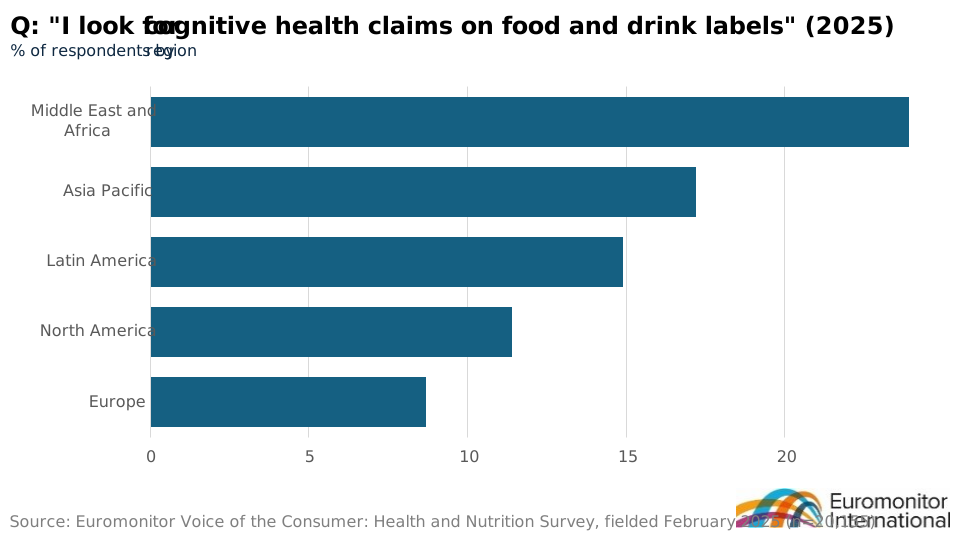
Soft drinks captured 16% of nootropic product launches during 2021-2025, with hot drinks at 6%, beauty and personal care at 5%, and even alcoholic drinks registering a small but notable presence. These aren't dominant numbers, but are what diffusion looks like in its growth phase. When an innovation crosses from specialist categories into mainstream consumables, it doesn't arrive at parity immediately, but in small batches, experimental formats, and targeted sub-segments.
The significance of nootropic claims across categories lies not in their magnitude, but in their presence. A nootropic energy drink is a different proposition from a nootropic capsule. It requires reformulation for taste masking, stability in liquid matrices, and positioning that doesn't alienate mass-market consumers unfamiliar with cognitive-health terminology. The fact that soft drinks manufacturers are solving these challenges signals genuine commercial interest, not just R&D curiosity.
Hot drinks offers an insightful use case. Coffee and tea already occupy a cognitive space in consumers' minds, being morning rituals associated with alertness and mental preparation. Adding L-theanine to a matcha latte or adaptogens to a functional coffee blend doesn't require a conceptual leap; it enhances an existing permission. The 66.7% year-over-year growth in hot drinks nootropic launches (albeit from a low base) suggests brands have recognised this natural synergy. Recent launches include Lady Teapot’s “focus mind” sub-brand and Biogena’s “focus coffee”.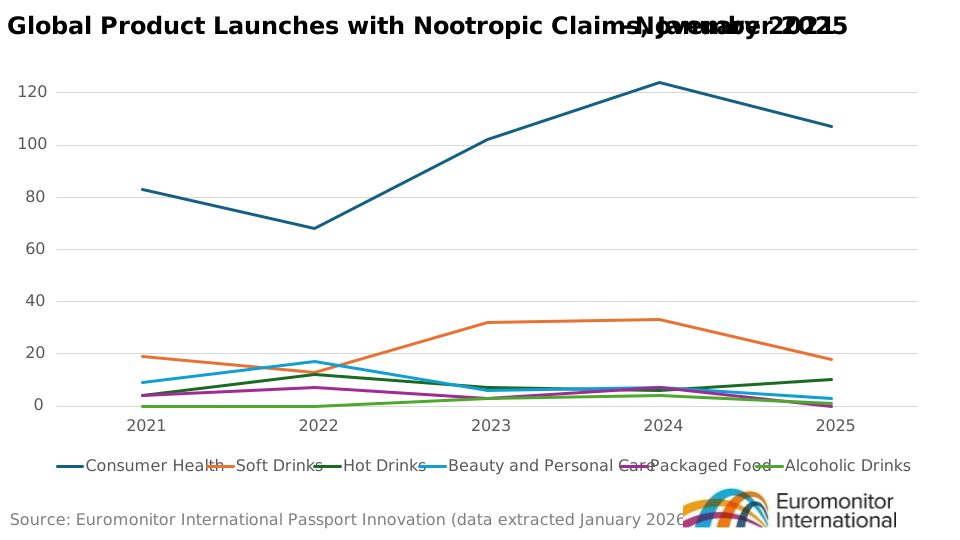
That recent momentum is mixed is instructive. Consumer health product launches have declined 13.7% year-over-year, while soft drinks dropped 45.5%. This isn't necessarily cause for concern; it may reflect market saturation in first-mover formats or natural consolidation after early experimentation. Innovation cycles often follow this pattern: an explosion of entrants, followed by a culling as the market determines which formats and claims resonate. When one category contracts while another grows, it's often a sign that consumer attention and manufacturer investment are shifting to where the unmet opportunity lies.
If nootropic claims were only succeeding in consumer health, that would indicate a niche ingredient trapped in a specialist category. The fact that they're appearing, even in small numbers, in beauty serums, functional snacks and RTD beverages means they've achieved something more valuable than volume – credibility. A shopper who buys a nootropic supplement, then encounters the claim in an energy drink and later in a stress-relief tea begins to internalise cognitive wellness as a holistic category, not just a pill you take when you seek focus.
The path forward
The data pattern suggests we're in the middle stage of nootropic diffusion, not the end. Consumer health will likely remain the volume leader, but growth will increasingly come from categories that integrate cognitive claims into formats consumers already use daily even as compliance and regulations expand on this claim. We expect continued expansion in hot drinks, where functional coffee and adaptogen tea are still maturing, and in beauty and personal care, where "beauty from within" positioning creates permission for ingestible cognitive support. The measure of a successful ingredient innovation isn't whether it owns one category – it's whether it becomes fluent in many.
Read our briefing, Top Five Trends in Consumer Health, for more analysis of the consumer health landscape.
Euromonitor’s Innovation solution enables rapid discovery of new product launches online and tracks the attributes and claims gaining momentum. Contact us here to learn more on the latest innovations across FMCG categories.