
There has been a prolonged period of stagnant growth in the home and garden industry. This has been driven by downward or negative trends in the factors driving home and garden demand including time spent at home, socialising occasions inside the home, home transactions, house moves, interest rates, and economic confidence. However, there are opportunities for growth to be found. Euromonitor identifies key trends that will continue to shape the industry in the coming years. This article examines three of the most pertinent such as indoor gardening and e-commerce.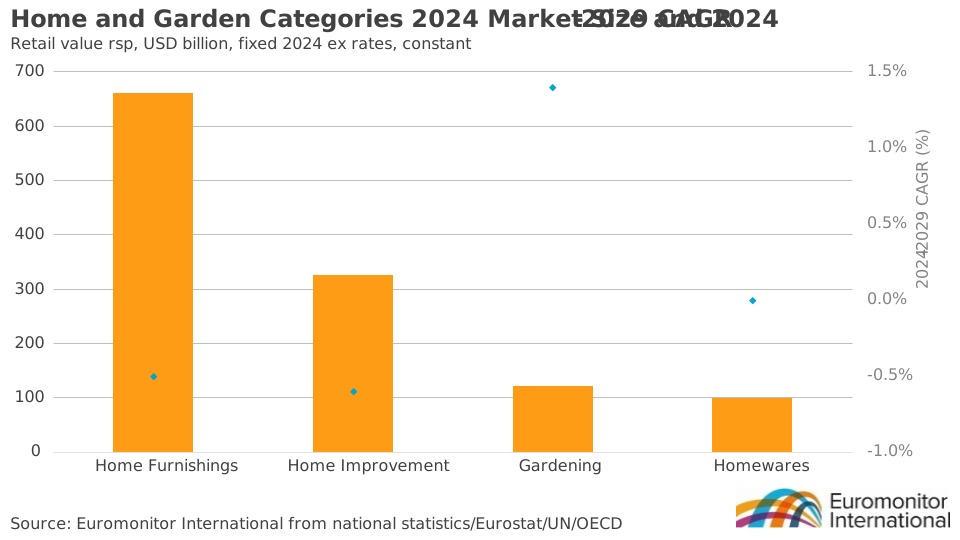
Opportunities are about gardening, segmentation or exposure
Growth strategies are increasingly focused on booming trends such as urban and indoor gardening, underexploited segments in saturated markets based on gender and age, and evolving shopper journeys like the “Do it for me” (DIFM) model via DIY stores.
Companies are repositioning their market exposure to capitalise on these trends through acquisitions and targeted outreach. For instance, in March 2025, Lidl’s DIY brand Parkside engaged female customers at its Lidl Springside event in Italy through interactive workshops promoting home innovation and gardening, aiming to foster personal satisfaction and creative expression.
Small spaces and elevated experiences drive differentiation
Urbanisation is fuelling dissatisfaction with living spaces, especially in cities where affordability and space constraints are major concerns. Beyond physical limitations, emotional aspects such as health, wellbeing, and happiness in the home are gaining importance. Product innovation is increasingly geared towards smaller, multifunctional living spaces with enhanced flexibility and storage. For example, Malaysian furniture retailer Arturo offers multifunctional sofas with hidden compartments beneath the cushions, and a lift-up storage feature in the ottoman, with drawer compartments and shelf spaces. This trend is expected to continue as consumers demand smarter use of space.
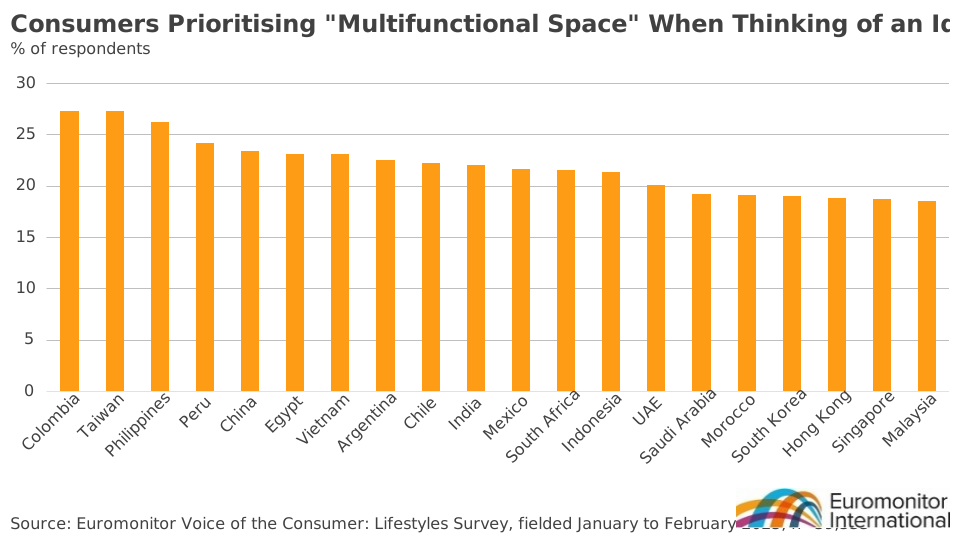
17% of global online consumers prioritise “multifunctional space” when envisioning their ideal home
Source: Euromonitor Voice of the Consumer: Lifestyles Survey, fielded January to February 2025
Innovation also focuses on emotive value, with elevated consumption experiences reflecting modern lifestyles. Homes with pets are receiving targeted investment, while dining and sleeping experiences are emerging as key areas of focus in 2025.
Technology investments focus on marketplaces and AI upgrades
E-commerce remains a major global growth driver, even in markets with stagnant overall demand. While direct-to-consumer models contribute, the most dynamic expansion is occurring through online marketplaces. These platforms are helping Chinese and broader Asian companies gain international traction, especially in home-related categories. Shein, for example, is evolving from a fast fashion brand into a comprehensive e-commerce marketplace. Since 2023, it has expanded into Europe and diversified into home furnishings, DIY tools, auto parts, electronics, pet supplies, and personal care – positioning itself as a rising competitor to Amazon.
New marketplaces are also emerging, such as Obi Group’s launch in Germany in May 2024, now offering furniture. DIY retailers like Leroy Merlin, Brico, and B&Q are expanding into consumer electronics, while generalist platforms such as Tesco, Cdiscount, Auchan, and Carrefour are increasing their home goods offerings.
In this competitive landscape, companies are also investing in driving real-world footfall and optimising online shopping journeys through improved merchandising, personalised data use, and AI-driven tools.
Adapting to shifts in home and garden
These trends are significant as they have implications for both businesses and consumers. Companies that adapt to these changes will be better positioned to succeed in a rapidly evolving environment. The rise of e-commerce demands effective online strategies, while growing interest in intelligent living spaces presents opportunities for innovation. Consumers are seeking smarter use of space, with an emphasis on storage, multifunctionality, and flexibility. Understanding these key trends and their implications will be crucial for sustained success.
For more information, read Euromonitor International’s report, Top Five Trends in Home and Garden.
This content was written with the assistance of AI. All information is original to Euromonitor and is derived from our report, Top Five Trends in Home and Garden. The final article has been thoroughly reviewed by our team to maintain the highest standards of quality and integrity.