
As recovery slows and consumer priorities shift, operators are rethinking value, convenience and personalisation in a more competitive, cost-sensitive environment. In 2025, 24% of global consumers expect to cut back on restaurant visits, putting pressure on discretionary spending and driving innovation. Key trends include wellness-focused menus, local flavours, beverage-led concepts and new loyalty strategies. Euromonitor highlights the main trends set to shape 2026, providing insight into what is driving change.
In 2026, 25% of global respondents order food for home delivery weekly, despite higher costs.
Source: Euromonitor Passport Consumer Foodservice, Voice of the Consumer: Lifestyles Survey (fielded January-February 2026, n=40,225)
1. Wellness as innovation
Aspirational and intentional consumption are converging as consumers seek nutrient-dense, minimally processed, and wellness-focused menu options. The rise of GLP-1 agonist drugs is changing dietary needs, prompting operators such as Sweetgreen to introduce high-protein choices like Power Max Protein Bowl in late 2025. Ital’in House’s Green brand, launched in Brazil in 2025, also reflects this trend with lighter portions and plant-based selections.
2. Hyperlocal flavours for global consumers
Digital discovery and social media are speeding up the global spread of regional specialities, with 59% of respondents enjoying new products or services. Ixchel in Seoul now serves authentic Latin American dishes beyond the typical global fare, while TikTok is turning local flavours into global trends.
3. The new frontier of beverage concepts and occasions
Beverage-focused outlets are gaining popularity as consumers look for personalisation, convenience, and creative flavours. Specialist coffee and tea shops are growing fast, with abCoffee in India meeting demand for affordable, customisable drinks. Daybright, launched in the US in late 2025, offers smoothies and sparkling refreshments alongside coffee. Gen Z is driving this trend, valuing aesthetics and unique experiences.
4. The tug of war between convenience and fees
Online delivery is now part of daily life, even as delivery fees have risen by 322% since 2019. Grubhub responded by waiving delivery fees on large orders in its February 2026 campaign. The long-term viability of this approach is under review, and operators are testing new workforce and fulfilment models.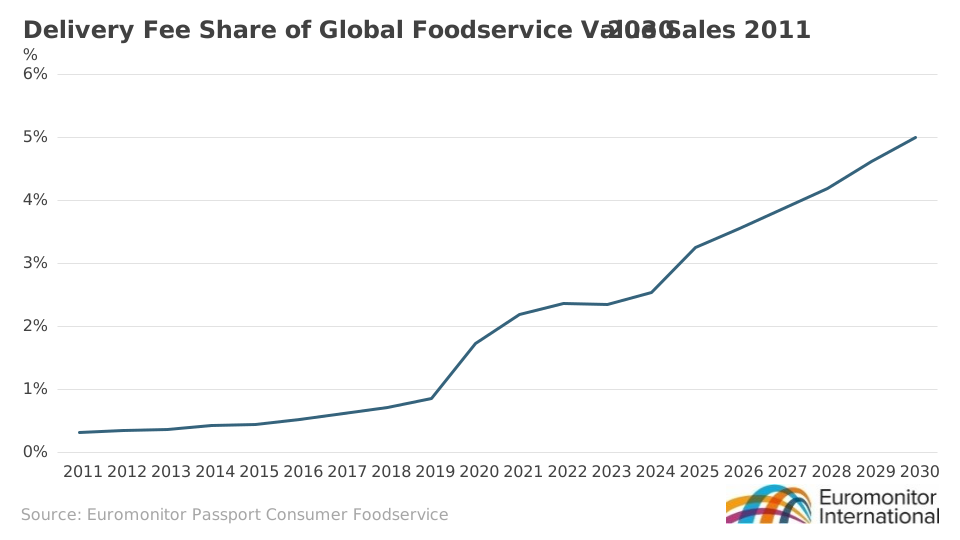
5. Evolving loyalty from rebate to resonance
Loyalty programmes are moving from transactional rewards to personalised, experience-led engagement. As app fatigue increases, Starbucks is innovating with tiered loyalty schemes introduced in March 2026, providing exclusive experiences such as trips to its Tokyo roastery.
Strategies for success in a changing foodservice landscape
As the consumer foodservice environment becomes more complex, operators face both growing challenges and significant opportunities. Increased price sensitivity, changing dietary habits, and digital disruption require businesses to rethink their approach to value, innovation, and customer engagement. Success depends on balancing menu differentiation with operational efficiency, using digital tools for seamless experiences, and building loyalty through meaningful, personalised interactions. Operators that move quickly by tracking consumer sentiment, testing new ideas, and investing in strong loyalty strategies are best placed to achieve growth and build resilience.
For further insight and practical strategies, see Euromonitor International’s report, Top Five Trends in Consumer Foodservice.
This content was written with the assistance of AI. All information is original to Euromonitor and is derived from our report titled “Top Five Trends in Consumer Foodservice”. The final article has been thoroughly reviewed by our team to maintain the highest standards of quality and integrity.