

As the FIFA World Cup approaches, leading foodservice and delivery players are rolling out strategies to capture consumption beyond the stadium, recognising that most viewing will take place in homes, offices, bars, and restaurants.
Mexico
Mexico will host 13 of the tournament’s 104 matches, including the opening game (Mexico vs South Africa) on June 11th, and is expected to receive between three and five million international tourists, creating a unique consumption opportunity.
For restaurants, the World Cup represents a historic chance to position themselves as the most appealing alternative to attending matches in person. In this context, Alsea, the sector’s largest player, has developed a strategy around the concept of the “fourth stadium,” complementing the three official host-city stadiums in Mexico. The goal is to make its restaurants the most accessible and comfortable spaces to experience the tournament atmosphere. Alsea’s portfolio includes Chili’s, Domino’s Pizza, and Starbucks, with Chili’s already the country’s largest sports bar chain by number of outlets. Despite ongoing inflationary pressures, the company plans to hold prices and invest over USD 300 million to renovate locations, prioritising volume growth, enhanced consumer experience, and long-term loyalty during the tournament.
Third-party delivery platforms are also expected to be central. Uber Eats, supported by its sponsorship of the Mexican National Team, is uniquely positioned across all three host countries. Its strategy targets both international tourists and local fans, with a focus on group orders, higher average tickets, and at-home consumption. Tools such as Group Ordering, match-time promotions, and partnerships with restaurants and retailers are designed to capture shared viewing occasions. By 2025, these platforms already accounted for 58% of total delivery sales value in Mexico.
Major QSR chains are similarly leveraging football’s emotional appeal. Little Caesars, the leading limited-service restaurant player by sales, generated close to USD 1 billion in 2025 and is reinforcing ties with fans through “La Seleccionada,” a special pizza inspired by the event and supported by aggressive price-led promotions. Meanwhile, McDonald’s is launching a World Cup Menu across its 380 outlets in collaboration with Tajín, a popular brand of chilli powder and sauces, adding premium cues and local flavour.
Together, these strategies reflect a clear view of the World Cup as a mass consumption event extending far beyond the stadium.
Exhorbitant US Consumer Costs Could Cost Consumers
While Mexico’s foodservice strategy is led by the passion that surrounds football, the US is leaning on pricing strategies to encourage value growth during the World Cup.
FIFA’s world cup rollout has been received with heavy backlash from fans, with international would-be visitors especially wary of price gouging for ticket sales, transit, and accommodations. Ticket prices which were set years in advance are subject to dynamic pricing, rising week-over-week until settling at a point 10x higher than Qatar’s $1,600 cap for the final. Subsequently the cost of accommodations, transit, and operations in host cities have likewise skyrocketed, leaving hotel bookings far below projections less than a month from kick-off.
Hostile immigration policies combined with financial barriers mean that the average world cup attendee skews towards a higher income bracket, but it is precisely this demographic shift that the US will look to exploit.
Metro areas promise to become hubs for football enjoyers beyond the stadium, with festivities, food, and drink aplenty. McDonald’s, one of Fifa’s most visible, long-standing sponsors, has opted out of supplying fan-fests, with the stipulation that no direct competitors replace them, according to The Athletic, citing the event’s lacklustre launch and uncertainty for international foot traffic as key reasons for stepping back. 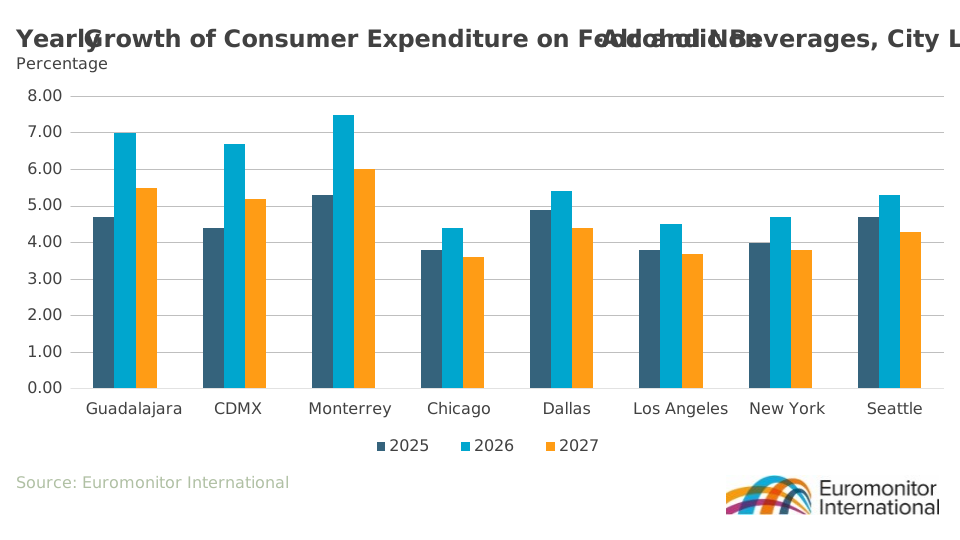
Regardless, the American people will be out en-masse. After all, the world cup has a certain allure that is hard for FIFA and the US to fully beat into the ground, despite their best efforts - and Americans love an LTO. On a city scale, the boost to restaurants, pubs, bars, and vendors capitalizing on local festivities will be a welcome windfall if they are prepared.
Major cities – regardless of host status – are forecasted to outstrip EMI’s total market growth projection of 4.3%.
Source: Euromonitor International
Partnering with local organizers and leveraging delivery channels is sure to be lucrative, even in non-host cities like Chicago where MLS team ‘Chicago Fire’ is partnering with operators to host watch-parties for fans. Just as Mexico partners with Uber Eats, US delivery giant DoorDash is integrating a match-finder and reservations capabilities across NA and EU – taking advantage of event’s scale to integrate into foodservice beyond delivery.
Ultimately the operator will choose their level of involvement, but across nations football is just as often shared over a drink at the pub as on the couch – community is key. McDonalds’ stepping out is no small niche to fill either. Early visibility also matters, particularly to leverage 3rd party channels, but no doubt NA’s turn at World Cup host will highlight our exceptional foodservice industry.
For more analysis read our report, In Real Life: The Unique Lure of Physical Experience