
The first year of Trump’s presidency was marked by significant uncertainty over tariffs, whilst the second year begins with the emergence of new geopolitical risks following the US capture of Venezuela’s head of state. This development introduces heightened uncertainty that extends beyond Venezuela, with implications across multiple regions. While global businesses face shifting geopolitical dynamics, the potential increased oil supply over the long term could help reduce energy price pressures.
Limited immediate impact on oil supply and prices
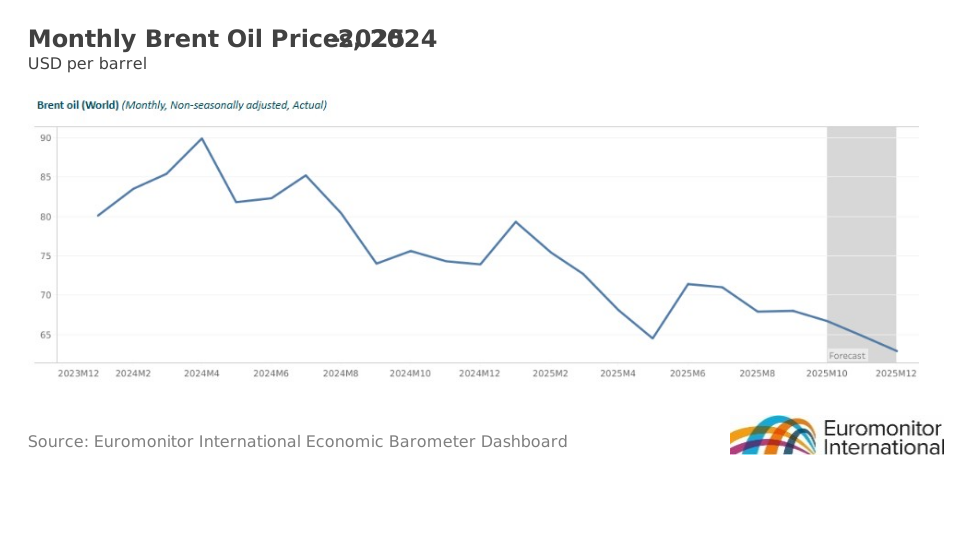
Venezuela holds the world's largest proven oil reserves, accounting for 17.4% of the global total. However, the country currently produces less than 1% of global crude output, due to decades of underinvestment, corruption and sanctions. As such, the immediate impact from Venezuela’s political upheaval on global oil supply is unlikely to be substantial. It is also noteworthy that the Trump administration’s oil embargo on Venezuela remains in force, despite reports of oil tankers supplying China with Trump’s assurances. Current market surplus conditions further cushion against any short-term supply shocks that might arise from this development.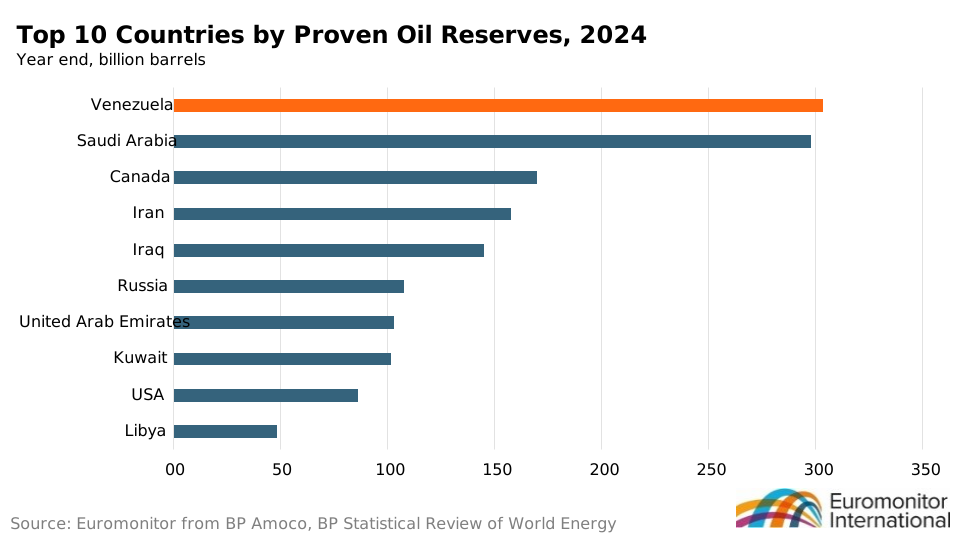
Venezuela faces prolonged economic struggles before potential improvement
Venezuela's domestic economy faces acute challenges that predate the current crisis. The country's GDP growth forecast stood at -0.1% for 2025 and 0.2% for 2026 in pre-event estimates, due to lower oil prices and a collapse of the domestic currency. Political turmoil is expected to further depress domestic demand and investment in the near term. Venezuela’s economic recovery after Maduro will depend largely on the success of the regime transition and the implementation of policies that attract sustained investment and drive diversification.
The return of hyperinflation since 2025, reaching 270%, represents a critical macroeconomic challenge likely to persist amid increased political instability. Poverty remains entrenched, with 22.7% of the population living below the international poverty line in 2024. Due to economic hardships and political repression, more than seven million people have fled the country since 2015, according to the International Organization for Migration (IOM). While the diaspora is hopeful for change, immediate large-scale returns are unlikely. Instead, the risk of renewed migration pressure is high if political and economic instability persists in Venezuela.
Business implications: Commodity prices, geopolitical realignment, and risks
For global businesses, the short-term outlook suggests no major oil supply or price shocks are imminent. However, market volatility is high, and increased uncertainty will affect business confidence across Venezuela and the broader Latin American region. From a medium- to long-term perspective, the potential for higher Venezuelan oil production, alongside robust output from US shale and OPEC+ producers, could create a more favourable commodity price environment. Industries particularly positioned to gain include transportation and logistics, energy-intensive manufacturing, and consumer-facing businesses that would benefit from enhanced disposable incomes as energy costs decline.
Aside from its significant hydrocarbon reserves, Venezuela possesses mineral wealth, including bauxite, iron ore, gold, and nickel, along with notable occurrences of zinc, copper, and rare earth elements. With global demand for battery metals such as nickel and copper accelerating, Venezuela’s mining sector can offer strategic value. Unlike its largely latent oil reserves, the country’s mineral resources provide a more accessible avenue for near-term investment, creating opportunities for international mining companies.
Another critical aspect of the US intervention in Venezuela is the potential escalation of US-China tensions. China is a major buyer of Venezuelan oil and the second largest trading partner in Latin America after the US. This event has also challenged international norms and can have ripple effects across other geopolitical hotspots, including Russia-Ukraine and China-Taiwan.
The new shift in Trump’s policies, coupled with potentially intensified resource competition among global superpowers, could spark new strategic alliances and geopolitical realignments, adding layers of risk and uncertainty to an already volatile global landscape. Businesses should proactively monitor these developments, evaluate interconnected risks, and implement robust contingency plans to safeguard operations and maintain resilience.
For more insights about market uncertainties and geopolitical risks, explore our trending topic, Market Volatility.