

As 2026 unfolds, global business faces a landscape marked by resilient but restrained growth, shifting trade dynamics, persistent cost pressures, widening consumer divides, and the rising influence of Generation Alpha. Success will depend on agility, authenticity and a nuanced understanding of rapidly fragmenting markets.
Global economy shows resilience amid a fragmented world
Lan Ha – Head of Economies and Consumers Insights
Despite ongoing trade shocks and geopolitical uncertainty, the global economy is demonstrating remarkable resilience.
Global GDP growth is forecast at 3.0% for 2026, only a slight dip from 3.1% in 2025
Source: Euromonitor International
Economic and consumption growth in 2026 will be supported by lower interest rates, easing inflation and the agility of the private sector in realigning supply chains.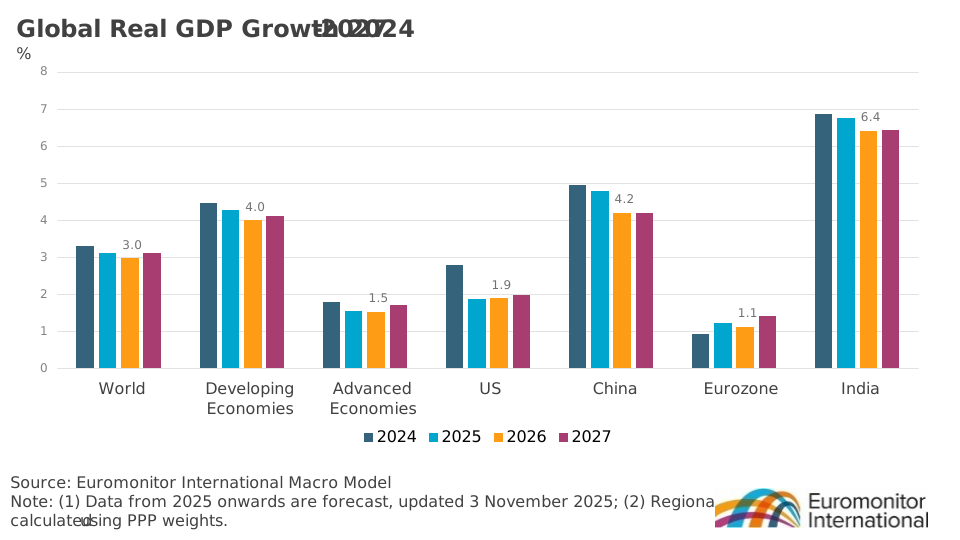
A new global trade order emerges
Aiste Bijune – Consultant, Economies and Consumers
Trade policy volatility will continue to shape global supply chains, making proximity and regional linkages increasingly important. The US aims at reducing its import reliance, while key exporters like China continue to reroute their exports beyond the US. Higher US tariffs since 2025 will contribute to a projected 1.7% decline in US imports for 2026, compared to 9.3% growth in 2025. Meanwhile, China’s share of global trade is projected to fall only slightly, from 14.7% in 2025 to 14.2% in 2026, underscoring the difficulty of relocating production away from China’s dense supplier networks and integrated contract manufacturing clusters.
The growing complexity of global trade is amplified by rapid technological advances and shifting consumer preferences. Traditional manufacturing hubs face challenges, not only due to tariffs but also because of the need for speed and flexibility. Closer and more flexible manufacturing solutions allow brands to respond quickly to consumer trends, shorten delivery times and balance cost efficiency with resilience.
Cost pressures to continue in 2026
Aiste Bijune – Consultant, Economies and Consumers
While inflation is expected to remain moderate in 2026, multiple risks may drive it upwards. Tariff escalation, supply chain shifts and commodity price volatility are upside cost risks for businesses in the coming year. Wages in manufacturing hubs such as China and Mexico rose by 14-36% during 2019-2025, and relocating production to the US exposes firms to higher labour cost. Commodity price volatility remains a key risk: cocoa prices, for example, rose by 15.9% in 2025, while copper saw an 8.7% increase in Q4 2025 due to infrastructure and electrification demand.
Cost pressures are driving changes in consumer pricing and product strategies. Sportswear giants like Nike and adidas have raised prices or warned of further increases as they navigate higher costs including tariffs and supply chain adjustments.
The race for Generation Alpha consumers begins
Jana Rude – Senior Insights Manager, Consumers
Generation Alpha will make up 24% of the global population in 2026. Two billion digital natives whose fragmented behaviours and early brand exposure are already shaping consumption patterns. Brands must act now, leveraging authentic creator partnerships and culturally intelligent storytelling to build trust and relevance with this cohort. McDonald’s, for instance, partnered with Minecraft to launch themed meals, capturing Gen Alpha’s attention through gaming and cross-industry collaboration.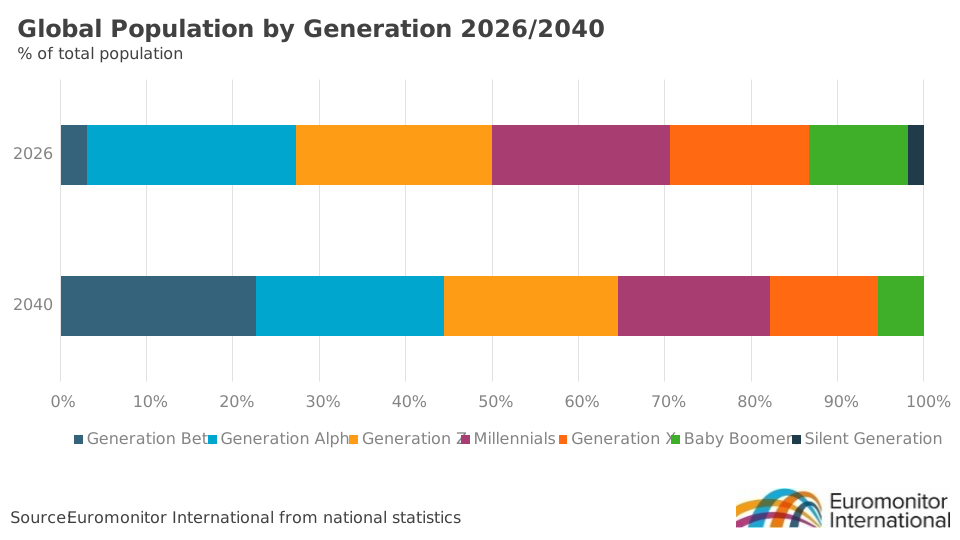
The divide among consumers intensifies
Jana Rude – Senior Insights Manager, Consumers
Consumer polarisation is expected to increase in 2026, as demographic shifts, income inequality and evolving values divide populations into distinct groups with differing behaviours, expectations and spending priorities. Economic divides are widening, with income inequality, as measured by the Gini index, projected to worsen in 49 out of 103 countries. Temu expanded its discount-focused marketplace to 86 countries, catering to financially sensitive consumers worldwide. Consumers are also increasingly guided by personal values, with 25% willing to boycott brands that do not align with their beliefs.
The year 2026 will reward businesses that anticipate change and respond with agility, authenticity, and precision. Navigating fragmented consumer segments, building resilient supply chains and engaging Generation Alpha will require data-driven strategies and nuanced engagement.
For more insights, read our full report: Economies and Consumers in 2026.