
In January 2026, we had the opportunity to speak about Fashion Navigating the New World Order at Source Fashion, Olympia London – the leading fashion sourcing event in Europe – which connects buyers, brands and manufacturers from around the world. Walking through the floor, visiting the exhibitors’ stalls and attending seminars there offered us various opportunities to engage in discussions centred on responsible sourcing, circularity, durability and innovation. Most participants emphasised the importance of rethinking sustainable fashion, and how fashion players today need to rethink the practicalities of sustainability, and emphasise its ethical and economic benefits to navigate the complexities of an increasingly volatile trading environment.
Navigating value shifts and volatility in 2026 and beyond
With attention shifting to more pressing geopolitical risks, changing political priorities in the US, and the lacklustre outcomes of recent climate summits (COP30), new barriers have been raised for global commitments towards the UN 2030 Agenda. But sustainability no longer solely depends on governmental mandates, and is becoming a strategic business imperative. Despite setbacks, the movement continues to evolve rather than disappear.
As macroeconomic and geopolitical shifts continue to impact the world economy and the outlook for fashion, global sales of apparel and footwear are poised for slow growth over the period to 2030. Faced with rising cost pressures and heightened uncertainty, market players now face their toughest test in decades – demanding bold moves in product, distribution, material and lifestyle innovation to stay ahead.
In this context, the fashion industry needs to think of circularity and sustainability strategies that evolve beyond carbon neutrality, and aim to drive revenues and support margins – as discussed during the panel on “From concept to commerciality – making circularity work”, where Jasmin Malik Chua, Climate and Labour Editor – Sourcing Journal, discussed practical ways of achieving profitability through circular business models with Stefan Mathys, Founder – VYN Shoes; Joseph Mountain, Sustainability Manager – N Brown; Rosie Cripps, Head of Revivo and Circularity – VivoBarefoot; and Miranda Beckett, Fashion Project Manager – Ellen MacArthur Foundation.
Can a rise in more intentional consumption encourage mindful consumption?
For most consumers, across all age and income groups, the shopping journey for fashion items starts online, where they do some research, no matter where they are finally making the purchase. Consumers, especially Millennials and Gen-Z, are increasingly tech-savvy and discerning – all the more since the growing uncertainty causes them to reconsider their spending priorities towards experience and wellness, as opposed to tangible goods.
Over 60% global consumers typically research fashion products on their phone or other connected device before buying, while 52% plan to increase their savings in the next 12 months
Source: Euromonitor Voice of the Consumer, Lifestyles Survey, fielded January-February 2025
The talk by James Sleater, CEO – Buffalo Systems, and the repair and upcycling workshop led by Lan Leeder and John Herrera from The Fashion Technology Academy explored how brands and retailers now have an opportunity to innovate with new models and services that extend the life of every garment.
How to generate value while reducing volume sales?
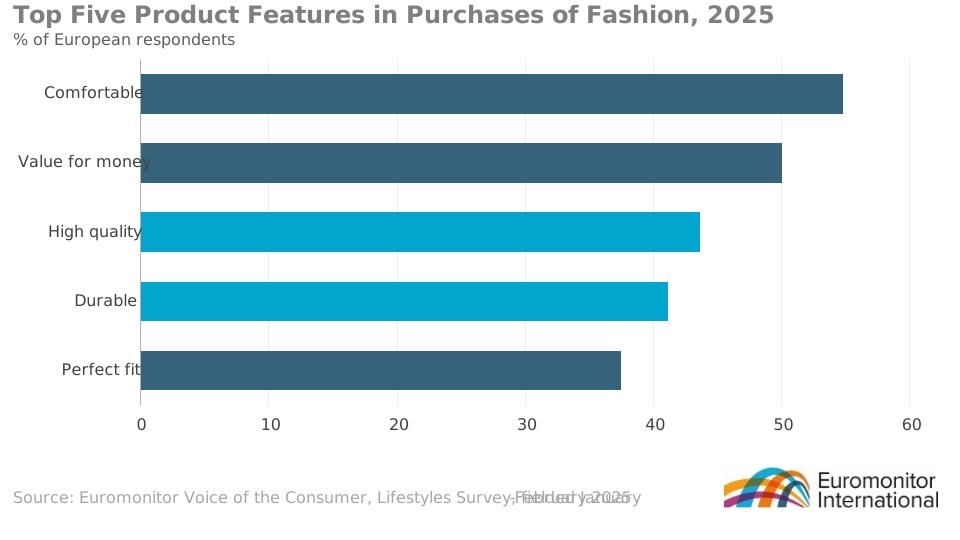
Purchase decisions are becoming more focused on all-round value, thus quality, durability and the shopping experience are increasingly part of the value paradigm, and a growing number of consumers focus on quality over quantity. This, combined with the current context of depletion of natural resources and the new regulatory landscape in fashion, shaped by the upcoming Ecodesign for Sustainable Products Regulation (ESPR) and the Extended Producer Responsibility (EPR) standards, is threatening volume sales and forcing industry players to ask themselves how they can realistically reduce volumes and still remain profitable, competitive and relevant.
To learn more on how fashion businesses are reframing sustainability to navigate shifting values and compliance, read “Top Five Trends in Apparel and Footwear”