
Since 2015, Euromonitor’s Voice of the Consumer: Lifestyles Survey has been tracking consumers’ personal traits, purchase habits and daily routines, among other topics. In the past decade, global consumers have been shaped by macro disruptions, and rapid digital transformation, prompting many to recalibrate not only what they buy, but how they define value and make purchase choices in online platforms and offline retailers. These shifts strongly impact economically active buyers, namely mid-career and mid-life consumers. Due to their growing purchasing power, they are key target segments for several industries and brands. Focusing on consumers in their 30s and 40s, based on the 2015 vs the 2025 Lifestyles Survey, the analysis yields insightful takeaways to help understand today’s consumer and foster growth opportunities in 2026 and beyond.
Rise of pressure, convenience, and desire for normality
Over the past decade, the COVID-19 pandemic, inflationary waves and geopolitical instabilities have amplified consumer desire to preserve normality and live in the present. In 2025, 48% of consumers in their 30s want to enjoy life and avoid worrying about the future, compared to 36% in 2015. While 42% of global respondents feel under constant pressure to get things done, this perception is more prominent for those in their 20s and 30s.
Aiming to ease daily tasks and routines, 48% of respondents in 2025 were willing to spend money to save time, and this has grown by 10 percentage points among consumers in their 30s and 40s. Time saving has gained prominence as a purchase motivation, reflecting a broader lifestyle shift where convenience and efficiency outweigh price considerations. Beyond spending, consumers have been looking for solutions to improve their overall wellbeing, leading those in their 30s to establish more boundaries between work and personal life.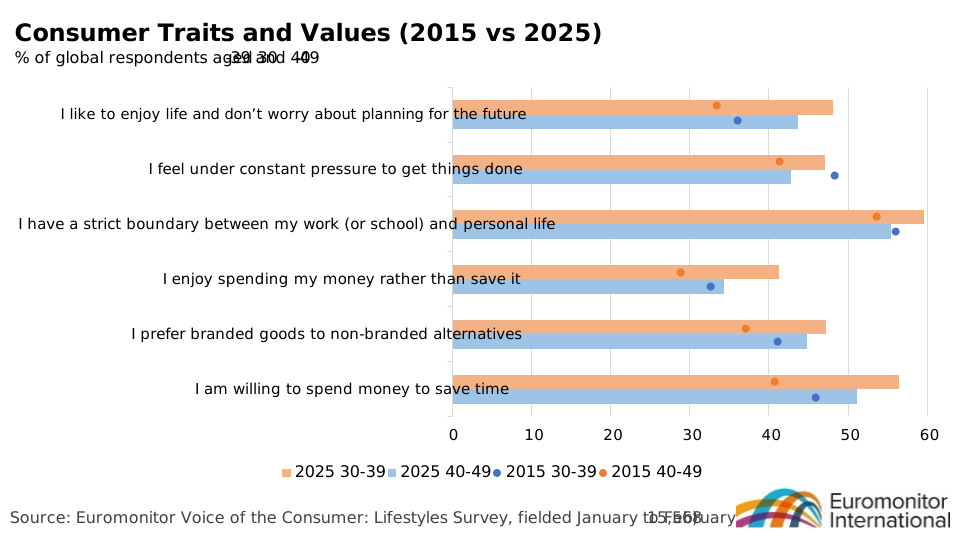
Increased reliance on digital in day-to-day life
The growth in smartphone ownership in the past decade, intertwining of social media into everyday life, and ongoing advances in e-commerce continue to boost consumers’ digital footprint. By providing connectivity, smartphones have evolved into extensions of our social interactions, work, identities and even personal memories.
Digital engagement is now deeply embedded in daily lives. At least weekly, 40% of global consumers use smartphones or computers to compare prices, while 34% turn to generative AI assistance for daily activities. Being online is now about cultivating an online brand and managing perceptions. This is the case for 46% of respondents in their 30s in 2025, up from 37% in 2015.
As a result, respondents in their 30s and 40s increasingly admit they would feel lost without the internet, with a notable jump since 2015. While offering convenience, digital tools also contribute to digital fatigue. Being online adds up to daily stress levels for 38% and 32% of consumers in their 30s and 40s, respectively. In the short term, this rising consumer burden, marked by cognitive overload, should continuously influence consumer online engagement and preferences.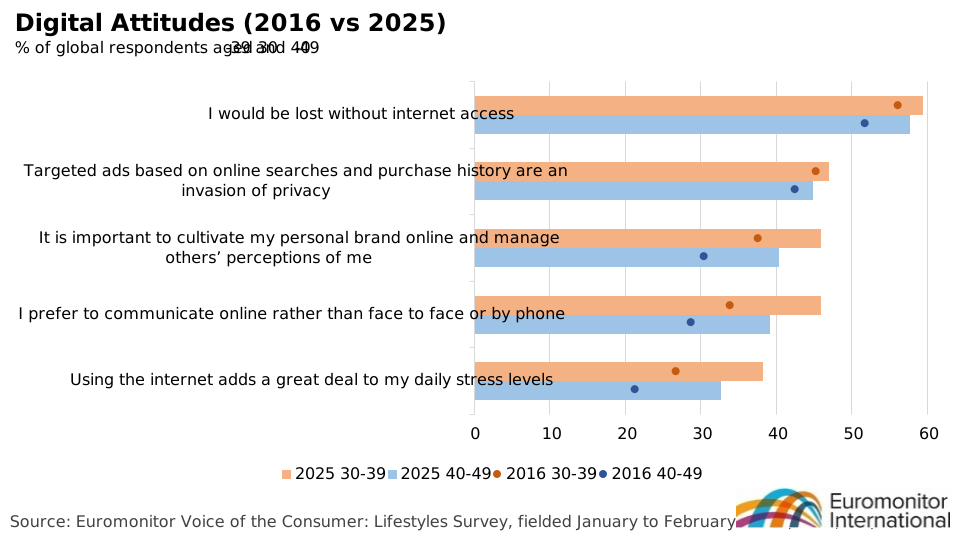
Download our new white paper, Economies and Consumers in 2026, for strategic recommendations about the economic landscape and consumer shifts.