
The transformation of the family is reshaping the global consumer landscape. Projections indicate that, by 2040, couples – whether or not they have children – will comprise just over half of all households and nearly two-thirds of total spending. Yet, the modern families will be smaller, more diverse, and value-driven, compelling brands to reconsider their approaches to fostering connection, loyalty, and growth.
By 2040, it is projected that couples will represent 51% of all households and account for 61% of total household spending
Source: Euromonitor International
Forces behind the new family
The traditional nuclear family is no longer the default. In 2025, couples with children still made up the largest group, but their share is set to fall from 36% of households to 33% by 2040. In developed markets like the US and UK, this figure is already as low as 16% and 15%, respectively. Four powerful forces are driving this shift: demographics, economic pressures, changing social norms, and rapid digitalisation.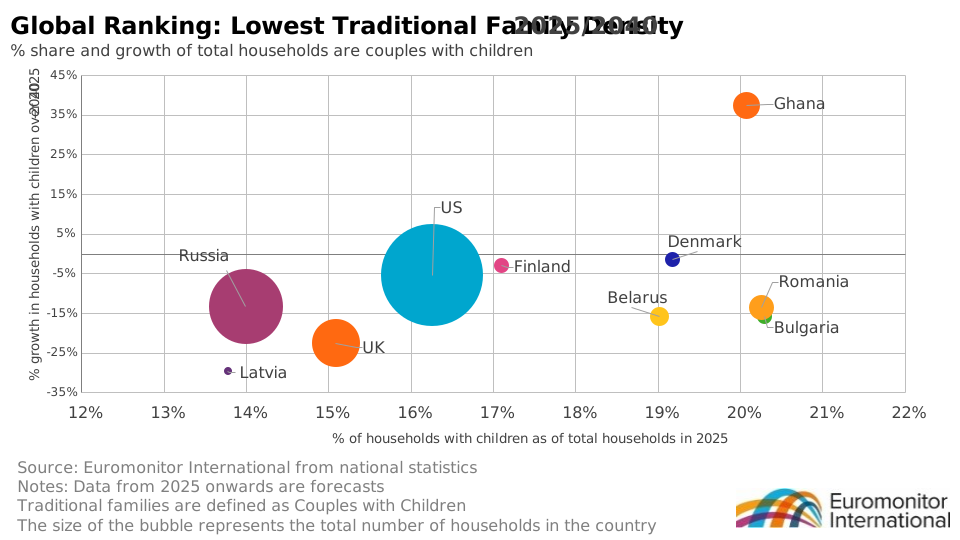
Fertility rates are in decline, particularly in developed nations, with the average expected to fall to 2.4 children born per female (1.5 in developed countries) by 2040. Economic factors such as increased housing costs, delayed life milestones, and income instability are making childbearing a privilege. Socially, individual freedom and evolving family structures are normalising cohabitation, same-sex families, and pet-centric households. Technological advancements are also redefining the nature of connection, with 90% of households owning a smartphone in 2025 (98% in 2040), and digital communities increasingly supplementing or supplanting traditional support systems.
Values, not labels: The rise of new family types
Shared values and lifestyle choices, rather than size or parental status, are increasingly defining modern families. Four key types are shaping the future: Connected Shoppers (tech-driven and convenience-focused), Wellness Enthusiasts (prioritising wellbeing), Experience Seekers (valuing meaningful moments over possessions) and Changemakers (purpose-led, sustainability-minded).
For example, Connected Shoppers, especially parents, are embracing digital tools to simplify life. In 2025, according to the Euromonitor International Voice of the Consumer: Lifestyles survey, 75% of couples with children sought ways to streamline daily routines, 84% among Connected Shoppers. Brands that integrate seamlessly into digital ecosystems, such as through smart kitchen partnerships or AI-powered shopping, are winning loyalty.
Wellness Enthusiasts are fuelling a boom in health spending, particularly among child-free couples in ageing markets. US-based January AI epitomises this trend, offering a free app that leverages generative AI and metabolic science to guide healthier food choices, democratising personalised nutrition for families and individuals alike.
Experience and purpose: New currencies of connection
Increasingly, Experience Seekers are prioritising experiences over ownership. Global expenditure on hotels and catering is forecast to rise by 92% between 2025 and 2040, with child-free couples leading the way. Airbnb, based in the US, has pivoted to offer curated, affordable, and AI-personalised stays and activities, catering to both families and couples seeking connection and value.
Changemakers are prioritising sustainability as a key purchasing criterion. In Canada, Toy Maker of Lunenburg’s eco-friendly wooden puzzles combine play with environmental education, appealing to parents who want products with both purpose and value. In the US, pet care is being reinvented for “fur parents” – Nuna’s Tavo Pets line, for example, adapts baby travel gear for pet safety, reflecting the growing trend towards pets as family.
Winning strategies for a fluid future
To remain relevant, brands must recalibrate their approach.
- Defend the core by premiumising traditional products for more demanding, health-conscious families, as seen with Unicharm’s mosquito-repellent nappies in Vietnam.
- Extend usage occasions by repositioning products, such as Danone’s Danimals yoghurt now marketed as an all-day snack.
- Expand reach by targeting new demographics – China’s PopMart has turned blind-box collectables into an adult lifestyle trend, while Build-A-Bear in the US now attributes 40% of sales to teens and adults.
- Reinvent entirely by creating new categories for emerging needs, as seen in the booming pet wellness market.
Alongside the shift from demographic segmentation to value-based engagement, the normalisation of family diversity is becoming the prevailing trend. Brands that design for lived lifestyles, not labels, and communicate through emotional connection will capture growth. Early adopters that innovate for new forms of kinship – be it digital, pet-centric, or community-based – will unlock opportunities, while those clinging to legacy models risk stagnation.
To gain deeper insights, consult the comprehensive report, The Modern Family: Adapting to the Transformation.
This analysis was generated with AI assistance. All content is original to Euromonitor, based on the report, The Modern Family: Adapting to the Transformation, and has undergone a thorough editorial review for accuracy and integrity.