
The global personal accessories market is being recalibrated by economic uncertainty, shifting consumer expectations and rapid digital transformation. Despite inflationary pressure, trade volatility and cautious discretionary spending, the sector returned to growth in 2025. Jewellery and watches remain the standout performers, stabilising the market and signalling where opportunities lie.
A sector defined by uneven recovery and heightened consumer selectivity
After flat real growth in 2024, personal accessories recorded renewed momentum in 2025 as both volume and value edged upwards. Performance, however, is uneven across regions. Asia Pacific remains the engine of global expansion, supporting near-term recovery and underpinning growth prospects to 2030. Western Europe shows signs of stabilisation as inflation moderates and confidence gradually improves. North America remains more subdued, constrained by trade turbulence, elevated prices and evolving spending priorities.
Macroeconomic pressures continue to reshape consumption behaviour. Inflation, shifting tariffs and lingering supply chain disruption have reinforced a “considered consumption” mindset. Shoppers are narrowing their repertoires, prioritising fewer purchases that deliver quality, longevity and emotional significance. This shift is eroding impulse-led demand and intensifying competition, particularly within the mid-market, which is increasingly squeezed between low-cost basics and premium propositions with clearer differentiation.
Categories associated with symbolism, craftsmanship and cultural value have demonstrated greater resilience. Jewellery and watches, in particular, benefit from their ability to function as gifts, investments and expressions of identity, reinforcing their central role in the sector’s trajectory.
Jewellery and watches as strategic growth engines
Jewellery remains the cornerstone of the personal accessories market, accounting for 56% of global sales in 2025 and forecast to grow at a 2.5% CAGR in real terms through to 2030
Source: Euromonitor International
Demand is supported by a dual dynamic. At the upper end, high-net-worth consumers continue to view jewellery as a store of value amid economic uncertainty. At the same time, younger consumers are embracing more accessible forms of adornment, driven by customisation, alternative materials and designs that reflect personal identity and values. Innovation ranges from modular formats and personalised pieces to digitally-enabled storytelling that strengthens emotional connection. Watches, both traditional and connected, are also regaining momentum. Recovery is most visible in Asia Pacific, Western Europe and the Middle East, supported by gifting culture, tourism flows and renewed appreciation for heritage and craftsmanship. Limited editions, collaborations and digital engagement are helping brands extend relevance across generations, positioning watches as lifestyle statements rather than purely functional items.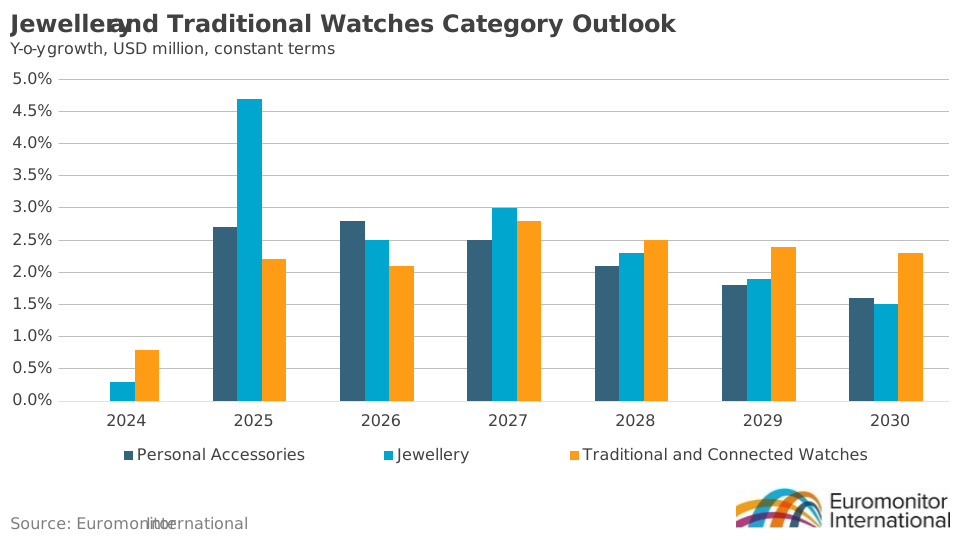
Tariff, trade and commodity volatility
Personal accessories is highly exposed to global trade flows. Fluctuating commodity prices, especially for gold and silver, combined with shifting tariff structures increase operational complexity. Recent trade policies demonstrate how quickly sourcing landscapes can change, presenting both risk and opportunity. Brands must adopt agile supply strategies, diversify production markets and build buffers against future volatility. Those that fail to restructure risk margin compression and disruptions across key categories, particularly jewellery, watches and leather goods.
The continued pursuit of value
Value has become multidimensional. Consumers are not simply trading down; they are evaluating what each purchase delivers over time. Craftsmanship, comfort, longevity, responsible sourcing and emotional relevance matter more than ever. This shift has profound implications for the mid‑market, which is increasingly squeezed between low-cost basics and premium labels. Brands must move beyond discounting to articulate clear, credible value narratives. Digital-first jewellery brands leveraging hypoallergenic materials, recycled metals and strong design integrity offer success cases in this environment. Ultimately, demonstrating “worth” through transparency and quality will determine loyalty as consumers narrow their purchasing repertoire.
Global travellers and emerging markets as growth multipliers
Rising international mobility and the rapid expansion of middle‑class consumers are redefining demand patterns. These shoppers are brand‑aware, digitally engaged and motivated by culturally relevant design. Their preferences are accelerating localisation strategies, from regional colour palettes and exclusive SKUs to localised storytelling and festival-specific collections. Travel retail remains an important channel. Airport purchases, destination boutiques and travel-exclusive editions play a growing role in premium conversion. Meanwhile, markets such as India, Mexico and Indonesia are becoming essential long-term growth pillars. Brands that invest in cultural resonance, local collaboration and flexible price tiering will capture the broadest share of this diversified, rapidly scaling audience.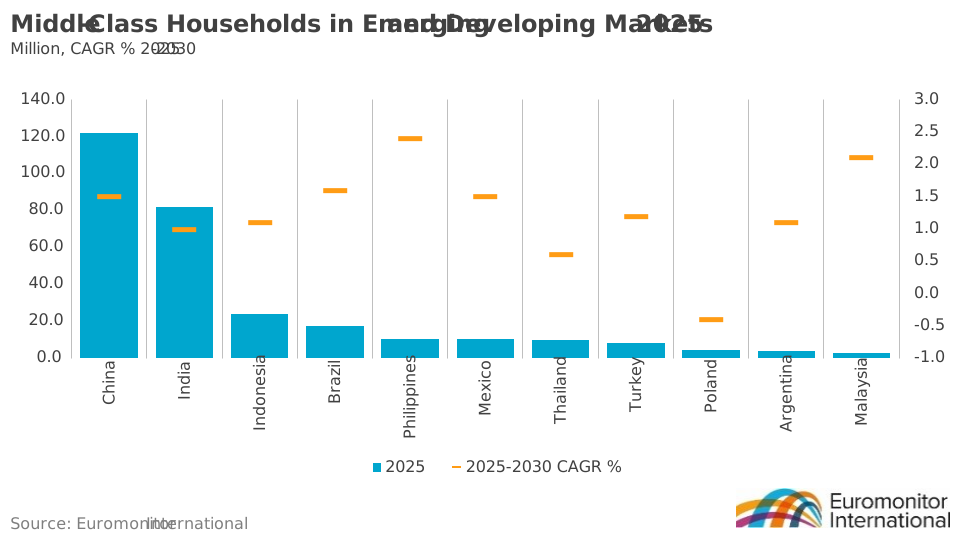
For more insights, read our strategy briefing, World Market for Personal Accessories, and for more analysis of the top trends driving the sector, see Top Trends in Personal Accessories.