
Consumer polarisation is transforming the global marketplace, presenting both challenges and opportunities for businesses. As demographics, income levels, and values continue to diverge, markets are fragmenting into increasingly distinct segments. The Consumer Landscape Polarisation Index (the top line results discussed in this article) provides a clear, data-led view of divergence across 40 countries. Built on demographic, financial and psychographic metrics, it identifies where polarisation is most intense.
Polarised household types reshape demand
Developed economies dominate the global ranking of countries with the most diverse household structures, reflecting the broader trend towards consumer fragmentation. Five of the 10 most divergent markets are in Western Europe, where post-war baby booms produced large cohorts who have since had children of their own, reinforcing the prevalence of couple-with-children households. At the same time, population ageing, along with rising divorce and separation rates, has contributed to an increase in single-adult households, including among middle-aged and senior individuals.
Asia’s largest economies also feature prominently.
Japan, South Korea and China collectively account for over 35% of the world’s single-person households and 20% of global families with children
Source: Euromonitor International
While ageing remains a major driver, the surge in single-person households in Asia also reflects delayed and declining marriage rates, shaped by economic uncertainty, intense work culture and shifting social norms. Living alone has become increasingly accepted, particularly among younger generations.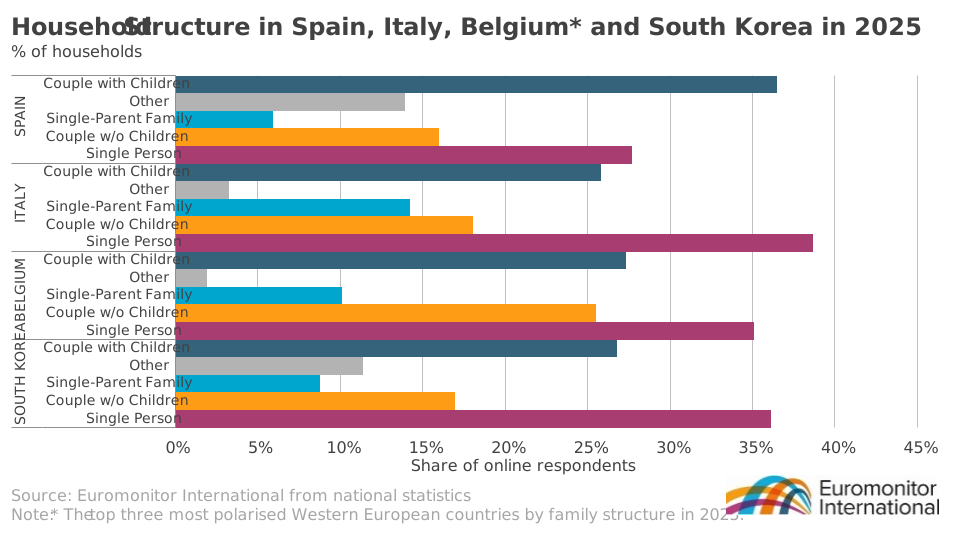
Social class E surges, deepening global income divides
In 2024, social class E grew by 1.3%, adding nearly 26 million people to its ranks. Social class A recorded the second fastest growth. This dynamic exemplifies income divide, which represents a measurable aspect of the broader fragmentation across income levels.
South Africa and Nigeria top the 2025 income divide pillar globally, with large cohorts in both income extremes, while the US is and will remain the most divided developed market. Over one third of consumers aged 15+ in the US are classified into the low-income bracket, while, at the same time, a significant affluent group, comprising one in eight, also stands out. Economic volatility and inflationary pressures, resulting from policy changes under the new administration, are likely to expand the low-income base and deepen the divide. While US consumers remain in focus of these changes, the ripple effects are expected to influence spending across interconnected economies and reshape global consumption too.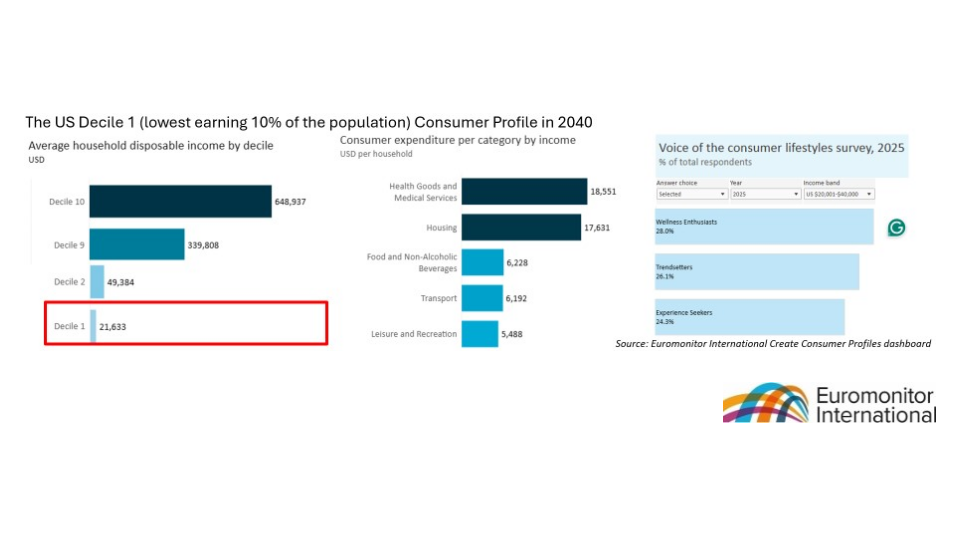
As political and economic divides deepen, fragmentation manifests itself through polarisation in contrasts of consumer behaviours. The psychographic divide reveals sharp divides in burnout levels, as well as preferences for digital versus physical experiences, political and social engagement, privacy concerns, and identity motivations, particularly between status-driven and autonomy-seeking consumers.
Poland ranks highest on the behavioural contrast pillar, driven by conflicting attitudes towards privacy and digital engagement. According to the Euromonitor Voice of the Consumer: Lifestyles Survey, fielded January to February 2025, 51% of Polish consumers are cautious about sharing personal data with the government, and 54% with companies, while a sizeable portion remain unconcerned.
Among the developed countries, the most behaviourally contrasting in 2025 is the UK. According to the Euromonitor Voice of the Consumer: Lifestyles Survey, fielded January to February 2025, many UK consumers report feeling pressured to accomplish their daily tasks. At the same time, a comparatively large share of respondents reports high levels of contentment. Political engagement in the UK exhibits a similarly sharp contrast.
Consumers are splitting, growth follows the fault lines
The average consumer no longer exists, and brands must navigate this complexity by identifying where divergence is sharpest and responding with precision. Turning consumer polarisation into growth requires at least four considerations:
- Refining segment focus. Replace broad, multi-segment approaches with targeted analysis of key fragmented consumer groups, especially those showing signs of polarisation.
- Designing flexible value tiers. Multi-segment businesses should build modular packages focused on their most concentrated segments while offering optional features for consumers across the fragmented middle, capturing both market diversity and polarisation at the extremes.
- Personalising service to deepen connection. Deliver high-touch advisory experiences in flagship stores or virtual showrooms, complemented by efficient self-service digital platforms. Use technology, usage, and attitudes analysis to tailor messaging and service levels to priority segments.
- Establishing a polarisation radar. Deploy a dynamic dashboard that tracks household structure, income, and behavioural fragmentation at the market and segment levels.
Learn more about the consumer landscape in our report, Beyond Affordability: Turning Consumer Polarisation into Growth in Fragmented Markets.