
The global economy weathered trade shocks in 2025 and is expected to continue its resilience, supported by lower interest rates, moderating inflation, and sustained consumption. However, 2026 global growth remains subdued, forecast at 3.1%, while the outlook is fragile amid ongoing trade and geopolitical uncertainties. Despite the global challenges, some emerging economies, particularly those from Asia Pacific, are expected to sustain solid growth rates and lead the global economic expansion in 2026 and beyond.
Of the world’s 62 major economies in Euromonitor International’s Macro Model, emerging countries India, Vietnam, Egypt, the Philippines, and Indonesia are expected to achieve the highest real GDP growth in 2026.
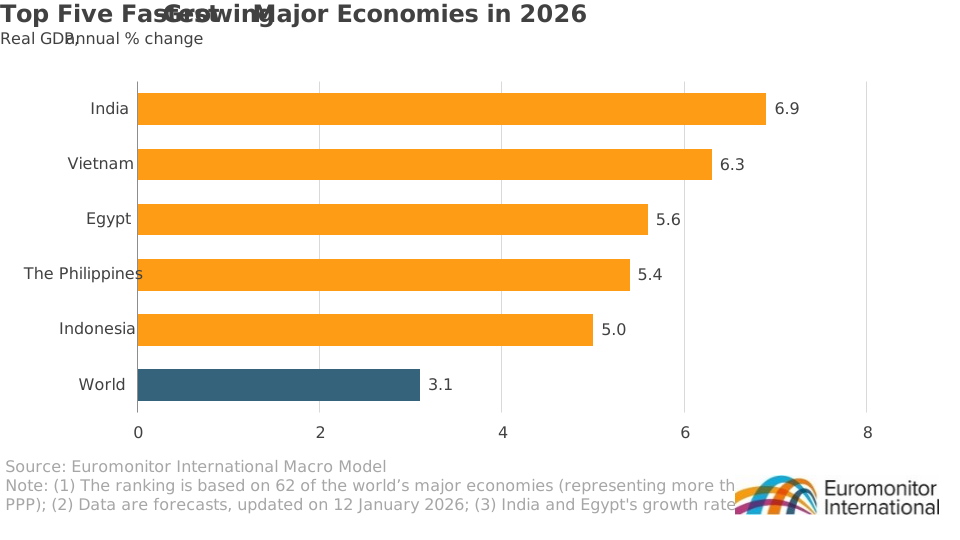
India’s economy is expected to grow by 6.9% in 2026, the fastest among major economies.
India will overtake Japan as the world’s fourth largest economy by nominal GDP in 2026
Source: Euromonitor International
While high US tariffs weigh on exports, growth is underpinned by resilient private consumption (forming 62% of GDP in 2025), expanding public investment, and structural reforms. Business environment improvements and global supply chain diversification strengthen India’s investment trajectory.
Over the medium to long term, India will benefit from youthful demographics, a growing middle class, technological innovation, and deeper integration in global value chains. Opportunities span sectors from household goods to industrial machinery, though businesses must navigate infrastructure gaps, regulatory hurdles, and price-sensitive consumers.
Vietnam: An emerging export and manufacturing powerhouse amid global fragmentation
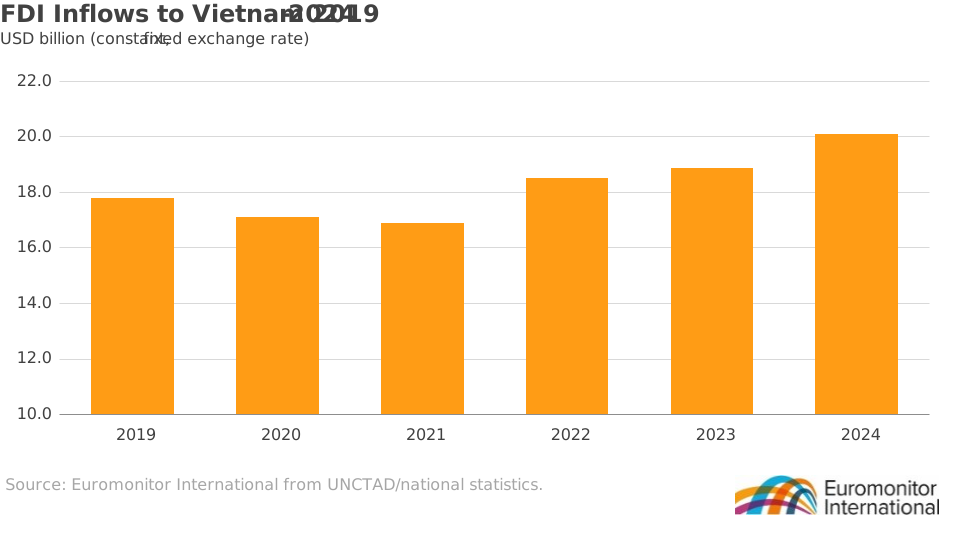
Despite headwinds from weakening external demand and high US tariffs, Vietnam is projected to grow by 6.3% in 2026, supported by resilient investment. The slowdown from 2025’s 7.3% is due to the full-year impact of 20% US tariffs and the expiry of some 2025 stimulus measures. Exports, comprising 87.4% of GDP in 2025, remain critical, with the US as the largest market (30% of exports in 2024).
Over the long term, Vietnam will remain a standout investment destination in Asia Pacific, driven by its dynamic export manufacturing base, expanding tech sector, and growing middle class. With its young, educated workforce, favourable trade policies, and strategic location on global trade routes, Vietnam is well positioned to benefit from supply chain diversification as firms reduce reliance on China.
Egypt’s economic outlook is improving, supported by IMF‑backed structural reforms and a renewed influx of foreign investment. Real GDP growth is projected to rise from 4.4% in 2025 to 5.6% in 2026, positioning Egypt as one of the fastest‑growing major economies in the MENA region.
The government is advancing an ambitious development agenda, with major projects such as the New Administrative Capital east of Cairo, continued expansion of Suez Canal capacity, and targeted investments in pharmaceuticals, agriculture, automotive manufacturing, and renewable energy. Demographics remain a structural advantage: with a population of 107 million in 2026 and a predominantly young profile, Egypt continues to offer considerable long‑term demand potential, especially for consumer‑focused industries.
However, significant risks remain. High poverty and unemployment levels, alongside a fragile regional security environment, could temper the recovery, particularly through foreign exchange pressures and potential disruptions to tourism and Suez Canal shipping routes.
The Philippines: Lower interest rates and inflation to support household spending
The Philippine economy is expected to grow by 5.4% in 2026, broadly in line with 2025, as soft global demand and an election‑related public spending ban cap near‑term momentum. Easing interest rates and stable inflation will continue to support household consumption and private investment, but elevated US tariffs on Philippine exports (19%) and persistent climate‑related risks present headwinds. Consumer spending, accounting for 76% of GDP in 2025, will remain the core engine of growth.
Over the medium to long term, the Philippines is set to maintain solid growth, backed by a large and increasingly affluent consumer base, alongside structural reforms aimed at boosting investment and productivity.
Indonesia: Steady expansion backed by stimulus and increased investment
Indonesia’s real GDP growth is projected to remain resilient at 5.0% in 2026, supported by a USD2 billion fiscal stimulus and monetary easing. However, the near-term outlook is tempered by late-2025 cyclones that caused casualties and infrastructure damage, alongside potential export slowdowns amid global trade uncertainty and weaker prices for EV-related commodities.
Long-term prospects remain strong, underpinned by a growing middle class and significant infrastructure investment, including cloud and AI capabilities. Manufacturing is poised to benefit from global supply chain diversification and deeper regional trade linkages.
India, Vietnam, Indonesia, Egypt, and the Philippines will lead global growth in 2026, each offering distinct opportunities for global businesses: India’s scale and innovation, Vietnam’s manufacturing strength, Indonesia’s infrastructure push, the Philippines’ consumer-driven economy, and Egypt’s improved economic environment.
Learn more about the global economic prospects in our on-demand webinar, Economic outlook for 2026: Global forecasts and insights.