
Vietnam is rapidly positioning itself at the forefront of Southeast Asia’s electric mobility revolution. Euromonitor’s latest research reveals that the country is outpacing its regional peers in electric vehicle (EV) adoption, with domestic players VinFast and Xanh SM not only driving the electrification of transport but also reshaping competition by integrating vehicle manufacturing, charging infrastructure, and mobility services. This transformation creates significant opportunities for investors and industry partners to participate in Vietnam’s transition to sustainable mobility.
EV market outlook
Vietnam is emerging as one of Southeast Asia’s most dynamic EV markets. Electric passenger car penetration is forecast to rise from just 0.3% of the national fleet in 2022 to 6.3% by 2025, and to exceed 20% by 2030, supported by strong government incentives, expanding local production capacity, and rising consumer confidence in EV technology. By 2040, more than half of all passenger vehicles in Vietnam are expected to be electric.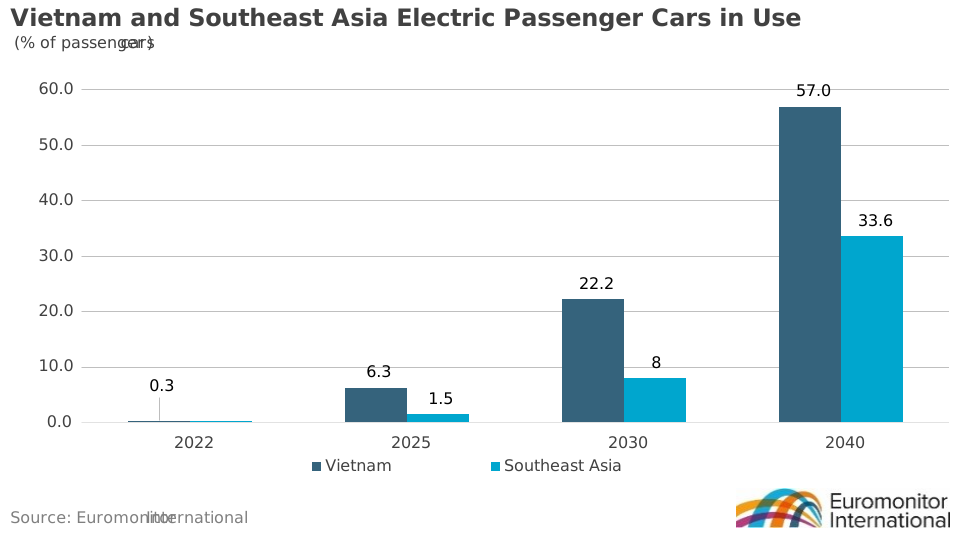
In sales terms, Vietnam’s EV share is expected to reach 36% in 2025 and 50% by 2030, compared with the regional averages of 17% and 28%, respectively
Source: Euromonitor International
The country’s EV ecosystem, anchored by domestic manufacturers such as VinFast and supported by state-backed infrastructure investment, has created a strong foundation for green mobility growth. Policy incentives such as 0% registration fees for EVs, significantly reduced special consumption tax, import duty exemptions for locally assembled EVs, and planned ICE bans in major cities, further reinforce the long-term viability of EV adoption in Vietnam.
Competition in the ride-hailing market
Vietnam’s ride-hailing sector has also expanded rapidly, reaching an estimated USD880 million in 2024 and projected to exceed USD1.2 billion by 2025. Rising urbanisation, high smartphone adoption, and favourable digital-economy policies have underpinned strong demand for on-demand mobility services.
The market remains highly competitive, led by Grab and the fast-rising Xanh SM, which introduced Vietnam’s first all-electric ride-hailing fleet in 2023. While Grab maintains leadership through its scale and super-app integration, Xanh SM’s 100% EV model has demonstrated that electrification can compete on both cost and consumer appeal.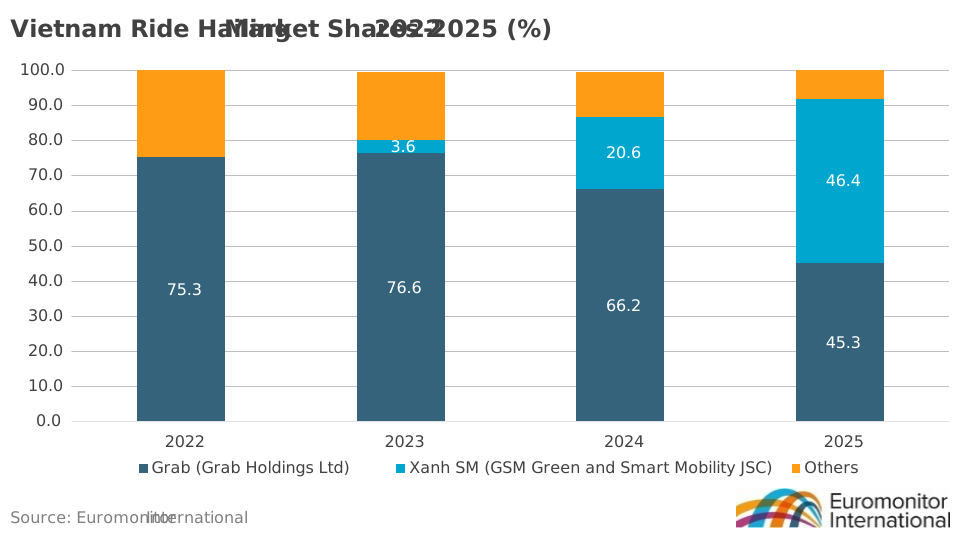
Both Xanh SM and VinFast are subsidiaries of VinGroup, Vietnam’s largest private conglomerate. This shared ownership enables a unified ecosystem that spans EV manufacturing, charging infrastructure, and electric mobility services – positioning VinGroup as a key architect of Vietnam’s green mobility future.
The market, however, is entering a more competitive phase. VinFast’s early leadership is now being challenged by a surge of new entrants such as BYD, Dongfeng, Wuling, Geely, MG, and Aion which expand aggressively with competitive pricing and diverse models. VinFast remains well placed to compete thanks to its nationwide charging network and brand recognition, but maintaining leadership in a rapidly evolving marketplace will require continued innovation, affordability, and infrastructure expansion.
Long-term prospects
Both Vietnam and the broader Southeast Asia region are moving decisively towards electrified transport. This transition creates major opportunities for automotive manufacturers, mobility platforms, and infrastructure providers. Companies that integrate EV technology into their business models, such as Xanh SM in ride-hailing or VinFast in production are positioned to capture early advantage as governments introduce stricter emissions policies and expand charging networks.
Consumer sentiment is shifting as well. Vietnamese consumers are increasingly receptive to EVs, driven by rising fuel costs, improved vehicle options, growing environmental awareness, and a strong sense of pride in supporting national brands like VinFast.
As one of the fastest-growing EV and ride-hailing markets in Southeast Asia, the country represents a compelling case for investors seeking exposure to sustainable transport growth in emerging economies.
Read our article, Chinese Electric Vehicle Battery Giants Accelerate Southeast Asia Expansion, for Southeast Asia’s rising role in the global EV supply chain.