
Households are transforming, influenced by long-term demographic shifts and fast-changing events. Five trends stand out, namely smaller households, the rise of mature consumers, housing affordability challenges, digitally and experience dense homes, and next-generation city living. By 2040, single-person households are expected to account for 26% of all households globally, up from 22% in 2024, the fastest-growing household type. Understanding these shifts helps businesses anticipate change and capture growth opportunities.
Smaller households, bigger opportunities
The rapid growth in smaller households, particularly single-person households, is transforming global consumption patterns. Demographic shifts, changing cultural norms, economic independence, and urbanisation are driving this change. The number of single-person households grew by 3.8% in 2024 and is forecast to expand by 44.8% between 2024 and 2040.
For businesses, this shift is driving adjustments in product formats, sizes and features. At the same time, it opens opportunities to develop offerings designed for solo living, such as single‑serve packaging. For example, South Korea’s Lotte Himart launched PLUX in April 2025, a private label electronics brand designed for households of one to two persons. This launch responds to solo dweller demand for compact, premium and personalised products.
Ageing homes, evolving needs
By 2040, one in five of the global population is expected to be aged 60+, with regions such as Europe, North America and Australasia experiencing even higher proportions. This demographic shift is driven by ageing populations and longer life expectancies, but, especially in the aforementioned regions, it results in mature households accumulating greater wealth and stable income streams.
41% of consumers aged 60+ want goods and services that are uniquely tailored to them
Source: Euromonitor Voice of the Consumer: Lifestyles Survey, fielded Jan-Feb 2025 (n=39,333)
Mature consumers prioritise health, wellness, comfort and personalised experiences, driving demand for growth in sectors such as premium nutrition, technology and other discretionary categories, tailored to ageing needs. For example, the Brain Health Programme by UK-based supplement brand Cytoplan offers nutrition and lifestyle coaching designed to optimise brain health and cognitive function, important for mature consumers.
Housing affordability squeeze
Housing affordability is deteriorating due to rising prices and slow wage growth. Consumers are compromising on space, location, or ownership, choosing to repair, upgrade, and repurpose instead of buying new. Alternative housing models such as co‑living are expanding, with operators such as Dash Living (Singapore, Hong Kong, Japan, Australia), Common (US) and Kosy Co Living EP (UK) maintaining strong occupancy, particularly among Gen Z and Millennials.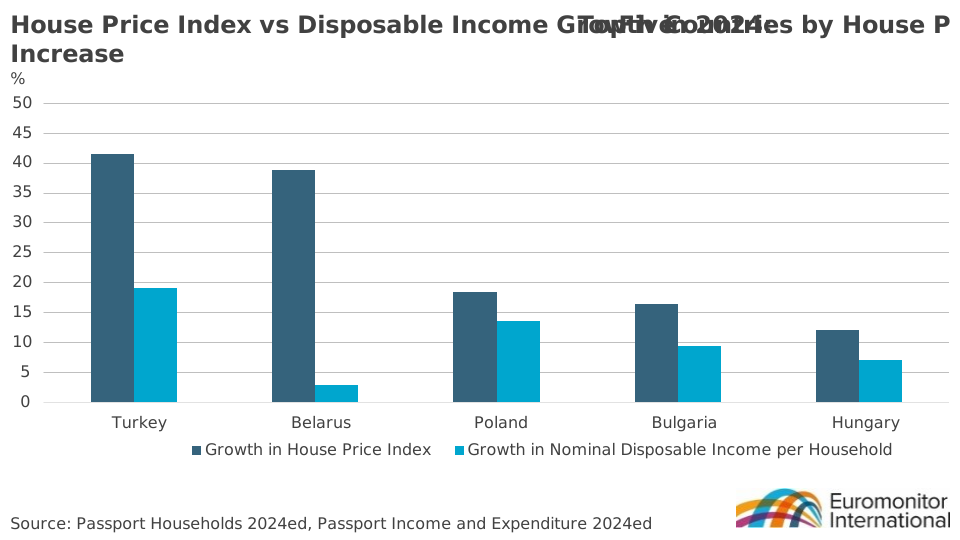
Digitally dense homes, equipped with high-speed internet and smart devices, are transforming consumer expectations. Households increasingly want immersive, personalised experiences that extend beyond basic connectivity. This shift is led by Gen Z and rising middle-class households who expect seamless automation, AI-driven services and integrated entertainment as standard.
Growth potential lies in designing affordable home models that deliver safe, meaningful, experience-rich living. Developers, prop‑tech innovators and marketers can enhance appeal by integrating virtual property tours, AI‑driven ambient controls and community‑focused digital services into accessible housing solutions. Even simpler, less technology‑intensive enhancements, such as improving sleeping environments or elevating dining experiences, are valued by households seeking to increase comfort and enjoyment at home.
Next-gen urban wellness
Urbanisation is accelerating, with 71% of global households expected to live in cities by 2040. Urban households will drive 81% of total spending, making them the key consumption driver. At the same time, expectations for city living are evolving, with urban respondents seeing access to green spaces and construction with sustainable materials as defining features of their ideal home.
For business leaders, the growth opportunity lies in creating urban living ecosystems that integrate greenery, sustainability and wellness at attainable price points. Strategic partnerships across real estate, health and mobility can enable integrated services, from energy‑as‑a‑service (EaaS) solutions to community wellness hubs, positioning brands to lead in the next generation of urban living.
Adapting to changing household demographics successfully
Demographic shifts, such as the rise of mature and single-person households, are reshaping consumption patterns. Brands that integrate consumer insights into opportunity scorecards can better anticipate demand and identify growth areas.
To stay competitive, businesses should adopt flexible, modular strategies that allow scalable personalisation without excessive cost. Consumers are seeking greater value amid affordability pressures, creating opportunities in wellness, convenience, multifunctionality, and sustainability: key frontiers for innovation.
You can access the full Top Five Trends in Households report, here.
This content was written with the assistance of AI. All information is original to Euromonitor and is derived from our report, “Top Five Trends in Households”. The final article has been thoroughly reviewed by our team to maintain the highest standards of quality and integrity.