LoyaltyExplore the evolving customer loyalty landscape from a multi-industry perspective. Gain insights and learn how to boost retention, increase engagement and future-proof your strategies with our thought leadership.
Onboarding is the easy part. The real challenge is month three, when the early excitement fades, reminders are ignored and transactional rewards no longer cut through. As loyalty programmes search for long‑term relevance, wellness is emerging as a powerful engine for sustained engagement; not because it is trendy, but because it taps into something members already care about: feeling better, living better and making progress that actually matters.
Wellness resonates as it delivers emotional ROI
A discount rewards the wallet, wellness rewards the self. That shift is critical in a landscape where most programmes rely on monetary incentives, but still struggle to keep people engaged. And the opportunity is huge: the global health and wellness economy reached USD1.2 trillion in 2025, reflecting a consumer expectation that brands should support their wellbeing, not just their spending habits.
What makes wellness so valuable for loyalty is how deeply personal it is. Across regions, consumers consistently see mental balance and quality rest as core to health – but motivations vary by culture. In Latin America, 64% of respondents prioritise emotional wellbeing, while in Asia Pacific and the Middle East and Africa, having a healthy immune system ranks highest, at 54% and 69%, respectively, according to Euromonitor’s 2025 Consumer Loyalty Survey. These differences show why generic “move more, eat better” challenges fall flat: wellness isn’t universal. It must be tailored. And when it feels personal, it becomes repeatable.
By creating a personalised health dashboard that links e‑receipts with wearable data, FamilyMart gives members full control over how they participate and adjust their choices as their needs evolve. This approach clearly resonates: monthly active users grew from 656,900 in Q1 2025 to 997,400 in Q4 2025, according to Euromonitor’s Loyalty Competitor Tracker.
Wellness and choice naturally align because every member defines “better” differently. When engagement becomes self‑directed rather than programme‑directed, motivation holds up better after onboarding, when it typically drops. Choice keeps the experience achievable and adaptable, helping members design a journey that feels realistic, not aspirational.
Wellness enables a more human engagement rhythm
Instead of relying on one‑off campaigns or high‑effort challenges, brands can use recurring prompts that fit into everyday life – moments of reflection, small routines and simple progress cues. Programmes like Vitality in South Africa show how this works in practice: members receive weekly personalised goals and even have access to a Rest Week: a reward unlocked after 25 consecutive active weeks that lets members pause without breaking their streak. This kind of reset‑friendly design prevents discouragement, because loyalty is rarely lost in a single moment – it fades through accumulated pressure. Flexible wellness goals keep the door open and make re‑engagement feel easy.
There is also a strategic upside: wellness reframes the economics of loyalty. When members feel rewarded by their own progress, brands deliver value without over‑relying on discounts. And the need is clear: According to Euromonitor’s Loyalty Competitor Tracker, which evaluates KPIs for the top 100 global loyalty brands across six industries, 63% of brands underperform on engagement, highlighting how much room there is to improve.
Routine wellness interactions reveal simple but powerful signals: who participates, how regularly they return, and which nudges actually work. This dynamic forms a simple loop: better insights sharpen personalisation and lift conversion, with each round of engagement strengthening the next.
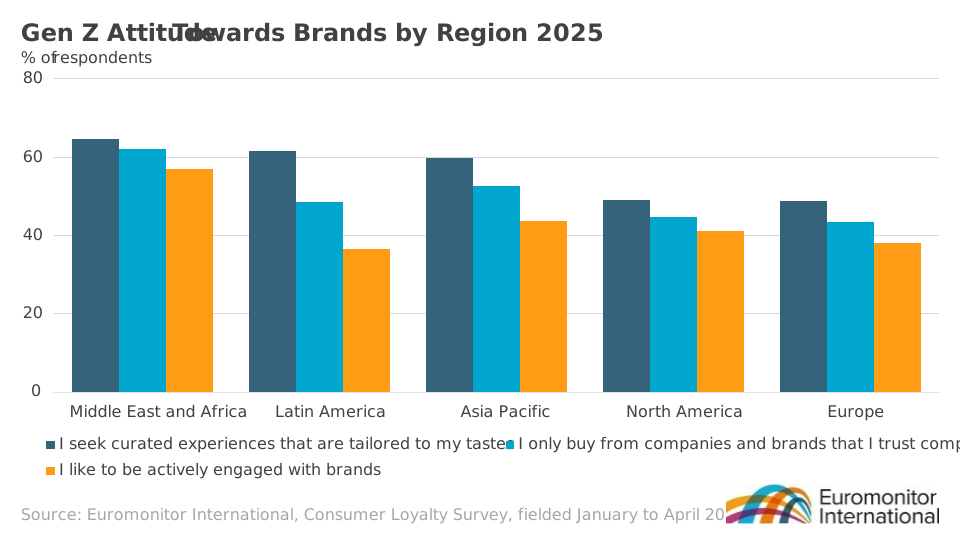
“Gen Z is particularly key to address. To win Gen Z, who are notoriously more fickle with brands, and are tech-native and wellness-led, brands must shift from purchase-driven points to wellness-driven loyalty that signals purpose and adds real value. Programmes that coach habits, not just discount baskets – for example Kroger’s OptUP offering free virtual nutrition coaching for Plus members – turn daily health goals into engagement and repeat choice, not mere transactions.” –
Karine Dussimon – Euromonitor International’s Global Insight Manager – Health and Wellness
Wellness in loyalty isn’t about turning every brand into a health brand
It starts with recognising that consumers now define wellbeing in broader, more accessible terms. When programmes align with this wider idea of the “better self,” wellness becomes relevant across almost any category – from retail and travel to financial services and foodservice.
That’s where the real opportunity lies. Wellness gives brands permission to show up in small, meaningful ways that integrate naturally into everyday life – building emotional stickiness, richer insight and a sense of progress that no discount can replicate.
Retail in 2026 is being rewritten by AI, autonomous commerce and evolving consumer behaviours. These forces are transforming how retailers compete, connect with…
The 2026 Iran conflict marks the fourth major economic disruption to global consumer markets in under two decades. While each crisis originated differently,…