
In a year shaped by geopolitical shocks and constant disruptions, sustainable FMCG products are unexpectedly holding their ground.
From Q1 to Q3 2025, sustainable SKUs declined more slowly than their non-sustainable counterparts, gaining share across seven of 11 industries
Source: Euromonitor Sustainability Quarterly Tracker
From tensions sparked by Trump’s tariff agenda to war in the Middle East and Eastern Europe, the global FMCG landscape has been rocked by disruption. Amid this turbulence, sustainability was expected to take a back seat. The exit of FMCG players from the US Plastic Pact and the collapse of global plastic pact negotiations added to the perception that sustainability was losing relevance. With companies in survival mode, trimming SKUs and prioritising margin protection, many assumed green products would be among the first to go. But the data tell a different story.
Sustainable SKUs are outperforming on a shrinking shelf
Q1 2025 saw a brief expansion in global SKU counts, driven primarily by non-sustainable products. But as geopolitical and economic pressures mounted, the trend reversed.
From Q1 to Q3 2025, global FMCG SKU counts fell by 28% as companies streamlined portfolios. Non-sustainable SKUs saw a sharper decline of 31%, leading to a 2.1pp increase in sustainable share of digital shelf.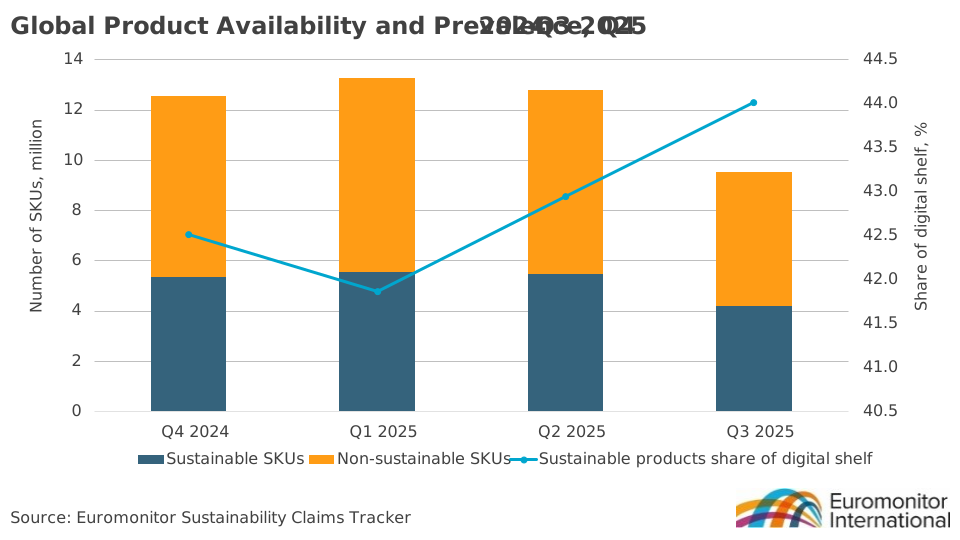
Even as brands leaned into smaller pack sizes to meet price-sensitive demand, sustainable products held their ground on affordability. Median prices for sustainable SKUs dropped by 3.1% over the same period.
A global trend with local hotspots
Sustainable products are gaining ground globally. The five fastest-growing countries – the Netherlands, Mexico, Japan, the UAE, and South Africa – span five continents.
The Netherlands saw the sharpest growth in sustainable share of digital shelf, a 5pp increase over Q1-Q3 2025, led by toilet care. Riding the broader trend towards greener formulations, home care saw a surge in biodegradable, organic, and vegan claims, layered onto already established natural and environmentally friendly messaging. Brands like Ecover and Robijn stand out, offering the highest number of SKUs aligned with these claims.
Mexico, the second fastest-growing market in sustainable share, saw its momentum fuelled by beauty and personal care products, where Garnier and NYX even grew their number of SKUs. The mass adoption of clean beauty has raised consumer expectations, driving brands to combine cruelty-free, vegan, organic, and sulphate-free claims with natural positioning.
Leverage the sustainability benefits of agile operational pivots
As volatility reshaped the FMCG landscape, companies turned to agile, cost-effective solutions to stabilise operations.
Nearshoring (moving production closer to markets) and friendshoring (shifting it to politically aligned countries) helped secure supply chains while reducing emissions from long-distance transportation. Companies are reinforcing local operations. For example, Danone invested USD65 million to expand its dairy and plant-based production facility in the US, expanding labour opportunities and boosting local economy.
Modular manufacturing allows companies to quickly adapt product formulations in response to supply chain disruptions, regulatory shifts (such as sugar bans or the rise of GLP-1 drugs), and evolving consumer preferences. It also allows for low-cost, low-waste product testing – reducing emissions and even enabling experimentation with bio-based ingredients and sustainable packaging without overhauling entire production lines.
The communication gap: A missed opportunity
While urgent challenges have forced many FMCG companies to focus on short-term survival, leading players have quietly continued investing in long-term sustainability strategies.
Nescafé now sources one third of its coffee from regenerative farms, well ahead of its 2025 goal of 20%. PepsiCo has expanded its Positive Agriculture programme to over 400,000 acres and recently launched regenerative initiatives across four Latin American markets, helping farmers cut emissions by up to 60% through low-carbon fertilisers.
These efforts go beyond regulatory compliance with frameworks like Extended Producer Responsibility (EPR) schemes and the EU Deforestation Regulation (EUDR). They reflect a commitment to building operational resilience and future-proofing business models.
Yet, even as sustainable SKUs showed relative resilience, they still declined. And while many FMCG companies are actively measuring emissions and investing in sustainability initiatives, they often fall short in communicating these efforts due to fear of public backlash.
Sustainability wasn’t the headline strategy of 2025, but it quietly proved its value. In a year of volatility, sustainable products weren’t just spared – they earned their place on the shelf.
Learn more by reading our Global Sustainability Trends: Embracing a Lower Carbon Future and How Creating Sustainable Value Drives Business Growth reports.