

In 2025, sustainability has demonstrated high resilience amidst global SKU rationalisation, remaining a key complementary feature for product development. In the last 12 months, 60% of all new products launched globally carried at least one sustainability claim. For private label products, that figure was even higher, at 63% – reflecting consumers’ preference for affordable but sustainable options, while signalling retailers’ evolving positioning as credible, value-driven and innovative competitors to national brands
Private label products are addressing the key barriers that have historically held consumers back from purchasing them.
The top three obstacles to sustainable purchasing remain higher prices (40%), unclear labelling (27%), and uncertainty about which claims to trust (25%)
Source: Euromonitor Voice of the Consumer: Sustainability Survey, fielded January to February 2025
Retailers are tackling these challenges head-on, making sustainability affordable, transparent and credible – and in doing so, they are reshaping the competitive landscape.
Private label surges ahead in sustainable launches
The numbers tell a compelling story. In the first quarter of 2025, private label accounted for 16% of new sustainable product launches on e-commerce. By the fourth quarter, that share had jumped to 29%. Even more striking, half of the top 10 brands for sustainable launches came from private label.
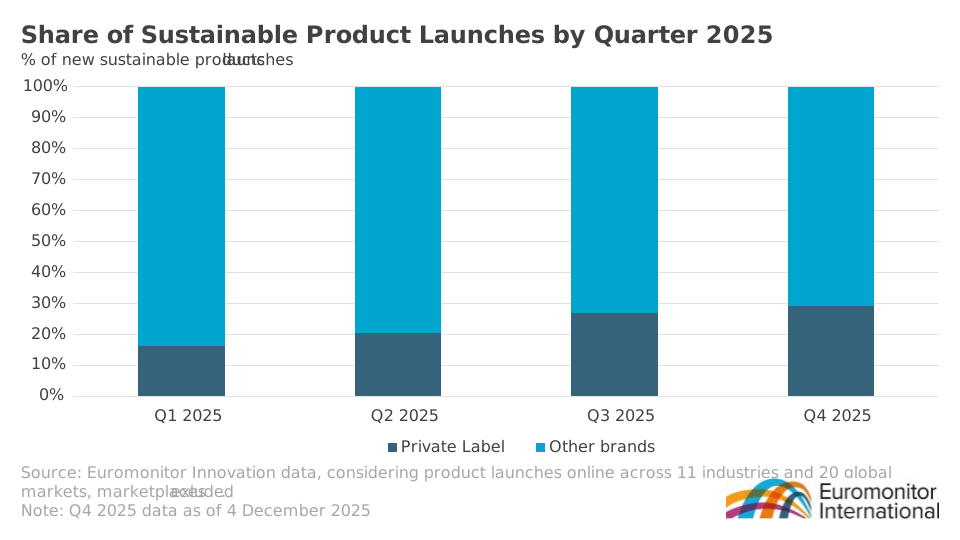
The gap between sustainable launches by brands and private label is closing fast. In Q1 2025, other brands launched 5.6 times more new sustainable products than private label. In Q4 2025, that difference is just 2.1. Private label products are no longer playing catch-up; they are increasingly setting the pace.
Making sustainability affordable and accessible
Private label is increasingly investing in democratising sustainable options as a core strategy, by offering greener products at the same price – or even less – than conventional options.
For instance, Albert Heijn launched in the Netherlands 15 “hybrid” items blending meat or dairy with plant-based ingredients, like beef burgers enhanced with beet fibre, and milk fortified with fava protein. These launches reduce saturated fat and CO₂ emissions, while maintaining price parity with conventional products. Aldi and Lidl NL have followed suit, with 60/40 meat-plant burgers priced at around EUR2.50, demonstrating that alternative proteins can compete in the mass market.
Similarly, Coop Switzerland pushed innovation further with Nice to Save Food, an upcycled line turning by-products like tofu pulp and oat bran into baking mixes and chocolate. No premium added – just smart resource use and zero-waste innovation. Finally, in the US, Natural Grocers recently launched an affordable vegan skin care private label line: plant-based, cruelty-free, and free from petrochemicals. Prices start at USD5.99, undercutting national brands and making clean beauty accessible.
Private label continues to turn sustainability into an everyday expectation, appealing to both budget-conscious and climate-conscious consumers. For brands, the game is not about charging extra for green, it is about proving value. That means adopting efficient, more sustainable practices, and backing every claim with credible proof linked to actual performance.
Building trust through transparency
Consumers want proof that sustainability claims are credible, and retailers are stepping up with transparency and verification.
Euromonitor’s Voice of the Consumer survey suggests that the most trusted claims in 2025 are Recyclable (57%), Locally sourced (55%), and Natural (54%) – areas where private label is doubling down.
For instance, Holland & Barrett partnered with Provenance to add verified sustainability labels online. Shoppers can now see which vitamins or foods use recyclable packaging or responsibly sourced ingredients, backed by an independent audit trail, building confidence in private label claims.
In Kenya, in July 2025, Carrefour launched Choose Better, tagging 680+ products, including private label products, that are healthier or sustainably sourced. The programme makes eco-friendly choices easy to spot, like local produce or items with reduced packaging, while supporting local farmers and cutting food miles. Affordability is baked in: shoppers earn loyalty points and exclusive discounts on these items, often making greener options cheaper than standard ones.
Retailers are not just committed to sustainability; they are proving it and communicating it clearly. By combining substantiated claims with affordability, they are turning trust into action, and making sustainable shopping effortless.
Learn more about our Sustainability expertise and capabilities by reading our Global Sustainability Trends: Embracing a Lower Carbon Future report and visit our Sustainability page and Innovation page for further insights into where to play and how to win with sustainable innovation.