
In 2025, 61% of global consumers still care about climate change and try to have a positive impact on the environment, yet only 51% believe individual choices drive real change. That gap pushes consumers to expect brands – not individuals – to lead with credible proof and practical value.
Sustainability alone rarely closes a sale. Design for quality and performance first, then use segment‑specific proof (simple labels, clear savings, verified sourcing) to make greener choices easy and good value. Measure what matters and say it plainly.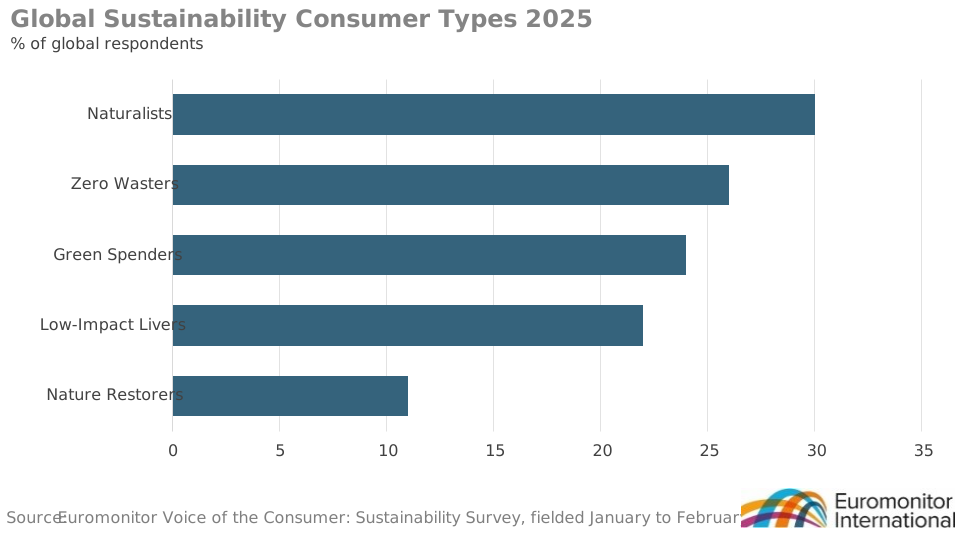
Naturalists – make “clean and clear” the default
Across global markets, many consumers are scanning ingredient lists, looking for simplicity and transparency. For Naturalists – about 30% of global consumers – “natural” is more than a label; it’s a lifestyle. These consumers are cutting back on meat, seeking plant-based options, and trusting claims like “environmentally friendly” – but only when brands back them up with specifics.
Implications for FMCG:
- Go beyond the label: Use QR codes or packaging copy to tell the story of sourcing and impact.
- Be transparent: Clearly define what “natural” means for your brand and support it with data.
How to win: Pair plain labels with specific benefits (“high in fibre”, “30% lower impact than conventional options”) and make provenance easy to verify. Authenticity and clarity build trust – and loyalty.
Zero Wasters – show circular value (and savings)
Many consumers, especially younger generations, are just as likely to check a second-hand app as a retail site, expecting brands to help them repair, reuse, or recycle. Zero Wasters – about 25% of consumers – span generations, but all share a drive to reduce waste. For some, it’s about recycling and food-waste reduction; for others, it’s about resale, repair, and circular fashion.
Implications for FMCG:
- Design for after-life: Make packaging easy to recycle, offer refill packs, and support repair or resale.
- Highlight economic benefits: Show how circular solutions save money, not just resources.
How to win:
Link circular actions to money saved (refill packs, resale programmes) and make “how to recycle/repair” guidance obvious. The easier and more affordable the circular option, the more likely consumers are to choose it.
Green Spenders – prove value across the supply chain
Green Spenders are willing to pay more for products that deliver on quality, performance, and purpose – but they want to see certifications, fair labour practices, and evidence of impact. About 25% of consumers fit this profile, and they’re driving demand for products that “walk the talk”.
Implications for FMCG:
- Stack features: Combine recyclable packaging with responsibly sourced ingredients.
- Localise impact: Highlight local sourcing and community benefits where possible.
How to win:
Communicate measurable benefits and third-party validation. Premium follows proof – show it, don’t just say it.
Low-impact Livers – lead with efficiency and cost
Many families are comparing products not just for a green logo, but for how much energy, water, or money they’ll save. Over 20% of consumers are Low-impact Livers, motivated by efficiency and cost savings. They’re practical, proactive, and increasingly sceptical of vague “carbon neutral” claims.
Implications for FMCG:
- Quantify the benefit: “Cold-wash detergent saves up to 90% energy per load.”
- Make it visible: Use clear, certified labels for energy, water, and carbon savings.
How to win:
Translate impact into cash and kilowatts saved. The clearer and more tangible the benefit, the more likely these consumers are to switch.
Nature Restorers – back big claims with hard proof
Picture a discerning shopper scanning for products that promise to restore nature, not just do less harm. Nature Restorers, about 10% of consumers, are highly educated and affluent. They scrutinise biodiversity, water, and regenerative claims, and expect companies to provide real evidence.
Implications for FMCG:
- Substantiate sourcing: Tell the story from farm to pack, with auditable data.
- Tailor by market: In developed markets, be precise and detailed; in emerging markets, educate and build trust.
How to win:
Show traceability, credible certifications, and measurable outcomes. Specifics and standards earn loyalty, especially when sustainability is seen as a baseline, not a bonus.
Map claims to segments, measure outcomes, and make greener choices the easiest good-value option. When brands combine performance, proof, and purpose, sustainability becomes a growth engine, not a trade-off.
Learn more about our Sustainability expertise and capabilities by reading our Voice of the Consumer: Sustainability 2025 report, watch our recent What’s in the basket? Unpacking which sustainability claims drive consumer purchases across Europe webinar, and visit our Sustainability page for further insights into where to play and how to win with sustainable claims.