
Companies dedicate significant resources to launching new products, carefully calibrating price points to reflect brand positioning, cost structures and perceived consumer value. Yet in the fast-paced world of FMCG, where thousands of innovations compete for limited shelf space, survival is far from guaranteed. This raises a critical question: does the price at launch influence a product’s staying power, where every extra day on shelf helps brands connect with consumers? Using Euromonitor’s proprietary AI-driven Innovation solution, which tracks when new brands and sub-brands appear as well as when they disappear from digital shelves, we can explore the relationship between price and longevity.
Entry price drives different staying power outcomes by category
For this analysis of staying power, defined as new brand or sub-brand launches that remain available on digital shelves for at least 12 months, we focus on two soft drinks categories: juice and energy drinks. Both categories continue to generate new product launches, yet they often follow different pricing strategies. Juice tends to be more commoditised, with consumers associating health benefits primarily with core ingredients. This makes the category price-sensitive, where premium pricing can act as a barrier to trial and repeat purchase. Energy drinks, by contrast, have embraced premiumisation, leveraging functional benefits and lifestyle positioning to justify higher prices and attract new demographics, including women and increasingly health-conscious consumers.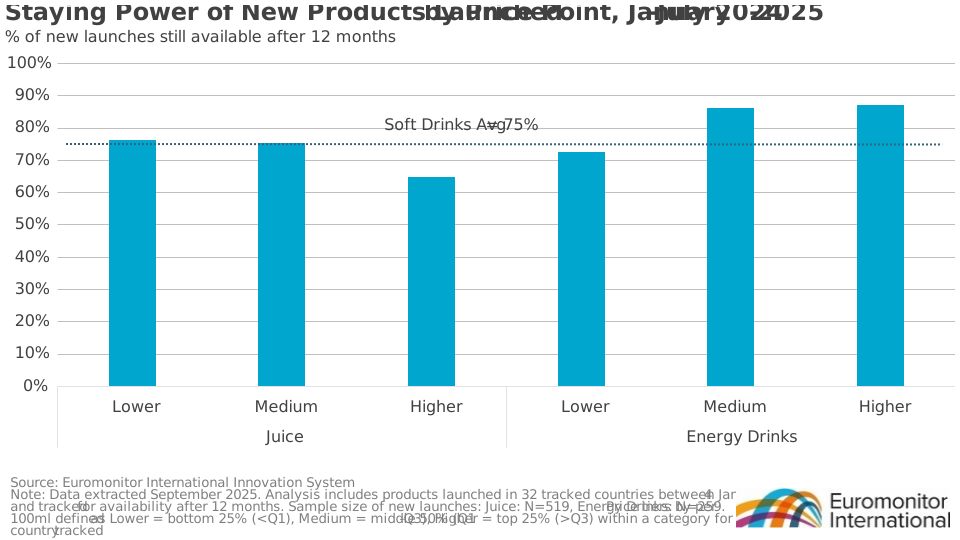
For companies, the message is clear. Pricing strategy cannot be one-size-fits-all. A higher price may erode staying power in categories where health is seen as built in, like juice, and where private label penetration is high, limiting brand pricing power. By contrast, it can strengthen survival in categories where function and identity are central, like energy drinks, where private label presence remains minimal. Knowing where premiumisation helps and where it hurts is essential to reducing failure rates and ensuring innovation delivers lasting returns.
Sweden’s Nocco thrives with innovation and price confidence
Let’s look at Sweden and a recent launch from Vitamin Well AB’s Nocco energy drink. While in most markets Red Bull or Monster rank as the first or second largest brands, Sweden tells a different story. In its home market, Nocco held a 22.7% share of the energy drinks market in 2024, according to Euromonitor’s Soft Drinks system, up from 19.3% the year before. By comparison, Red Bull held 15% and Monster 11.8% in 2024 and both lost share from 2023.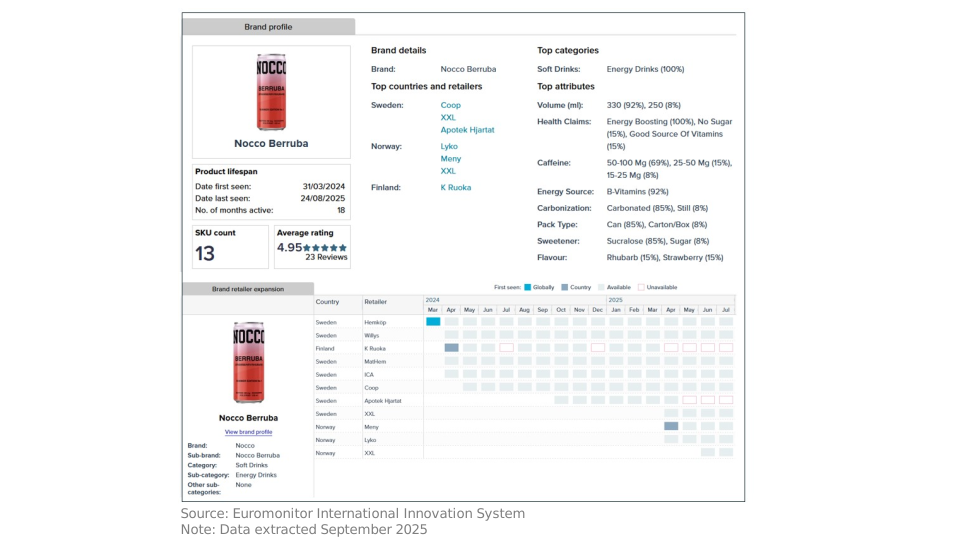
Euromonitor’s Innovation solution helps to quickly discover where new products first appear online and which are expanding rapidly across retailers, countries and categories. Contact us to see which new products have been gaining ground in your category and please see the new briefing on how monitoring product launches, market expansion, and longevity can transform innovation into a strategic advantage.